82-Day South America, Antarctica, South Atlantic & Africa
Miami, Florida | Fuerte Amador | Guayaquil | Salaverry | Callao | General San Martin | Hangaroa, Easter Island | San Juan Bautista (Robinson Crusoe Island) | Santa Clara Island | Valparaiso | Puerto Montt | Castro | Puerto Chacabuco | PIO X Glacier | More...
 Miami, Florida
 Miami, Florida
 Miami, Florida
 Miami, Florida
 Miami, Florida
 Fuerte Amador
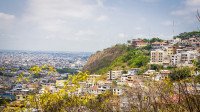 Guayaquil
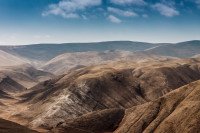 Salaverry
 Callao
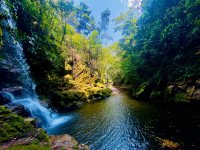 General San Martin
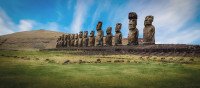 Hangaroa, Easter Island
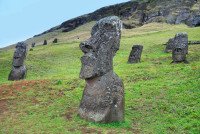 Hangaroa, Easter Island
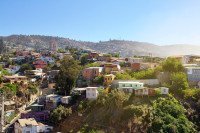 Valparaiso
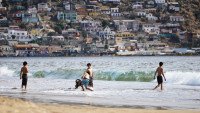 Puerto Montt
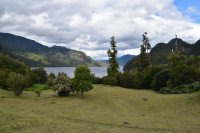 Puerto Chacabuco
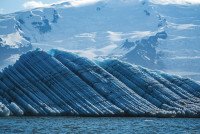 PIO X Glacier
 Punta Arenas
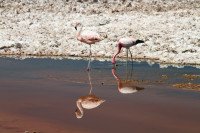 Punta Arenas
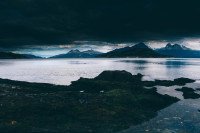 Ushuaia
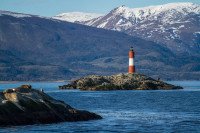 Ushuaia
 Ushuaia
 Ushuaia
 Ushuaia
 Antarctic Experience
 Falkland Islands
 Falkland Islands
 Falkland Islands
 Falkland Islands
 Port Stanley
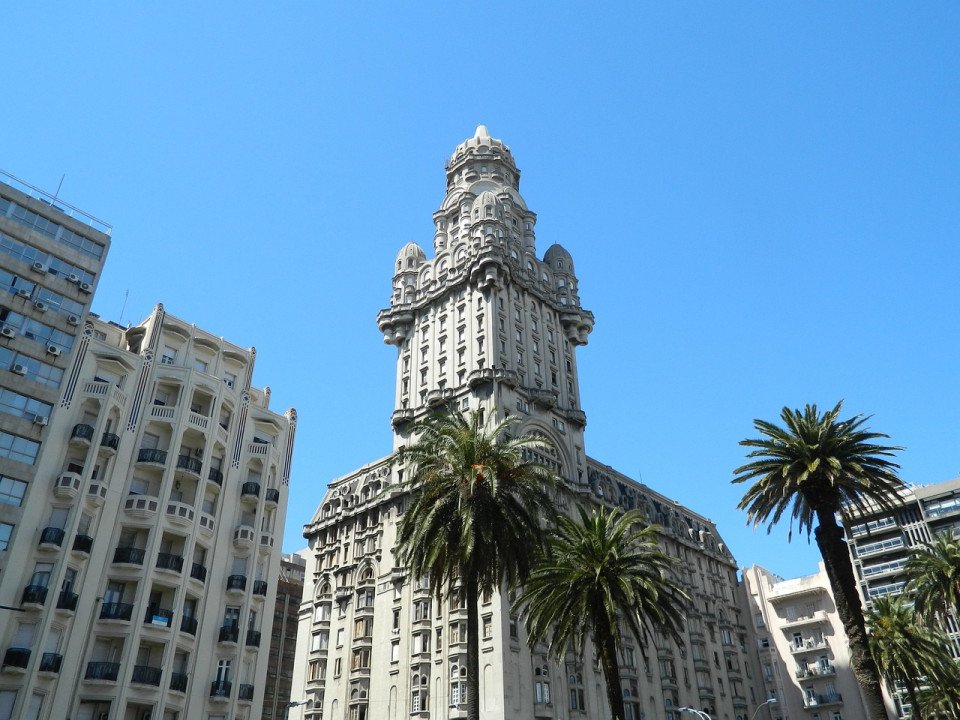
 Montevideo
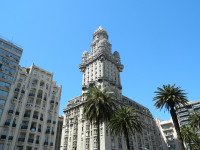 Montevideo
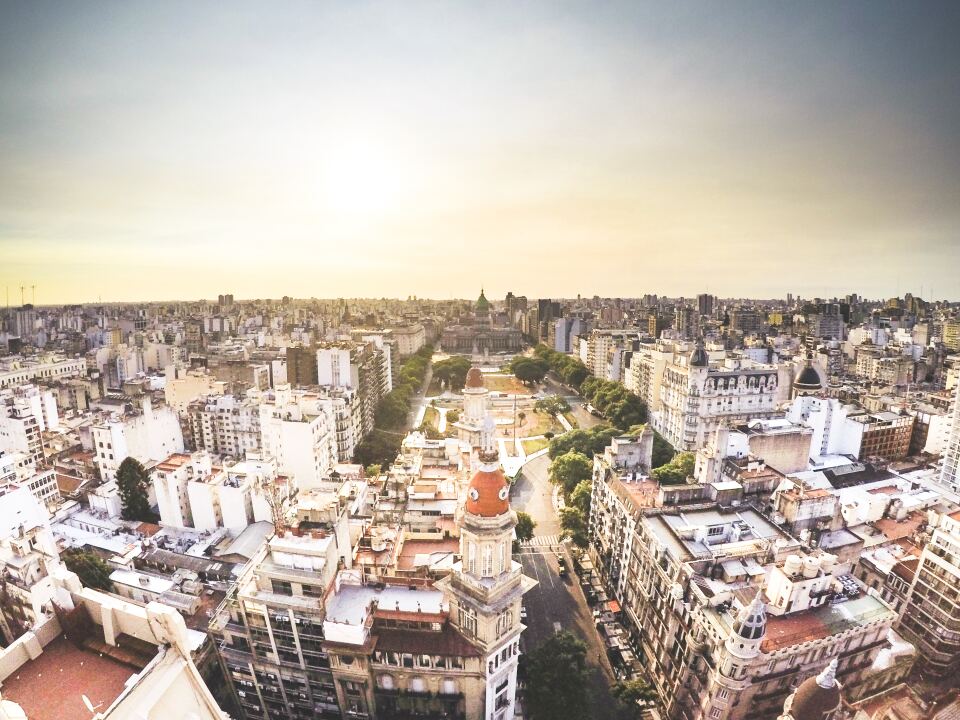
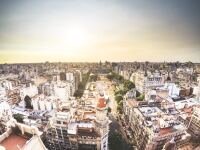 Buenos Aires
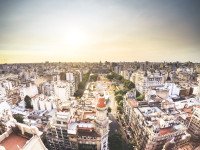 Buenos Aires
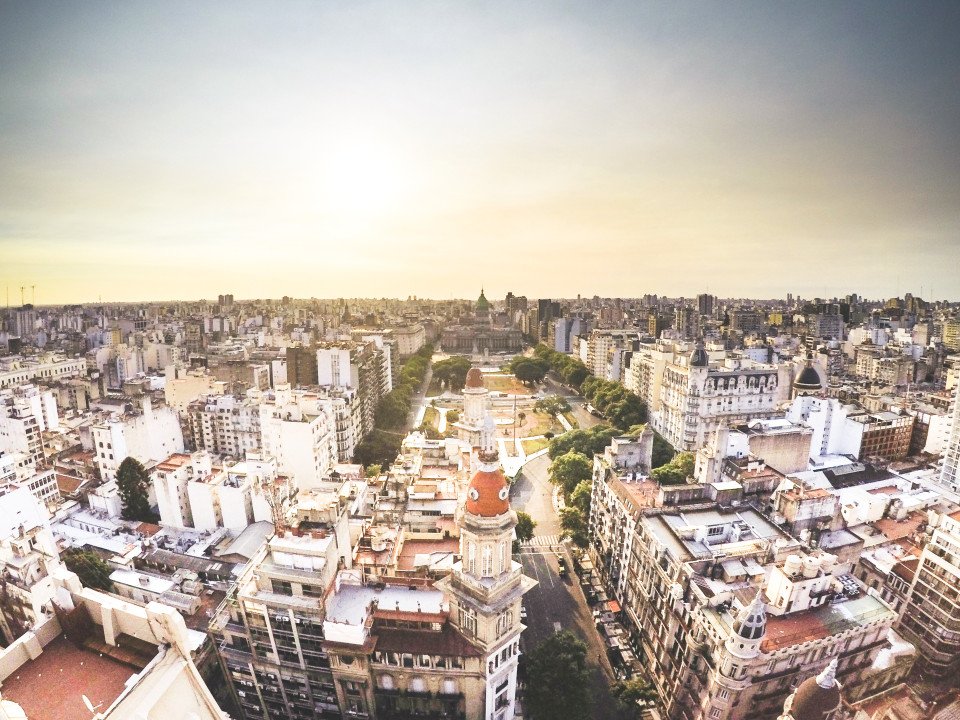
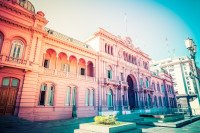 Buenos Aires
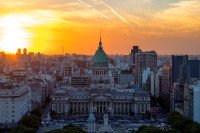 Buenos Aires
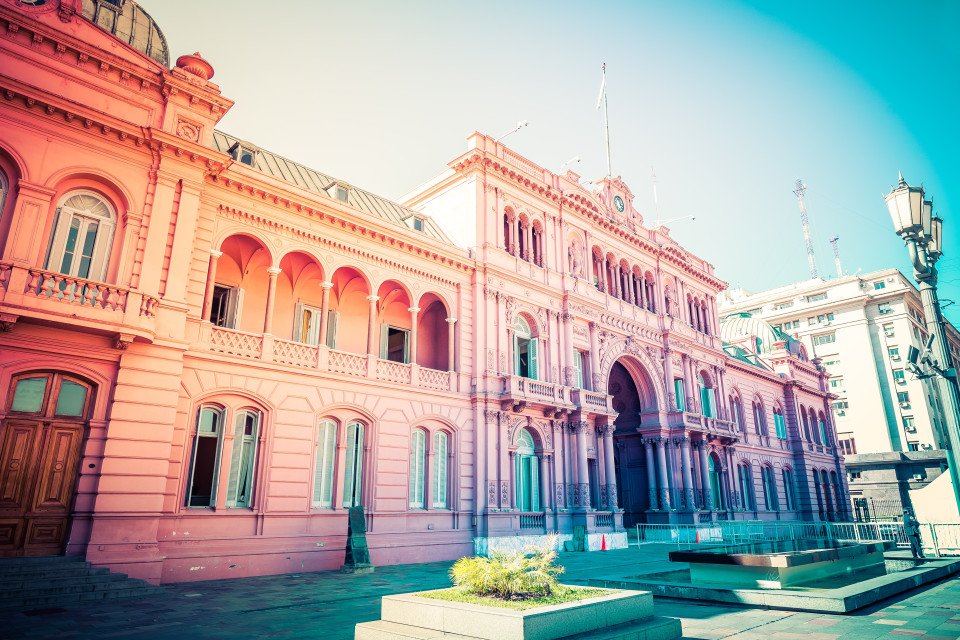
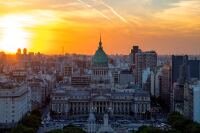 Buenos Aires
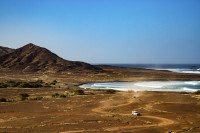 Tristan da Cunha
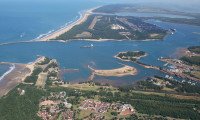 Richards Bay
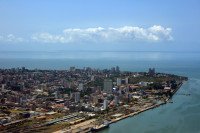 Maputo
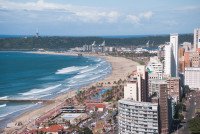 Durban
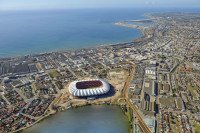 Gqeberha (ex Port Elizabeth)
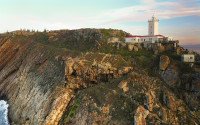 Mossel Bay
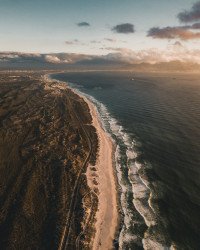 Cape Town
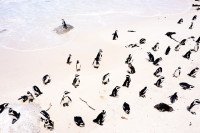 Cape Town
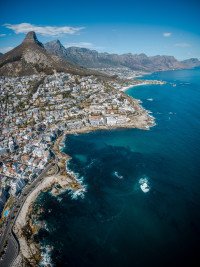 Cape Town





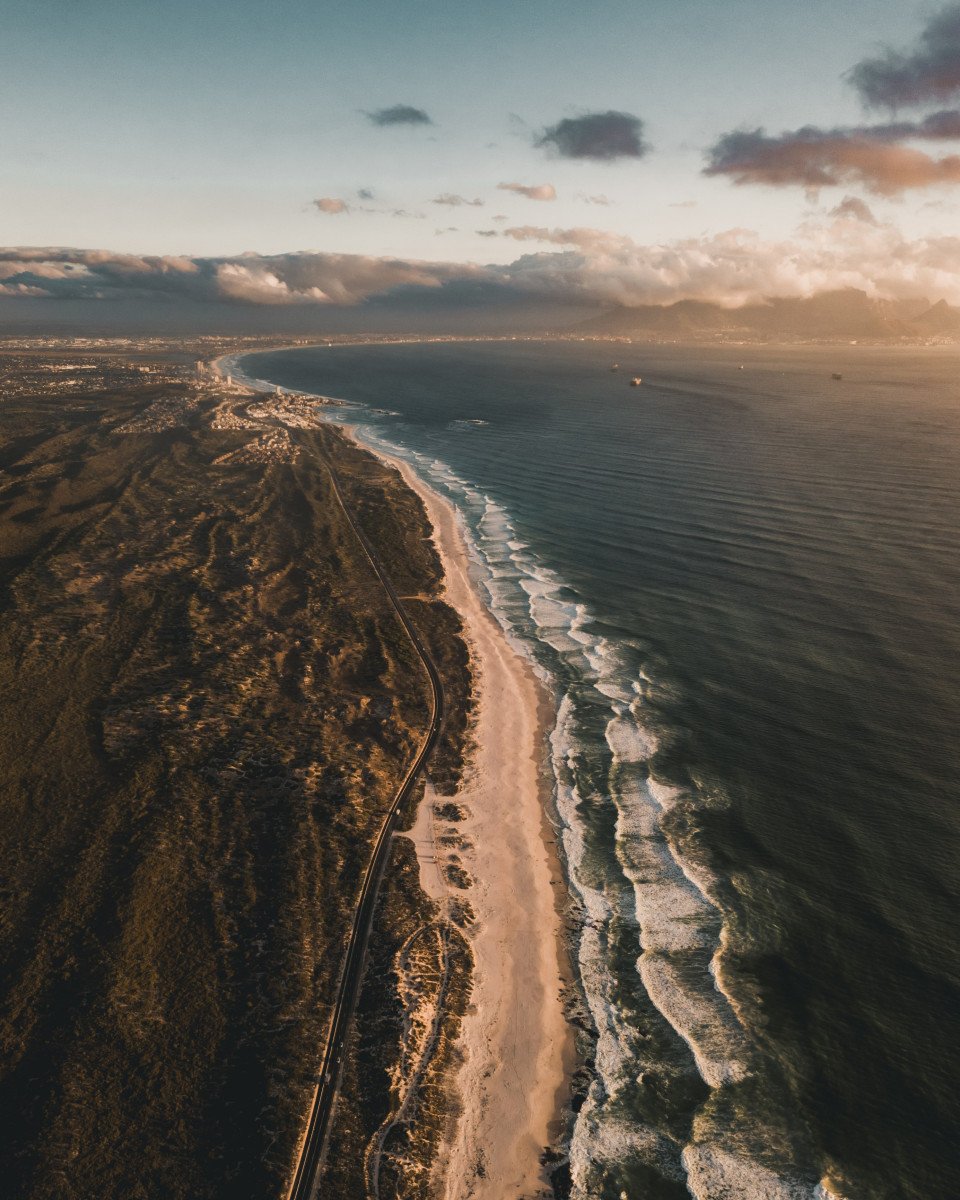
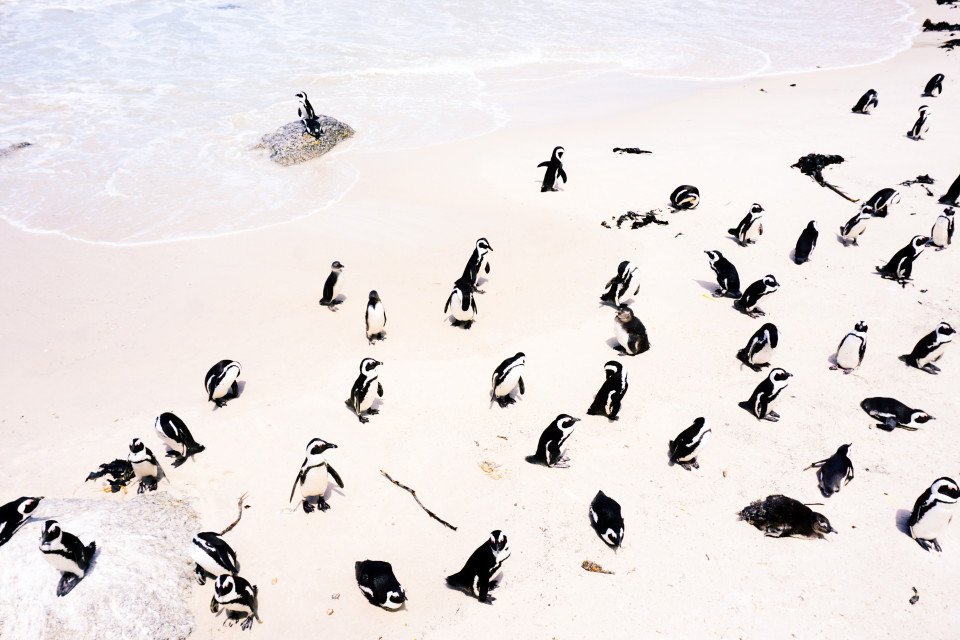
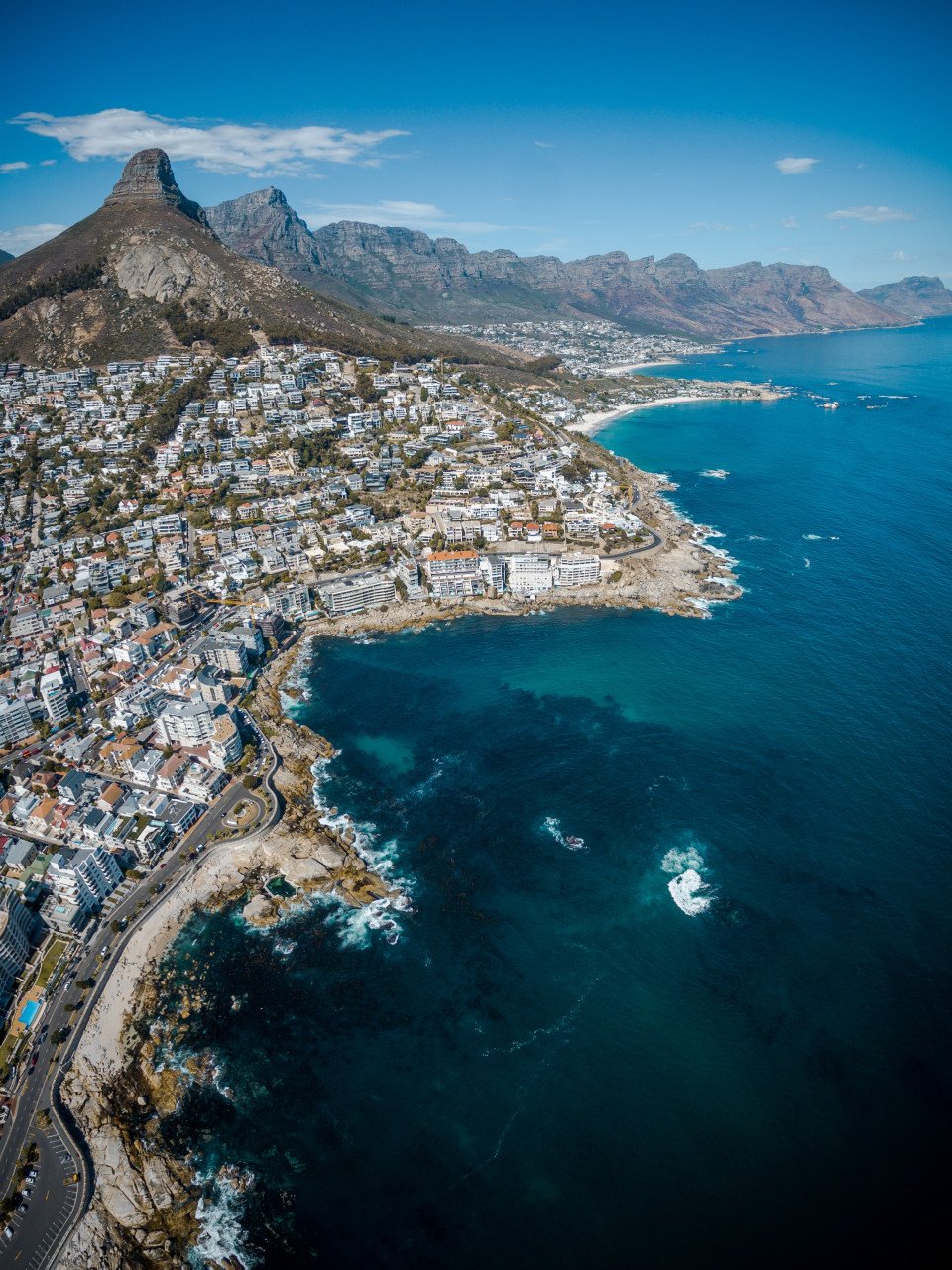


(Prices correct as of today’s date, are updated daily, are subject to change and represent genuine availability at time of update).
Cruise only holidays are financially protected by ABTA. Fly cruise holidays are financially protected by Seabourn under ATOL number 6294
Please click here to check the essential travel requirements before booking this cruise.

Call our cruise experts now and customise your cruise with flights, hotels, land tours and more
Prices based on 2 people sharing. Cruise only price does not include flights. Fly-cruise price may vary by chosen UK airport.
Prices based on 1 solo passenger. Cruise only price does not include flights. Fly-cruise price may vary by chosen UK airport.
Prices based on 3 people sharing. Cruise only price does not include flights. Fly-cruise price may vary by chosen UK airport.
Prices based on 4 people sharing. Cruise only price does not include flights. Fly-cruise price may vary by chosen UK airport.

The
SixStarCruises
Difference
Our sister brand SixStarCruises specialise in luxury and ultra luxury cruise holidays. Click here to view this itinerary in full and speak to one of our specialist cruise concierge today on 0808 239 3462 . Our team are here to help you plan your perfect cruise holiday and guide you with first-hand experience with more time on board than any other UK luxury travel agent.
 CONCIERGE
 EXPERTISE
 FIRST-CLASS
 SERVICE
 LONG-ESTABLISHED
 BUSINESS
 CRUISE LINE
 RELATIONSHIPS
 BOOKING
 CONFIDENCE
 ATOL & ABTA
 SECURITY
 EXCELLENT CUSTOMER SERVICE
 rated 4.8 / 5
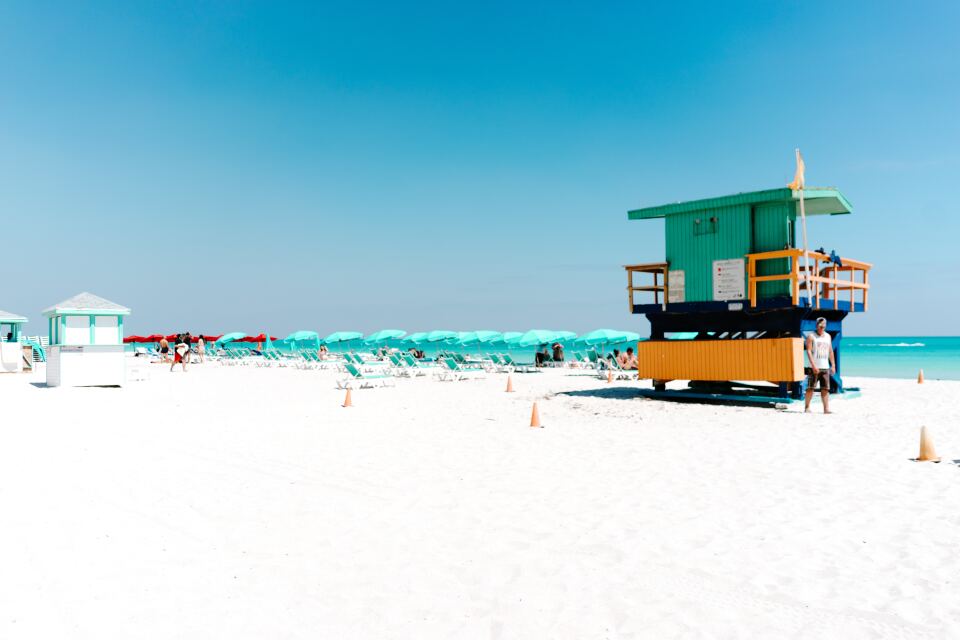
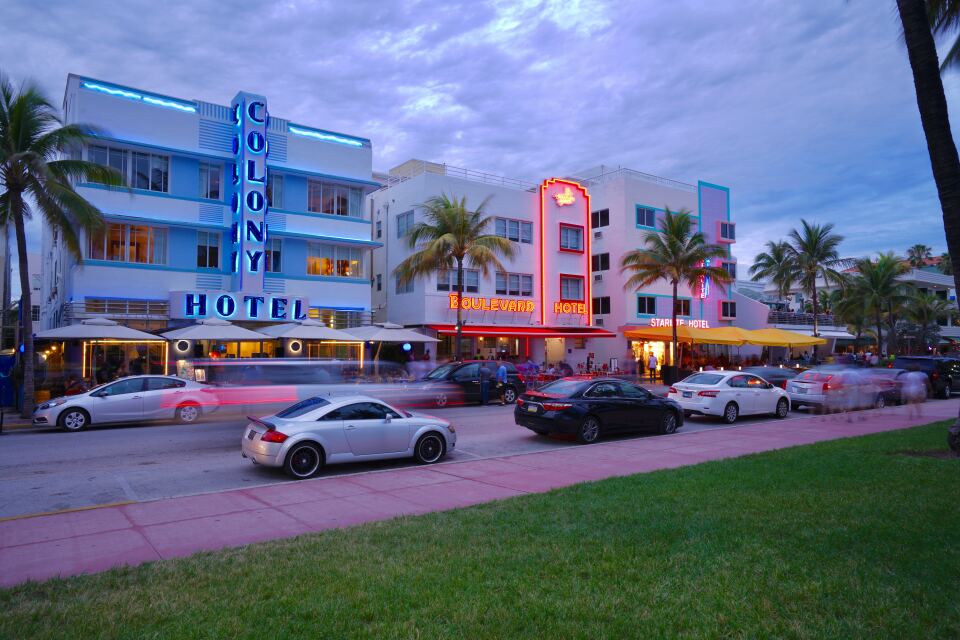
Miami, Florida
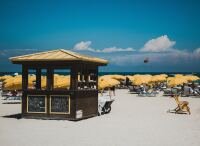
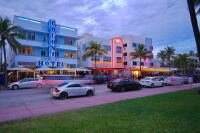
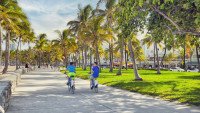
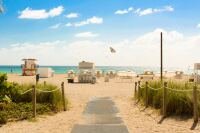
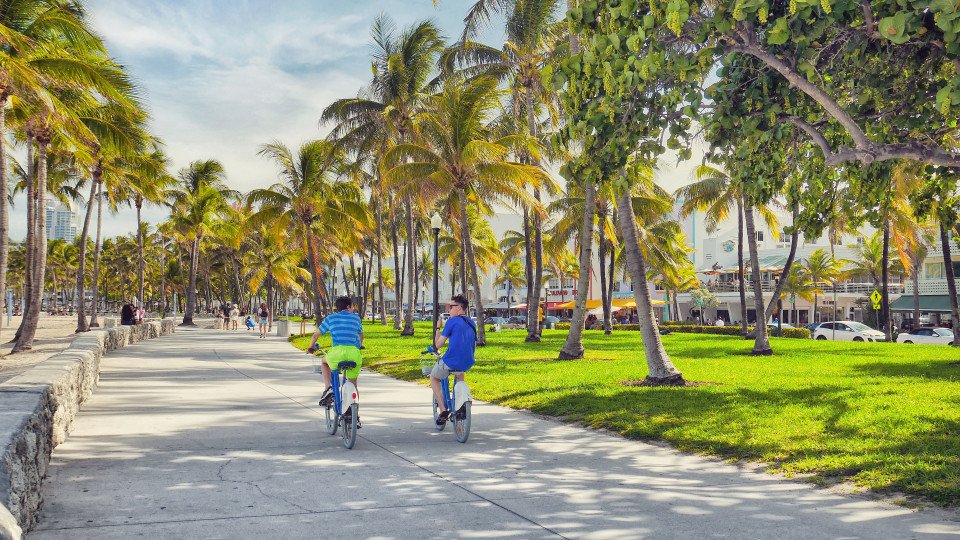
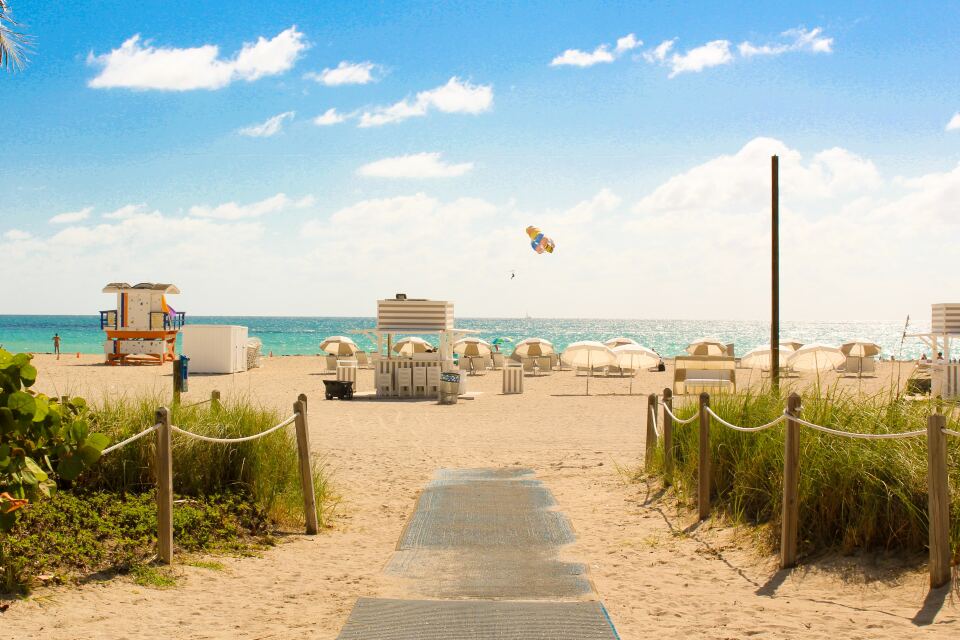
Miami is one of the world’s most popular holiday spots. It has so much to offer; from its countless beach areas, to culture and museums, from spa and shopping days out, to endless cuban restaurants and cafes. Miami is a multicultural city that has something to offer to everyone.
Guayaquil
The second major jumping off point for the Galapagos Islands after Quito, this is a little city with a big heart. A sea port first and foremost, the city’s personality has been founded on that, and all the better it is for it too. Almost Caribbean in feeling, the clement climate coupled wi... The second major jumping off point for the Galapagos Islands after Quito, this is a little city with a big heart. A sea port first and foremost, the city’s personality has been founded on that, and all the better it is for it too. Almost Caribbean in feeling, the clement climate coupled with the intermingling rhythms floating from the windows and abundance of fresh seafood make this a very tropical destination. Once not even considered by the travel books as a potential destination in its own right, the city has undergone something of a resurgence in the past few years. Proud Guayaquileños will not hestitate to point out the Malecón or the exciting new riverfront promenade, once a no-go area after dark, now happily (and hippily) lined with museums, restaurants, shops, and ongoing entertainment. The new airport and urban transportation network are also lauded to the happy tourists who find themselves here. As the largest and most populous city in Ecuador as well as being the commercial centre, it would only be natural that the city would have some kind of modern architecture, but it is the colourful favelas, or to use their real name guasmos, that cling to the side of the hillside like limpets that really catch your eye. A blend of old and new, the first inhabitants can be traced back to 1948 when the government cleared the area for affordable housing, these shanty towns are witness to the social and political particularities that Guayaquil has faced in the past. Read More
Salaverry
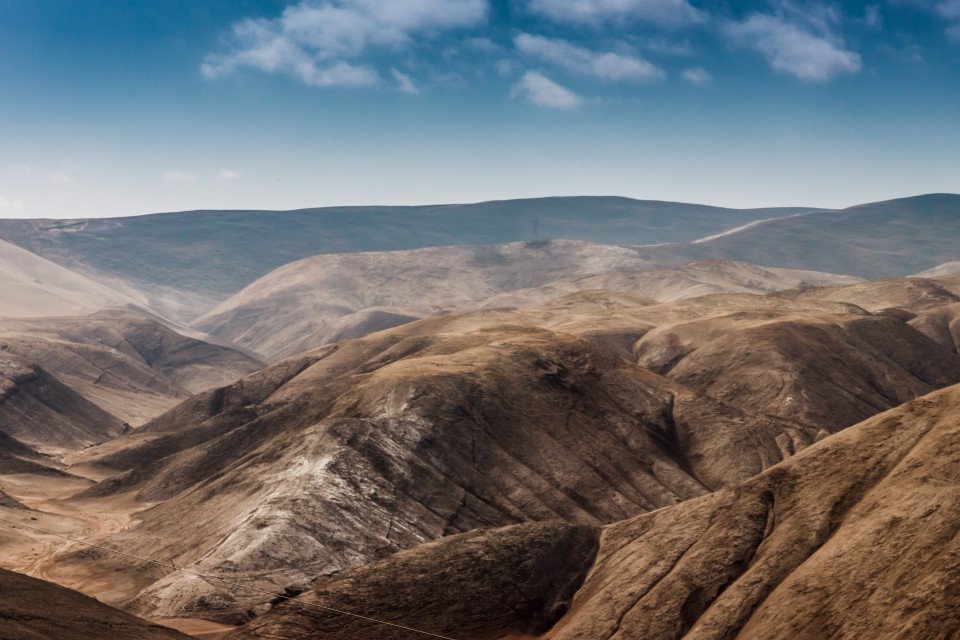
Located about nine hours north of Lima, Trujillo was founded in 1534 by the Spanish conquistador Pizarro. The attractive, colonial city retains much of its original charm with elegant casonas, or mansions, lining the streets. Nearby is Chan Chan, the ancient capital of the Chimú, a local I... Located about nine hours north of Lima, Trujillo was founded in 1534 by the Spanish conquistador Pizarro. The attractive, colonial city retains much of its original charm with elegant casonas, or mansions, lining the streets. Nearby is Chan Chan, the ancient capital of the Chimú, a local Indian tribe who came under the rule of the Incas. The area has several other Chimú sites, some dating back about 1500 years. The region is also famous as the home of the Peruvian Paso horses, as well as excellent beaches offering world-class surfing and other water sports. Read More
Callao
When people discuss great South American cities, Lima is often overlooked. But Peru's capital can hold its own against its neighbors. It has an oceanfront setting, colonial-era splendor, sophisticated dining, and nonstop nightlife.It's true that the city—clogged with traffic and choked wit... When people discuss great South American cities, Lima is often overlooked. But Peru's capital can hold its own against its neighbors. It has an oceanfront setting, colonial-era splendor, sophisticated dining, and nonstop nightlife.It's true that the city—clogged with traffic and choked with fumes—doesn't make a good first impression, especially since the airport is in an industrial neighborhood. But wander around the regal edifices surrounding the Plaza de Armas, among the gnarled olive trees of San Isidro's Parque El Olivar, or along the winding lanes in the coastal community of Barranco, and you'll find yourself charmed.In 1535 Francisco Pizarro found the perfect place for the capital of Spain's colonial empire. On a natural port, the so-called Ciudad de los Reyes (City of Kings) allowed Spain to ship home all the gold the conquistador plundered from the Inca. Lima served as the capital of Spain's South American empire for 300 years, and it's safe to say that no other colonial city enjoyed such power and prestige during this period.When Peru declared its independence from Spain in 1821, the declaration was read in the square that Pizarro had so carefully designed. Many of the colonial-era buildings around the Plaza de Armas are standing today. Walk a few blocks in any direction for churches and elegant houses that reveal just how wealthy this city once was. But the poor state of most buildings attests to the fact that the country's wealthy families have moved to neighborhoods to the south over the past century.The walls that surrounded the city were demolished in 1870, making way for unprecedented growth. A former hacienda became the graceful residential neighborhood of San Isidro. In the early 1920s the construction of tree-lined Avenida Arequipa heralded the development of neighborhoods such as bustling Miraflores and bohemian Barranco.Almost a third of the country's population of 29 million lives in the metropolitan area, many of them in relatively poor conos: newer neighborhoods on the outskirts of the city. Most residents of those neighborhoods moved there from mountain villages during the political violence and poverty that marked the 1980s and ’90s, when crime increased dramatically. During the past decade the country has enjoyed peace and steady economic growth, which have been accompanied by many improvements and refurbishment in the city. Residents who used to steer clear of the historic center now stroll along its streets. And many travelers who once would have avoided the city altogether now plan to spend a day here and end up staying two or three. Read More
Callao
When people discuss great South American cities, Lima is often overlooked. But Peru's capital can hold its own against its neighbors. It has an oceanfront setting, colonial-era splendor, sophisticated dining, and nonstop nightlife.It's true that the city—clogged with traffic and choked wit... When people discuss great South American cities, Lima is often overlooked. But Peru's capital can hold its own against its neighbors. It has an oceanfront setting, colonial-era splendor, sophisticated dining, and nonstop nightlife.It's true that the city—clogged with traffic and choked with fumes—doesn't make a good first impression, especially since the airport is in an industrial neighborhood. But wander around the regal edifices surrounding the Plaza de Armas, among the gnarled olive trees of San Isidro's Parque El Olivar, or along the winding lanes in the coastal community of Barranco, and you'll find yourself charmed.In 1535 Francisco Pizarro found the perfect place for the capital of Spain's colonial empire. On a natural port, the so-called Ciudad de los Reyes (City of Kings) allowed Spain to ship home all the gold the conquistador plundered from the Inca. Lima served as the capital of Spain's South American empire for 300 years, and it's safe to say that no other colonial city enjoyed such power and prestige during this period.When Peru declared its independence from Spain in 1821, the declaration was read in the square that Pizarro had so carefully designed. Many of the colonial-era buildings around the Plaza de Armas are standing today. Walk a few blocks in any direction for churches and elegant houses that reveal just how wealthy this city once was. But the poor state of most buildings attests to the fact that the country's wealthy families have moved to neighborhoods to the south over the past century.The walls that surrounded the city were demolished in 1870, making way for unprecedented growth. A former hacienda became the graceful residential neighborhood of San Isidro. In the early 1920s the construction of tree-lined Avenida Arequipa heralded the development of neighborhoods such as bustling Miraflores and bohemian Barranco.Almost a third of the country's population of 29 million lives in the metropolitan area, many of them in relatively poor conos: newer neighborhoods on the outskirts of the city. Most residents of those neighborhoods moved there from mountain villages during the political violence and poverty that marked the 1980s and ’90s, when crime increased dramatically. During the past decade the country has enjoyed peace and steady economic growth, which have been accompanied by many improvements and refurbishment in the city. Residents who used to steer clear of the historic center now stroll along its streets. And many travelers who once would have avoided the city altogether now plan to spend a day here and end up staying two or three. Read More
Callao
When people discuss great South American cities, Lima is often overlooked. But Peru's capital can hold its own against its neighbors. It has an oceanfront setting, colonial-era splendor, sophisticated dining, and nonstop nightlife.It's true that the city—clogged with traffic and choked wit... When people discuss great South American cities, Lima is often overlooked. But Peru's capital can hold its own against its neighbors. It has an oceanfront setting, colonial-era splendor, sophisticated dining, and nonstop nightlife.It's true that the city—clogged with traffic and choked with fumes—doesn't make a good first impression, especially since the airport is in an industrial neighborhood. But wander around the regal edifices surrounding the Plaza de Armas, among the gnarled olive trees of San Isidro's Parque El Olivar, or along the winding lanes in the coastal community of Barranco, and you'll find yourself charmed.In 1535 Francisco Pizarro found the perfect place for the capital of Spain's colonial empire. On a natural port, the so-called Ciudad de los Reyes (City of Kings) allowed Spain to ship home all the gold the conquistador plundered from the Inca. Lima served as the capital of Spain's South American empire for 300 years, and it's safe to say that no other colonial city enjoyed such power and prestige during this period.When Peru declared its independence from Spain in 1821, the declaration was read in the square that Pizarro had so carefully designed. Many of the colonial-era buildings around the Plaza de Armas are standing today. Walk a few blocks in any direction for churches and elegant houses that reveal just how wealthy this city once was. But the poor state of most buildings attests to the fact that the country's wealthy families have moved to neighborhoods to the south over the past century.The walls that surrounded the city were demolished in 1870, making way for unprecedented growth. A former hacienda became the graceful residential neighborhood of San Isidro. In the early 1920s the construction of tree-lined Avenida Arequipa heralded the development of neighborhoods such as bustling Miraflores and bohemian Barranco.Almost a third of the country's population of 29 million lives in the metropolitan area, many of them in relatively poor conos: newer neighborhoods on the outskirts of the city. Most residents of those neighborhoods moved there from mountain villages during the political violence and poverty that marked the 1980s and ’90s, when crime increased dramatically. During the past decade the country has enjoyed peace and steady economic growth, which have been accompanied by many improvements and refurbishment in the city. Residents who used to steer clear of the historic center now stroll along its streets. And many travelers who once would have avoided the city altogether now plan to spend a day here and end up staying two or three. Read More
Hangaroa, Easter Island
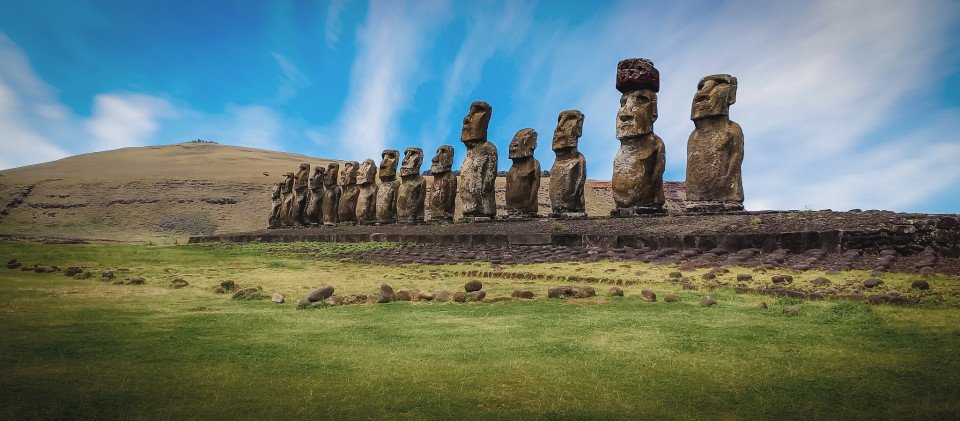
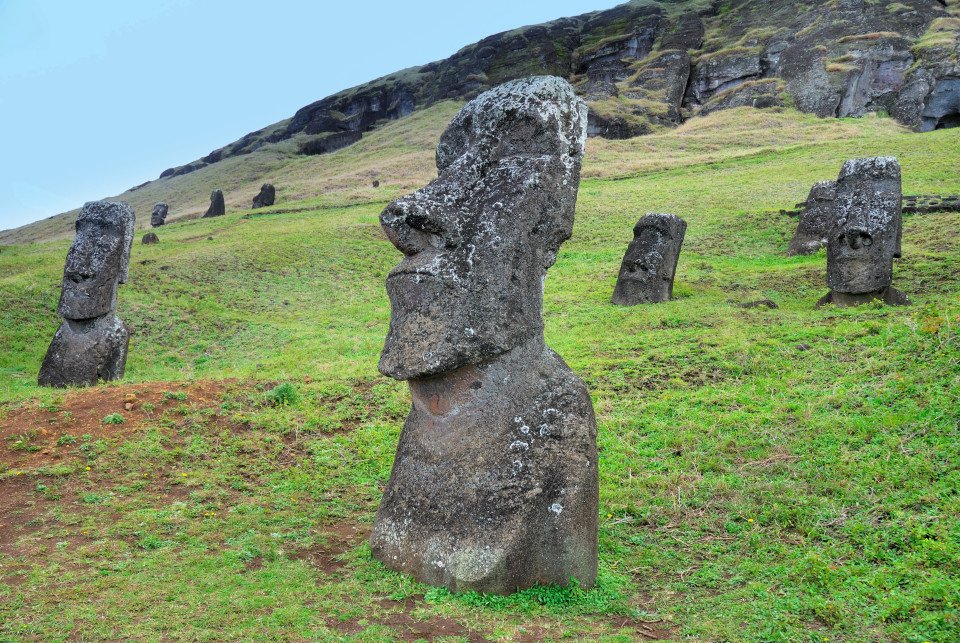
Discovered (by the Western world) on Easter Sunday, 1722, Easter Island is a UNESCO World Heritage Site and one of the most isolated places on the face of the Earth, some 2,300 miles from the Chilean mainland. Although more Polynesian than South American in character, the 64-square mile is... Discovered (by the Western world) on Easter Sunday, 1722, Easter Island is a UNESCO World Heritage Site and one of the most isolated places on the face of the Earth, some 2,300 miles from the Chilean mainland. Although more Polynesian than South American in character, the 64-square mile island was annexed by Chile in 1888, and is now famous as the world’s largest ‘open air museum’ on account of the Moai, or human-like stone statues, that can be found on the island. The Moai remain very much a mystery, which archaeologists are still trying to unlock by interpreting an ancient language of the Rapa Nui, which is the key to understanding this culture, and is written on the so called ‘rongo rongo tablets’. The island owes its origin to three volcanoes which erupted some three million years ago: Poike, Rano Kau and Maunga Terevaka. It is not known when or how the island was first populated, but the most credible theory suggests that the Rapa Nui people came from other Pacific islands in the 4th century AD. In addition to the cultural and archaeological interest, there are the beautiful beaches, transparent waters, and coral reefs that might be expected of a Pacific Island. Read More
Hangaroa, Easter Island
Discovered (by the Western world) on Easter Sunday, 1722, Easter Island is a UNESCO World Heritage Site and one of the most isolated places on the face of the Earth, some 2,300 miles from the Chilean mainland. Although more Polynesian than South American in character, the 64-square mile is... Discovered (by the Western world) on Easter Sunday, 1722, Easter Island is a UNESCO World Heritage Site and one of the most isolated places on the face of the Earth, some 2,300 miles from the Chilean mainland. Although more Polynesian than South American in character, the 64-square mile island was annexed by Chile in 1888, and is now famous as the world’s largest ‘open air museum’ on account of the Moai, or human-like stone statues, that can be found on the island. The Moai remain very much a mystery, which archaeologists are still trying to unlock by interpreting an ancient language of the Rapa Nui, which is the key to understanding this culture, and is written on the so called ‘rongo rongo tablets’. The island owes its origin to three volcanoes which erupted some three million years ago: Poike, Rano Kau and Maunga Terevaka. It is not known when or how the island was first populated, but the most credible theory suggests that the Rapa Nui people came from other Pacific islands in the 4th century AD. In addition to the cultural and archaeological interest, there are the beautiful beaches, transparent waters, and coral reefs that might be expected of a Pacific Island. Read More
San Juan Bautista (Robinson Crusoe Island)
Robinson Crusoe Island is located 600 kilometres off the coast of Chile. The island is a rugged volcanic speck where 70 percent of its plant species are endemic, and is the largest of the Juan Fernandez Islands, a small archipelago that since 1935 is a Chilean National Park which was decla... Robinson Crusoe Island is located 600 kilometres off the coast of Chile. The island is a rugged volcanic speck where 70 percent of its plant species are endemic, and is the largest of the Juan Fernandez Islands, a small archipelago that since 1935 is a Chilean National Park which was declared a UNESCO World Biosphere Reserve. This island has witnessed and played an important role in Chilean and world history. In 1750 the village of San Juan Bautista was founded at Cumberland Bay and by 1779 there were already 7 fortresses bristling with guns. The island’s isolation offered Spain a splendid place for setting up a penal colony, to which high-ranking Chilean patriots were deported in the early 19th century. In 1915, during the First World War, three British ships and a German one, the Dresden, engaged in a sea battle which ended with the scuttling of the German cruiser. Today there are currently around one thousand people living in the archipelago, most of them in the village of San Juan Bautista engaged in fishing for the “pincer-less lobster”, a delicacy in the mainland. Read More
Valparaiso
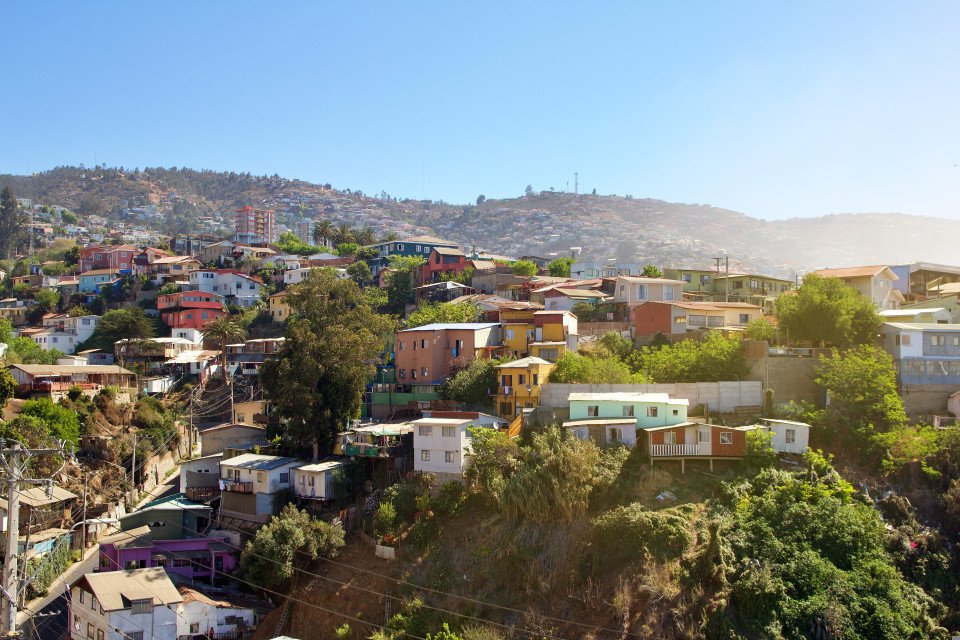
Valparaíso's dramatic topography—45 cerros, or hills, overlooking the ocean—requires the use of winding pathways and wooden ascensores (funiculars) to get up many of the grades. The slopes are covered by candy-color houses—there are almost no apartments in the city—most of which have exter... Valparaíso's dramatic topography—45 cerros, or hills, overlooking the ocean—requires the use of winding pathways and wooden ascensores (funiculars) to get up many of the grades. The slopes are covered by candy-color houses—there are almost no apartments in the city—most of which have exteriors of corrugated metal peeled from shipping containers decades ago. Valparaíso has served as Santiago's port for centuries. Before the Panama Canal opened, Valparaíso was the busiest port in South America. Harsh realities—changing trade routes, industrial decline—have diminished its importance, but it remains Chile's principal port. Most shops, banks, restaurants, bars, and other businesses cluster along the handful of streets called El Plan (the flat area) that are closest to the shoreline. Porteños (which means "the residents of the port") live in the surrounding hills in an undulating array of colorful abodes. At the top of any of the dozens of stairways, the paseos (promenades) have spectacular views; many are named after prominent Yugoslavian, Basque, and German immigrants. Neighborhoods are named for the hills they cover. With the jumble of power lines overhead and the hundreds of buses that slow down—but never completely stop—to pick up agile riders, it's hard to forget you're in a city. Still, walking is the best way to experience Valparaíso. Be careful where you step, though—locals aren't very conscientious about curbing their dogs. Read More
Puerto Montt
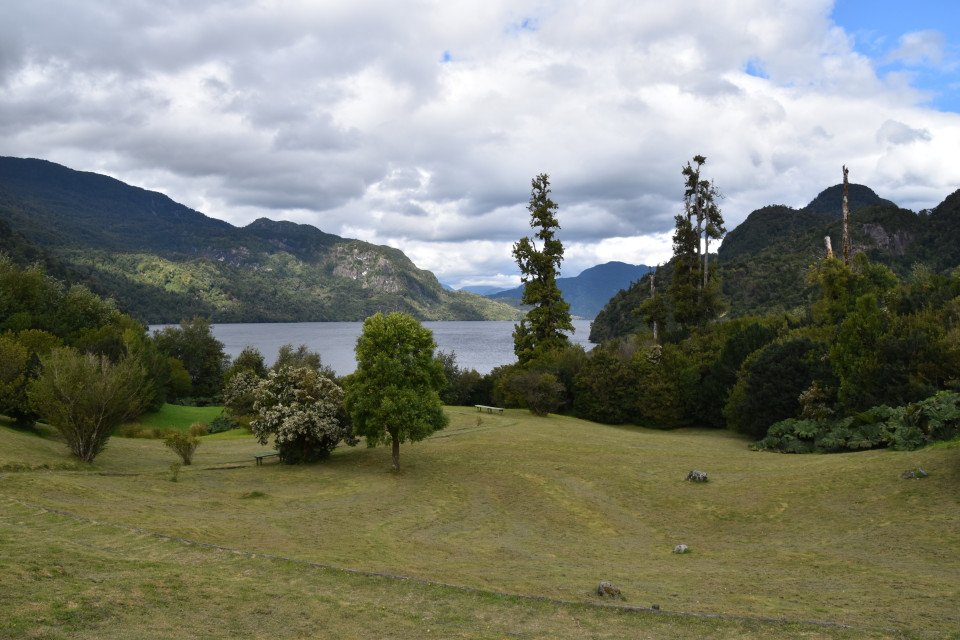
For most of its history, windy Puerto Montt was the end of the line for just about everyone traveling in the Lake District. Now the Carretera Austral carries on southward, but for all intents and purposes Puerto Montt remains the region's last significant outpost, a provincial city that is... For most of its history, windy Puerto Montt was the end of the line for just about everyone traveling in the Lake District. Now the Carretera Austral carries on southward, but for all intents and purposes Puerto Montt remains the region's last significant outpost, a provincial city that is the hub of local fishing, textile, and tourist activity.Today the city center is full of malls, condos, and office towers—it's the fastest-growing city in Chile—but away from downtown, Puerto Montt consists mainly of low clapboard houses perched above its bay, the Seno de Reloncaví. If it's a sunny day, head east to Playa Pelluco or one of the city's other beaches. If you're more interested in exploring the countryside, drive along the shore for a good view of the surrounding hills. Read More
Castro
Bright, wooden huts teeter on stilts over Castro's estuary waterfront, inviting you into a patchwork of colour that’s sure to brighten any day. These traditional palafitos give the warmest of welcomes, as you prepare to experience Chile at its most vibrant. Castro has faced something of a... Bright, wooden huts teeter on stilts over Castro's estuary waterfront, inviting you into a patchwork of colour that’s sure to brighten any day. These traditional palafitos give the warmest of welcomes, as you prepare to experience Chile at its most vibrant. Castro has faced something of a tumultuous past, having been hit by a by a succession of earthquakes and fires - the most recent a devastating earthquake in 1960. But this city is incredibly resilient, and today the capital of Chiloe Island makes for a fantastic base for exploring the archipelago that surrounds it. Read More
Puerto Chacabuco
The drive from Coyhaique to the town of Puerto Aisén and its port, Chacabuco, is beautiful. The mist hangs low over farmland, adding a dripping somnolence to the scenery. Dozens of waterfalls and rivers wend their way through mountain formations. Yellow poplars surround charming rustic lod... The drive from Coyhaique to the town of Puerto Aisén and its port, Chacabuco, is beautiful. The mist hangs low over farmland, adding a dripping somnolence to the scenery. Dozens of waterfalls and rivers wend their way through mountain formations. Yellow poplars surround charming rustic lodges, and sheep and cattle graze on mossy, vibrant fields. The picture of serenity terminates at the sea, where the nondescript town of Puerto Aisén and its port Chacabuco, Coyhaique's link to the ocean, sits, a conduit to further beauty. This harbor ringed by snowcapped mountains is where you board the ferries that transport you north to Puerto Montt in the Lake District and Quellón on Chiloé, as well as boats headed south to the spectacular Laguna San Rafael. Read More
Punta Arenas
Impenetrable forests, impassable mountains, and endless fields of ice define Chilean Patagonia, and meant that the region went largely unexplored until the beginning of the 20th century. Located in the southernmost part of the country, this area is still sparsely inhabited, though you will... Impenetrable forests, impassable mountains, and endless fields of ice define Chilean Patagonia, and meant that the region went largely unexplored until the beginning of the 20th century. Located in the southernmost part of the country, this area is still sparsely inhabited, though you will find a few populated places—like the colorful provincial city of Punta Arenas, which looks like it's about to be swept into the Strait of Magellan. Some unique wildlife, particularly colonies of elephant seals and penguins, call this breathtaking topography home. To the north is Parque Nacional Torres del Paine, the country's most magnificent natural wonder, and whose snow-covered peaks seem to rise vertically from the plains below. The vistas, such as the fantastic Avenue of the Glaciers, are breathtaking; along this stretch of the Beagle Channel, you can pass six tremendous glaciers all within a stone's throw of each other.Cruise SightsPunta Arenas. Founded a little more than 150 years ago, Punta Arenas (Sandy Point) was Chile's first permanent settlement in Patagonia. Plaza Muñoz Gamero, the central square, is surrounded by evidence of that early prosperity: buildings whose then-opulent brick exteriors recall a time when this was one of Chile's wealthiest cities. The newer houses here have colorful tin roofs, best appreciated when seen from a high vantage point such as the Mirador Cerro la Cruz. Although the city as a whole may not be particularly attractive, look for details: the pink-and-white house on a corner, the bay window full of potted plants, parking attendants wearing the regional blue and yellow colors, and schoolchildren in identical naval pea coats that remind you that the city's fate is tied to the sea.The Museo Naval y Marítimo extols Chile's high-seas prowess, particularly concerning Antarctica. Its exhibits are worth a visit for anyone with an interest in ships and sailing, merchant and military alike. Part of the second floor is designed like the interior of a ship, including a map and radio room. Pedro Montt 989. Admission charged.Housed in what was once the mansion of the powerful Braun-Menéndez family, the Museo Regional de Magallanes is an intriguing glimpse into the daily life of a wealthy provincial family at the beginning of the 20th century. Lavish Carrara marble hearths, English bath fixtures, and cordovan leather walls are among the original accoutrements. The museum also has an excellent group of displays depicting Punta Arenas's past, from the first European contact to the town's decline after the opening of the Panama Canal. The museum is half a block north of the main square. Magallanes 949. Admission charged.The resplendent 1895 Palacio Sara Braun is a national landmark and an architectural showpiece of southern Patagonia. Designed by a French architect, the house was built from materials and by craftsmen imported from Europe during the four years of construction. The city's central plaza and surrounding buildings soon followed, ushering in the region's golden era. Noteworthy are the lavish bedrooms, magnificent parquet floors, marble fireplaces, and hand-painted ceilings. Don't miss the portraits of Braun and her husband José Nogueira in the music room. Afterwards, head to the cellar for a drink or snack in the warm public tavern (a good portion of the mansion is leased to a hotel). Plaza Muñoz Gamero 716. Admission charged.Commonly referred to simply as "El Salesiano," the Museo Salesiano de Maggiorino Borgatello is operated by Italian missionaries whose order arrived in Punta Arenas in the 19th century. The Salesians, most of whom spoke no Spanish, proved to be daring explorers. Traveling throughout the region, they collected the artifacts made by indigenous tribes that are currently on display. Av. Bulnes 398. Admission charged.Isla Magdalena. Punta Arenas is the launching point for a boat trip to the Isla Magdalena to see the more than 100,000 Magellanic penguins at the Monumento Natural Los Pingúinos. A single trail, marked off by rope, is accessible to humans. The boat trip to the island, in the middle of the Estrecho de Magallanes, takes about two hours. Make sure to bring along warm clothing, even in summer; the island can be chilly, particularly if a breeze is blowing across the water.Parque Nacional Torres del Paine. Some 12 million years ago, lava flows pushed up through the thick sedimentary crust that covered the southwestern coast of South America, cooling to form a granite mass. Glaciers then swept through the region, grinding away all but the ash-gray spires that rise over the landscape of one of the world's most beautiful natural phenomena, now the Parque Nacional Torres del Paine (established in 1959). Snow formations dazzle along every turn of road, and the sunset views are spectacular.Among the 2,420-square-km (934-square-mi) park's most beautiful attractions are its lakes of turquoise, aquamarine, and emerald green waters. Another draw is its unusual wildlife. Creatures like the guanaco (a woollier version of the llama) and the ñandú (resembling a small ostrich) abound. They are used to visitors and don't seem to be bothered by the proximity of automobile traffic and the snapping of cameras. Predators, like the gray fox, make less frequent appearances. You may also spot the dramatic aerobatics of a falcon and the graceful soaring of the endangered condor. The beautiful puma is especially elusive, but sightings have become more common. Admission charged.Pingúinera de Seno Otway. The road to this penguin sanctuary begins 30 km (18 mi) north of Punta Arenas. Magellanic penguins, which live up to 20 years in the wild, return to their birthplace here every year to mate with the same partner. For about 2,000 penguin couples—no single penguins make the trip—home is this desolate and windswept land off the Otway Sound. In late September, the penguins begin to arrive from the southern coast of Brazil and the Falkland Islands. They mate and lay their eggs in early October, and brood their eggs in November. Offspring hatch between mid-November and early December. If you're lucky, you may catch sight of one of the downy gray chicks that stick their heads out of the burrows when their parents return to feed them. Otherwise you might see scores of the ungainly adult penguins waddling to the ocean from their nesting burrows. They swim for food every eight hours and dive up to 100 feet deep. The penguins depart from the sound in late March. Note that the sanctuary is a 1-km (1/2-mi) walk from the parking lot. It gets chilly, so bring a windbreaker. Admission charged.Reserva Nacional Laguna Parillar. This 47,000-acre reserve lies west of Puerto Hambre, a tranquil fishing village, and is centered around a shimmering lake in a valley flanked by hills. It's a great place for a picnic, and there are a number of well-marked paths that offer sweeping vistas over the Estrecho de Magallanes. About 2 km (1 mi) west of Puerto Hambre is a small white monolith that marks the geographical center of Chile, the midway point between Chile's northern port Arica and the South Pole.Cruise ShoppingWool may no longer be king of the economy, but vast flocks of sheep still yield a high-quality product that is woven into the clothing here. Leather products are also common, but the prices are not necessarily low. About 3 km (2 mi) north of Punta Arenas is the Zona Franca (Av. Bulnes). This duty-free zone is where people from all around the region come for low-priced electronics and other consumer items. Read More
Ushuaia
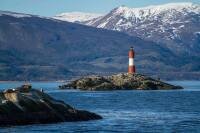
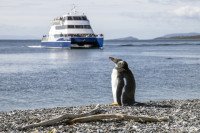
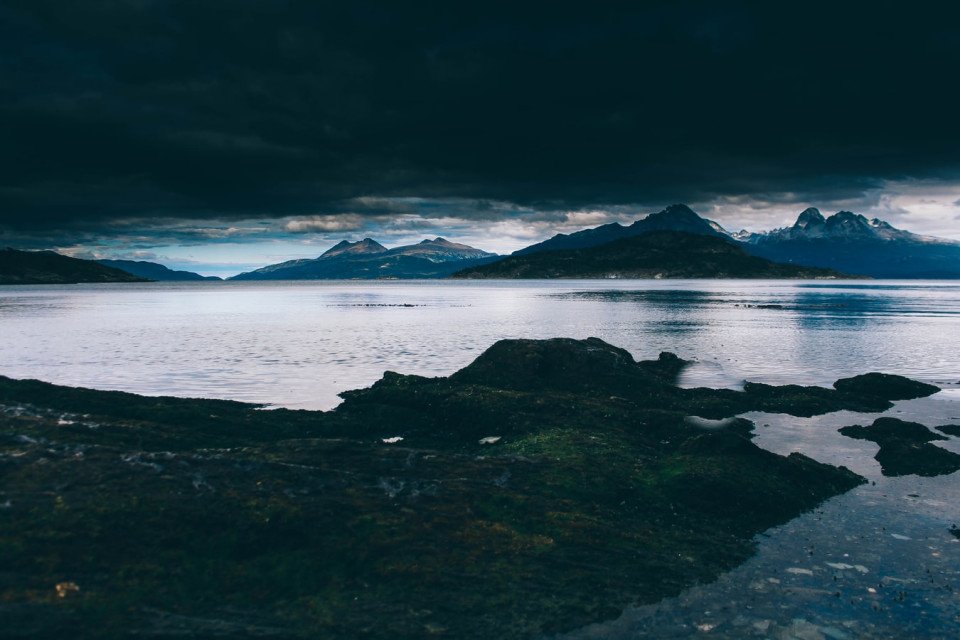
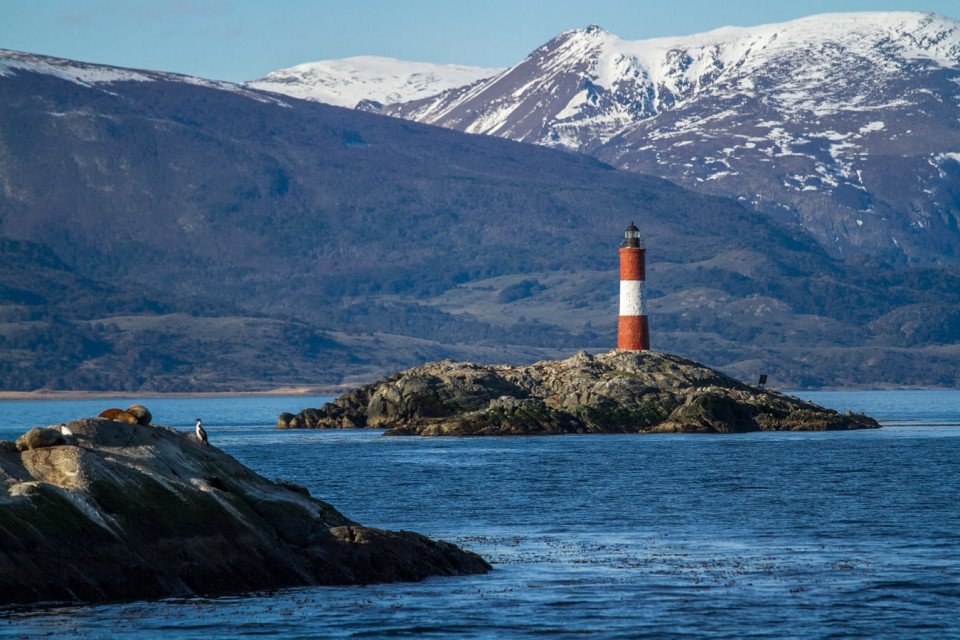
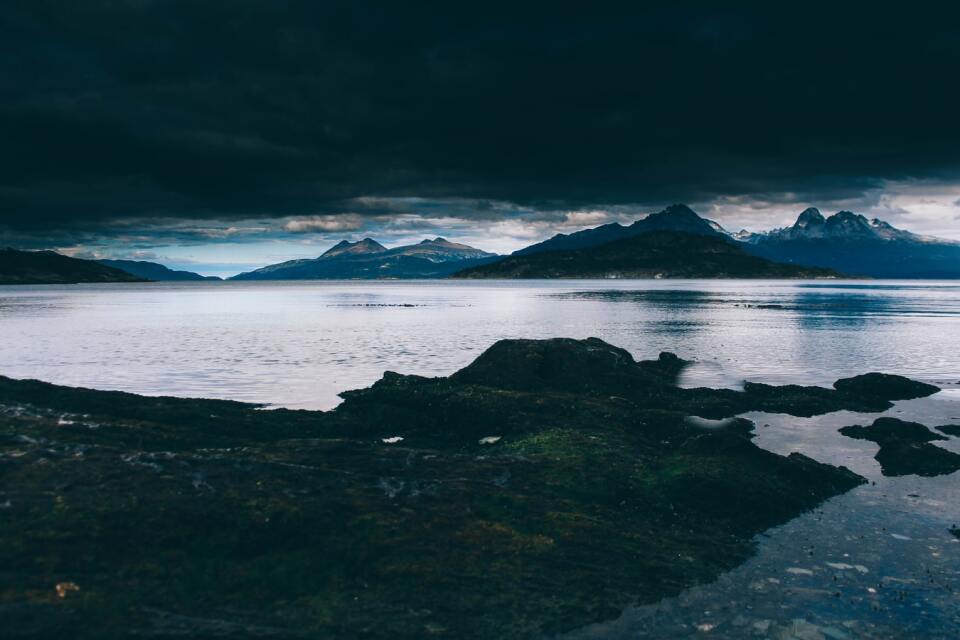
At 55 degrees latitude south, Ushuaia (pronounced oo-swy-ah) is closer to the South Pole than to Argentina's northern border with Bolivia. It is the capital and tourism base for Tierra del Fuego, the island at the southernmost tip of Argentina.Although its stark physical beauty is striking... At 55 degrees latitude south, Ushuaia (pronounced oo-swy-ah) is closer to the South Pole than to Argentina's northern border with Bolivia. It is the capital and tourism base for Tierra del Fuego, the island at the southernmost tip of Argentina.Although its stark physical beauty is striking, Tierra del Fuego's historical allure is based more on its mythical past than on rugged reality. The island was inhabited for 6,000 years by Yámana, Haush, Selk'nam, and Alakaluf Indians. But in 1902 Argentina, eager to populate Patagonia to bolster its territorial claims, moved to initiate an Ushuaian penal colony, establishing the permanent settlement of its most southern territories and, by implication, everything in between.When the prison closed in 1947, Ushuaia had a population of about 3,000, made up mainly of former inmates and prison staff. Today the Indians of Darwin's "missing link" theory are long gone—wiped out by diseases brought by settlers and by indifference to their plight—and the 60,000 residents of Ushuaia are hitching their star to tourism.The city rightly (if perhaps too loudly) promotes itself as the southernmost city in the world (Puerto Williams, a few miles south on the Chilean side of the Beagle Channel, is a small town). You can make your way to the tourism office to get your clichéd, but oh-so-necessary, "Southernmost City in the World" passport stamp. Ushuaia feels like a frontier boomtown, at heart still a rugged, weather-beaten fishing village, but exhibiting the frayed edges of a city that quadrupled in size in the '70s and '80s and just keeps growing. Unpaved portions of Ruta 3, the last stretch of the Pan-American Highway, which connects Alaska to Tierra del Fuego, are finally being paved. The summer months (December through March) draw more than 120,000 visitors, and dozens of cruise ships. The city is trying to extend those visits with events like March's Marathon at the End of the World and by increasing the gamut of winter activities buoyed by the excellent snow conditions.A terrific trail winds through the town up to the Martial Glacier, where a ski lift can help cut down a steep kilometer of your journey. The chaotic and contradictory urban landscape includes a handful of luxury hotels amid the concrete of public housing projects. Scores of "sled houses" (wooden shacks) sit precariously on upright piers, ready for speedy displacement to a different site. But there are also many small, picturesque homes with tiny, carefully tended gardens. Many of the newer homes are built in a Swiss-chalet style, reinforcing the idea that this is a town into which tourism has breathed new life. At the same time, the weather-worn pastel colors that dominate the town's landscape remind you that Ushuaia was once just a tiny fishing village, snuggled at the end of the Earth.As you stand on the banks of the Canal Beagle (Beagle Channel) near Ushuaia, the spirit of the farthest corner of the world takes hold. What stands out is the light: at sundown the landscape is cast in a subdued, sensual tone; everything feels closer, softer, and more human in dimension despite the vastness of the setting. The snowcapped mountains reflect the setting sun back onto a stream rolling into the channel, as nearby peaks echo their image—on a windless day—in the still waters.Above the city rise the last mountains of the Andean Cordillera, and just south and west of Ushuaia they finally vanish into the often-stormy sea. Snow whitens the peaks well into summer. Nature is the principal attraction here, with trekking, fishing, horseback riding, wildlife spotting, and sailing among the most rewarding activities, especially in the Parque Nacional Tierra del Fuego (Tierra del Fuego National Park). Read More
Antarctic Experience
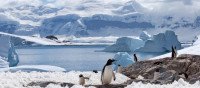
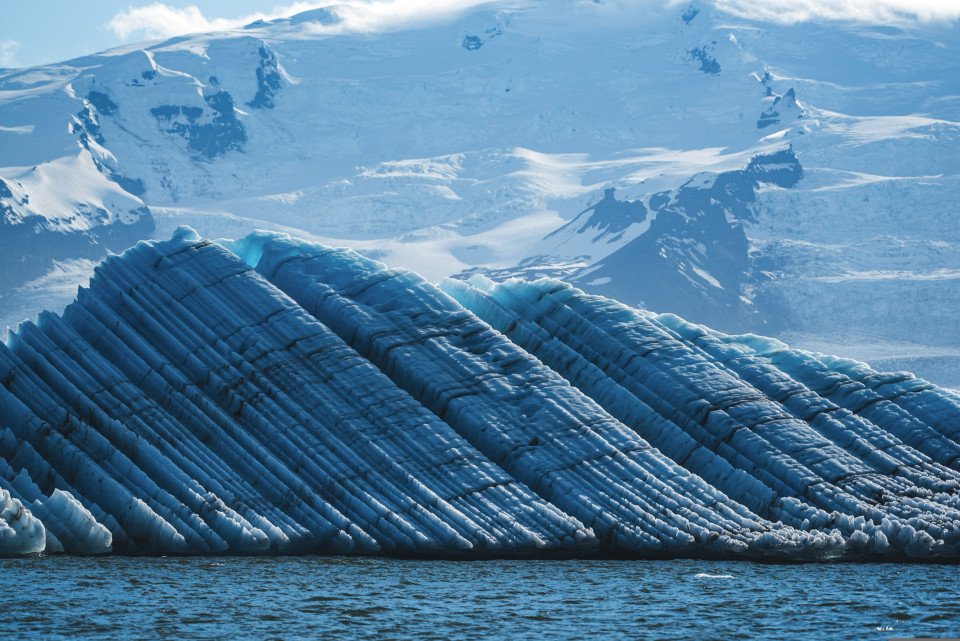
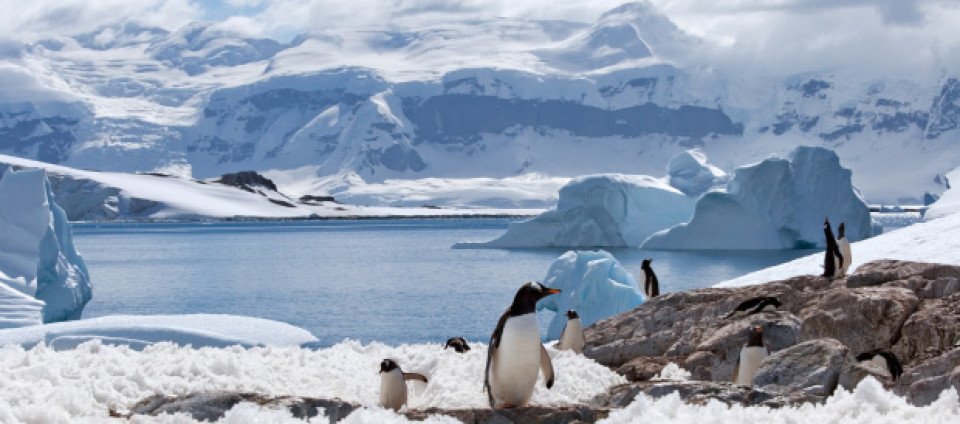
The Antarctic Experience offers a thrilling adventure into one of the planet's most remote and captivating environments. Participants embark on guided expeditions to explore stunning ice formations, observe unique wildlife such as penguins, seals, and seabirds, and learn about the critical... The Antarctic Experience offers a thrilling adventure into one of the planet's most remote and captivating environments. Participants embark on guided expeditions to explore stunning ice formations, observe unique wildlife such as penguins, seals, and seabirds, and learn about the critical role this ecosystem plays in the global climate. Through immersive activities, including kayaking, hiking, and wildlife photography, guests gain a deep appreciation for the harsh beauty of the Antarctic landscape. Educational components focus on climate change and conservation efforts, encouraging a commitment to preserving this fragile environment. Overall, the Antarctic Experience combines adventure, education, and a profound connection to nature, making it an unforgettable journey. Read More
Antarctic Experience
The Antarctic Experience offers a thrilling adventure into one of the planet's most remote and captivating environments. Participants embark on guided expeditions to explore stunning ice formations, observe unique wildlife such as penguins, seals, and seabirds, and learn about the critical... The Antarctic Experience offers a thrilling adventure into one of the planet's most remote and captivating environments. Participants embark on guided expeditions to explore stunning ice formations, observe unique wildlife such as penguins, seals, and seabirds, and learn about the critical role this ecosystem plays in the global climate. Through immersive activities, including kayaking, hiking, and wildlife photography, guests gain a deep appreciation for the harsh beauty of the Antarctic landscape. Educational components focus on climate change and conservation efforts, encouraging a commitment to preserving this fragile environment. Overall, the Antarctic Experience combines adventure, education, and a profound connection to nature, making it an unforgettable journey. Read More
Antarctic Experience
The Antarctic Experience offers a thrilling adventure into one of the planet's most remote and captivating environments. Participants embark on guided expeditions to explore stunning ice formations, observe unique wildlife such as penguins, seals, and seabirds, and learn about the critical... The Antarctic Experience offers a thrilling adventure into one of the planet's most remote and captivating environments. Participants embark on guided expeditions to explore stunning ice formations, observe unique wildlife such as penguins, seals, and seabirds, and learn about the critical role this ecosystem plays in the global climate. Through immersive activities, including kayaking, hiking, and wildlife photography, guests gain a deep appreciation for the harsh beauty of the Antarctic landscape. Educational components focus on climate change and conservation efforts, encouraging a commitment to preserving this fragile environment. Overall, the Antarctic Experience combines adventure, education, and a profound connection to nature, making it an unforgettable journey. Read More
Antarctic Experience
The Antarctic Experience offers a thrilling adventure into one of the planet's most remote and captivating environments. Participants embark on guided expeditions to explore stunning ice formations, observe unique wildlife such as penguins, seals, and seabirds, and learn about the critical... The Antarctic Experience offers a thrilling adventure into one of the planet's most remote and captivating environments. Participants embark on guided expeditions to explore stunning ice formations, observe unique wildlife such as penguins, seals, and seabirds, and learn about the critical role this ecosystem plays in the global climate. Through immersive activities, including kayaking, hiking, and wildlife photography, guests gain a deep appreciation for the harsh beauty of the Antarctic landscape. Educational components focus on climate change and conservation efforts, encouraging a commitment to preserving this fragile environment. Overall, the Antarctic Experience combines adventure, education, and a profound connection to nature, making it an unforgettable journey. Read More
Antarctic Experience
The Antarctic Experience offers a thrilling adventure into one of the planet's most remote and captivating environments. Participants embark on guided expeditions to explore stunning ice formations, observe unique wildlife such as penguins, seals, and seabirds, and learn about the critical... The Antarctic Experience offers a thrilling adventure into one of the planet's most remote and captivating environments. Participants embark on guided expeditions to explore stunning ice formations, observe unique wildlife such as penguins, seals, and seabirds, and learn about the critical role this ecosystem plays in the global climate. Through immersive activities, including kayaking, hiking, and wildlife photography, guests gain a deep appreciation for the harsh beauty of the Antarctic landscape. Educational components focus on climate change and conservation efforts, encouraging a commitment to preserving this fragile environment. Overall, the Antarctic Experience combines adventure, education, and a profound connection to nature, making it an unforgettable journey. Read More
Port Stanley
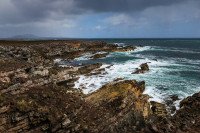
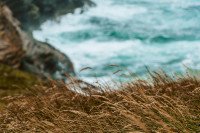
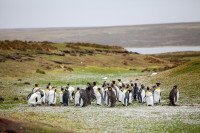
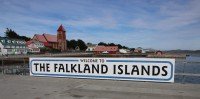
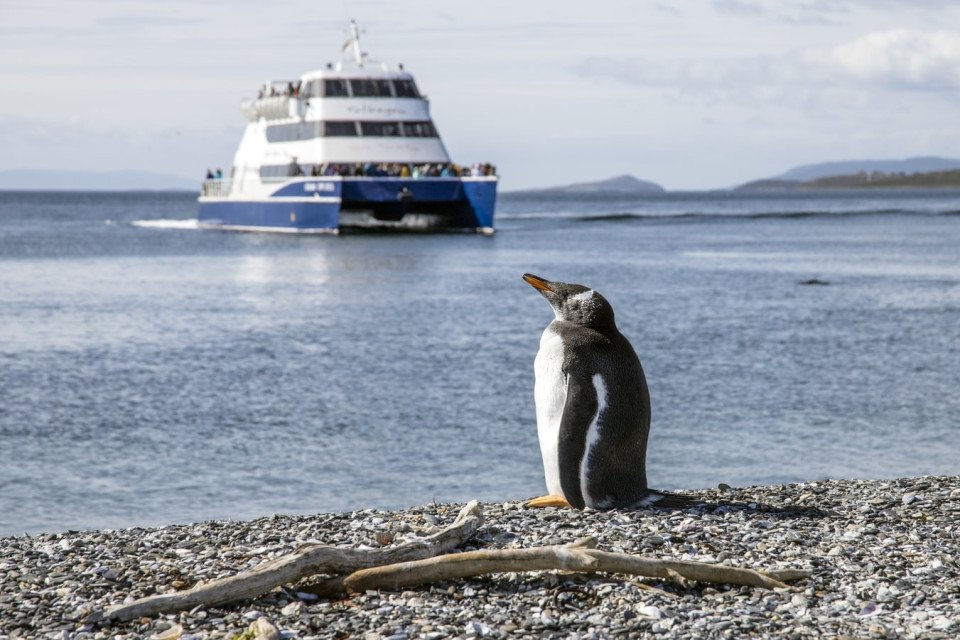
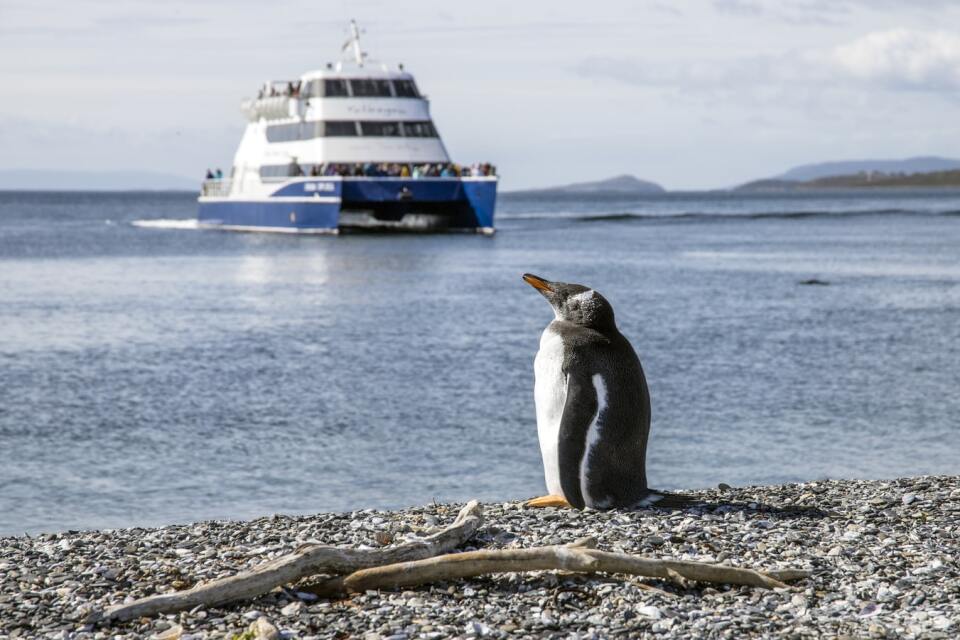
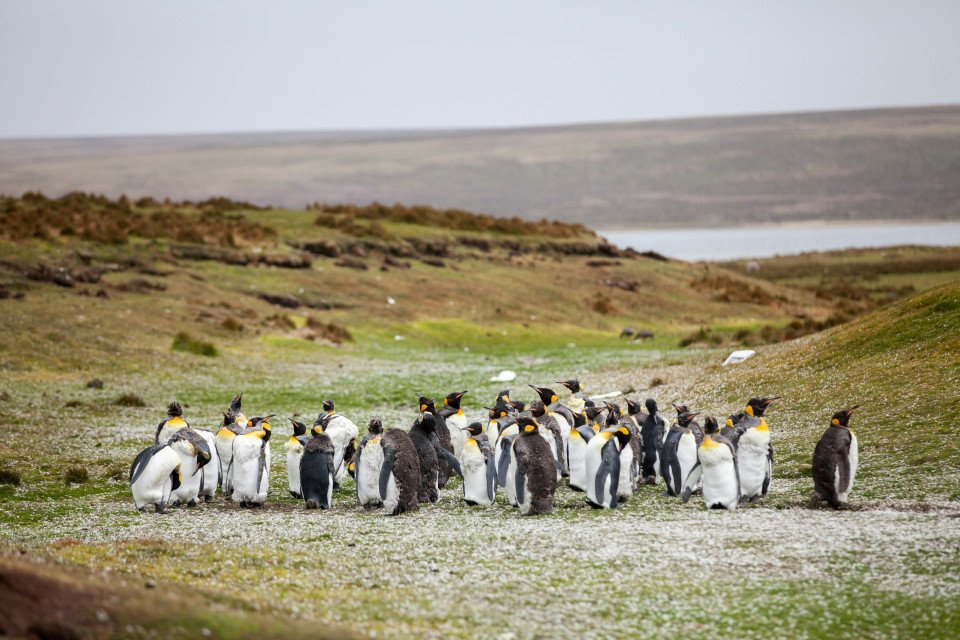
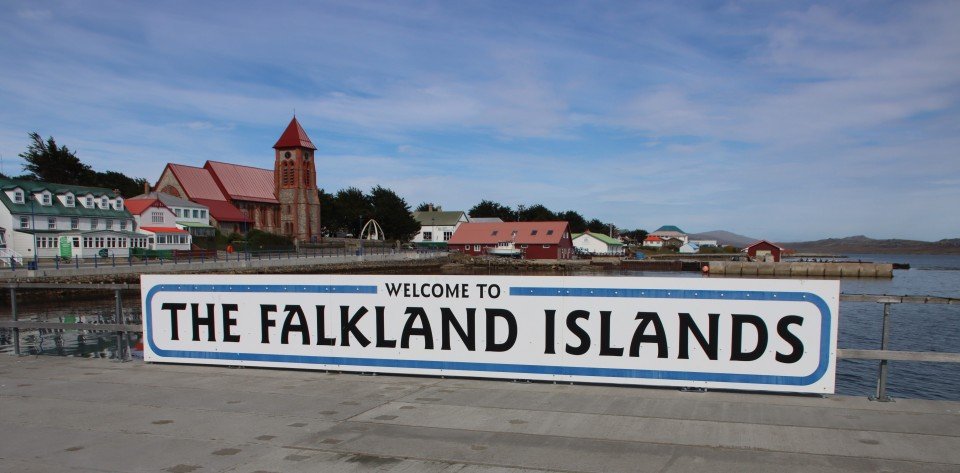
Tiny Stanley, capital of the Falklands, seems in many ways like a British village fallen out of the sky. Many homes are painted in bright colours, adding visual appeal to this distant outpost. Not far offshore, the wreck of the Lady Elizabeth, is one of the many vessels remaining as a sile... Tiny Stanley, capital of the Falklands, seems in many ways like a British village fallen out of the sky. Many homes are painted in bright colours, adding visual appeal to this distant outpost. Not far offshore, the wreck of the Lady Elizabeth, is one of the many vessels remaining as a silent testimonial to the region's frequent harsh weather conditions.The islands, also known by their Spanish name of Islas Malvinas, are home to arguably more tuxedo-clad inhabitants of the penguin variety than human residents. Various species, such as Gentoo, Magellanic and the more elusive King penguins, either live here permanently or use the Falklands as a stopover on their migration route. Darwin found the islands' flora and fauna fascinating - no doubt you will, too. Read More
Montevideo
Uruguay’s capital city hugs the eastern bank of the Río de la Plata. A massive coastal promenade (malecón) that passes fine beaches, restaurants, and numerous parks recalls the sunny sophistications of the Mediterranean and is always dotted with Montevideans strolling, exercising, and loun... Uruguay’s capital city hugs the eastern bank of the Río de la Plata. A massive coastal promenade (malecón) that passes fine beaches, restaurants, and numerous parks recalls the sunny sophistications of the Mediterranean and is always dotted with Montevideans strolling, exercising, and lounging along the water. Montevideo has its share of glitzy shopping avenues and modern office buildings, balanced with its historic old city and sumptuous colonial architecture, as well as numerous leafy plazas and parks. It is hard not to draw comparisons to its sister city Buenos Aires across the river, and indeed Montevideo strikes many as a calmer, more manageable incarnation of Argentina's capital.When the weather's good, La Rambla, a 22-km (14-mile) waterfront avenue that links the Old City with the eastern suburbs and changes names about a dozen times, gets packed with fishermen, ice-cream vendors, and joggers. Around sunset, volleyball and soccer games wind down as couples begin to appear for evening strolls. Polls consistently rate Montevideo as having the highest quality of life of any city in Latin America. After one visit here, especially on a lovely summer evening, you probably will agree. Read More
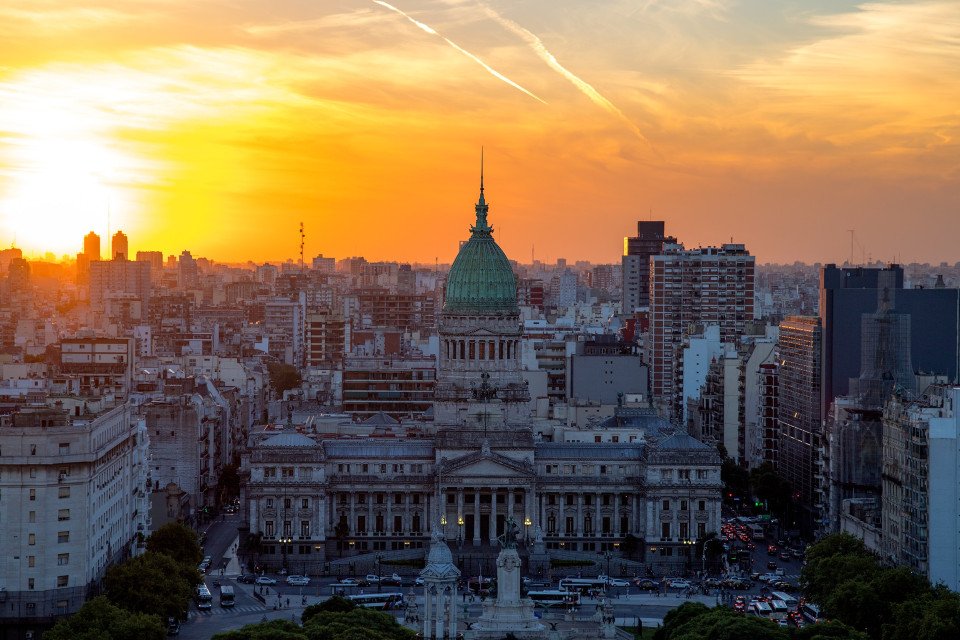
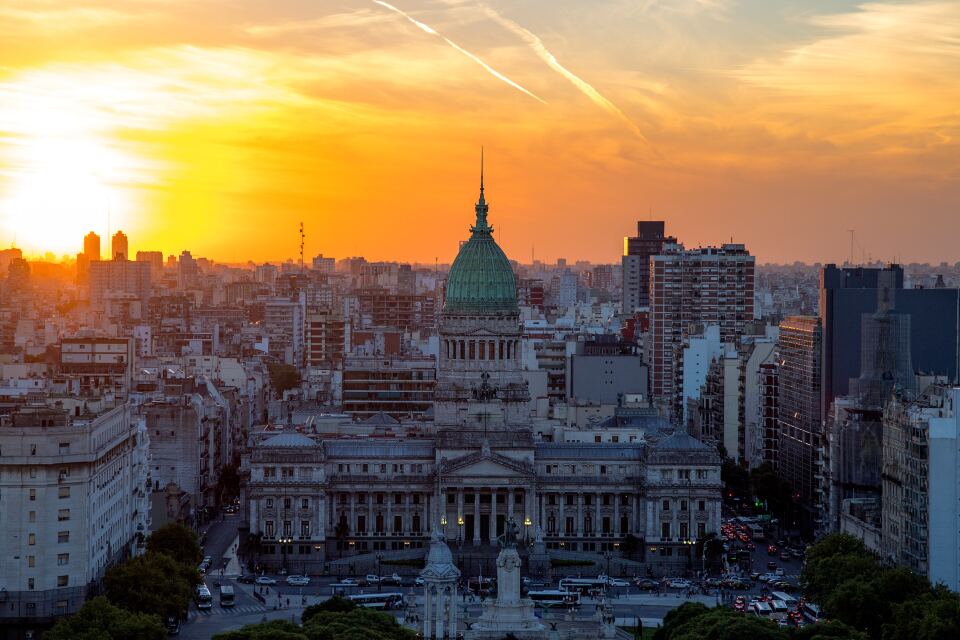
Buenos Aires
Glamorous and gritty, Buenos Aires is two cities in one. What makes Argentina's capital so fascinating is its dual heritage—part European, part Latin American. Plaza de Mayo resembles a grand square in Madrid, and the ornate Teatro Colón would not be out of place in Vienna. But you’ll know... Glamorous and gritty, Buenos Aires is two cities in one. What makes Argentina's capital so fascinating is its dual heritage—part European, part Latin American. Plaza de Mayo resembles a grand square in Madrid, and the ornate Teatro Colón would not be out of place in Vienna. But you’ll know you’re in South America by the leather shoes for sale on cobbled streets and impromptu parades of triumphant soccer fans. Limited-production wines, juicy steaks, and ice cream in countless flavors are among the old-world imports the city has perfected. Read More
Buenos Aires
Glamorous and gritty, Buenos Aires is two cities in one. What makes Argentina's capital so fascinating is its dual heritage—part European, part Latin American. Plaza de Mayo resembles a grand square in Madrid, and the ornate Teatro Colón would not be out of place in Vienna. But you’ll know... Glamorous and gritty, Buenos Aires is two cities in one. What makes Argentina's capital so fascinating is its dual heritage—part European, part Latin American. Plaza de Mayo resembles a grand square in Madrid, and the ornate Teatro Colón would not be out of place in Vienna. But you’ll know you’re in South America by the leather shoes for sale on cobbled streets and impromptu parades of triumphant soccer fans. Limited-production wines, juicy steaks, and ice cream in countless flavors are among the old-world imports the city has perfected. Read More
Tristan da Cunha
For the adventurous and fit Jacobs Ladder could be of interest: the ladder actually is an inclined plane with 699 steps (and 600ft). For connoisseurs a visit to the St Helena Distillery is a must: names like White Lion Rum, Midnight Mist coffee liqueur and Juniper flavoured gin entice to s... For the adventurous and fit Jacobs Ladder could be of interest: the ladder actually is an inclined plane with 699 steps (and 600ft). For connoisseurs a visit to the St Helena Distillery is a must: names like White Lion Rum, Midnight Mist coffee liqueur and Juniper flavoured gin entice to see how they are made –and perhaps taste them. Read More
Nightingale Islands
Nightingale Island is an active volcano and one of three islands in the extremes of the South Atlantic Ocean known as the Nightingale Islands falling within the Tristan da Cunha group. The three islands are administered by the United Kingdom and are visited for scientific research purposes... Nightingale Island is an active volcano and one of three islands in the extremes of the South Atlantic Ocean known as the Nightingale Islands falling within the Tristan da Cunha group. The three islands are administered by the United Kingdom and are visited for scientific research purposes and little else. This means the magnificent wildlife with an estimated one million seabirds, in addition to unusual flora, is all unspoiled by people. Nightingale Island is also a protected wildlife reserve and World Heritage Site. Nightingale has two peaks on its north end and the rest of the island is ringed by cliffs and sea caves, and is fringed with kelp beds. The sea caves have been said to hide pirate treasure with a fortune in Spanish doubloons and pieces-of-eight hidden here for safekeeping. However, no recovery of this booty has ever been documented. Read More
Richards Bay
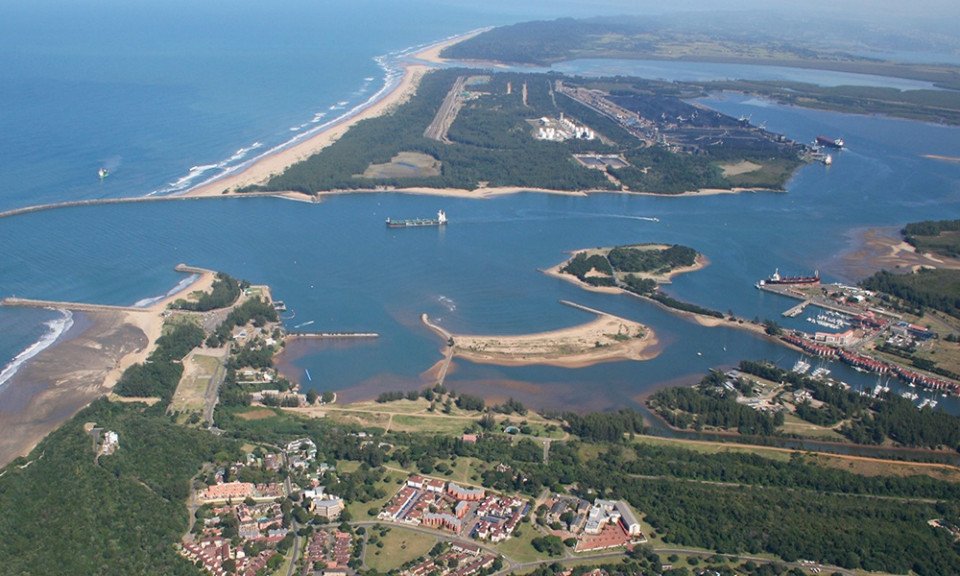
South Africa’s largest harbour is located on a lagoon on the Mhlatuze River on the northern coast of KwaZulu-Natal and takes its name from Admiral Sir F W Richards who sailed into the bay to deliver supplies to the troops during the Anglo/Zulu War of 1879. The Richards Bay lagoon was decla... South Africa’s largest harbour is located on a lagoon on the Mhlatuze River on the northern coast of KwaZulu-Natal and takes its name from Admiral Sir F W Richards who sailed into the bay to deliver supplies to the troops during the Anglo/Zulu War of 1879. The Richards Bay lagoon was declared a game reserve in 1935, when conservationists objected to the growing industrialisation here. This however did nothing to halt development. Instead a compromise was agreed and a wall was built across the length of the bay to divide the lagoon. The north side became the seaport and the south remained a sanctuary for waterfowl and wildlife. The lagoon is famous for being the site where the longest crocodile ever recorded was shot by hunter John Dunn - it measured over 20 feet. The town was built on the shores of the lagoon in 1954 and although it was only a small fishing community in the 1960s, the development of the deep water harbour and railway in 1976 prompted the growth of the much larger township you see today. The bustling town is now a popular holiday destination with its unspoilt beaches at the edge of the Indian Ocean, year-round sunshine and excellent recreational facilities including surfing and fishing. It is also an excellent gateway to Zululand and the KwaZulu wildlife reserves. Richards Bay has recently undergone a major renovation that has given the town a Caribbean feel. Read More
Maputo
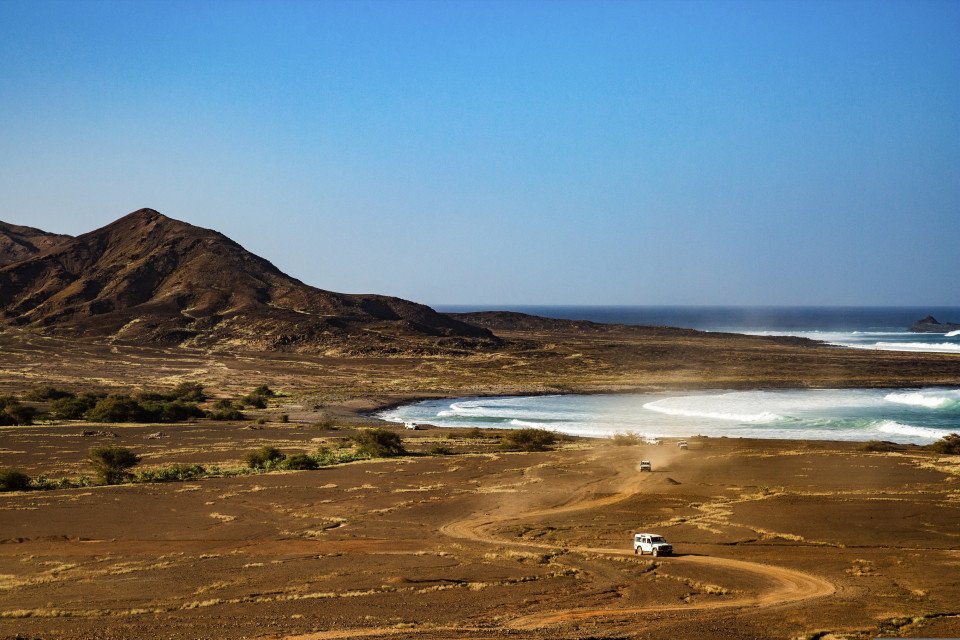
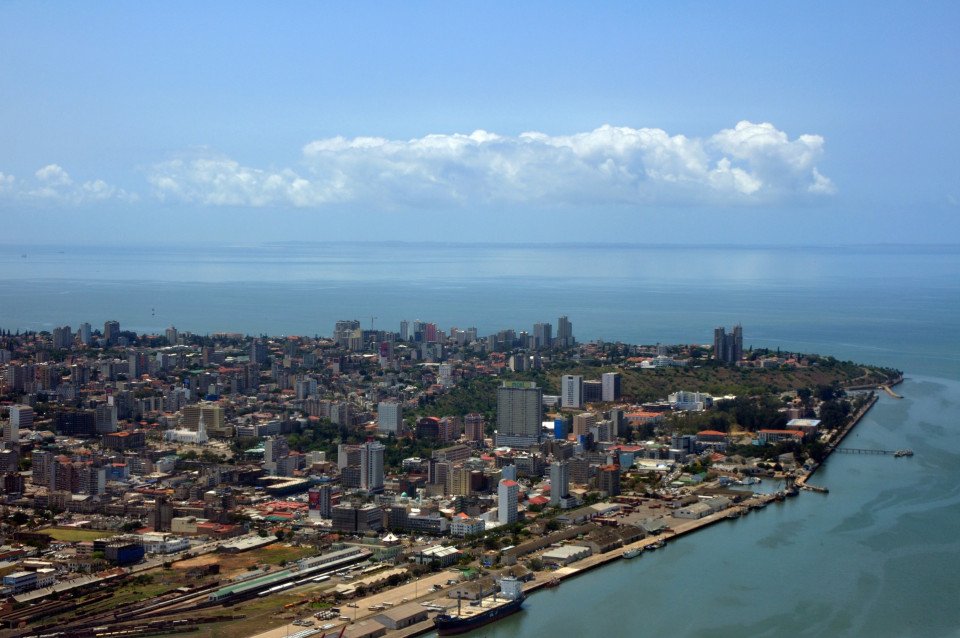
The city of Maputo was founded towards the end of the 18th century, and is influenced by a variety of cultures including Bantu, Arabian and Portuguese. Surrounded by beautiful colonial architecture and stunning natural scenery, it is an ideal base from which to explore the region. The scar... The city of Maputo was founded towards the end of the 18th century, and is influenced by a variety of cultures including Bantu, Arabian and Portuguese. Surrounded by beautiful colonial architecture and stunning natural scenery, it is an ideal base from which to explore the region. The scars from past wars and conflict are still evident, but the city is clearly regenerating, and the original beauty and cultural attractions of the area can easily be appreciated by visitors. Read More
Durban
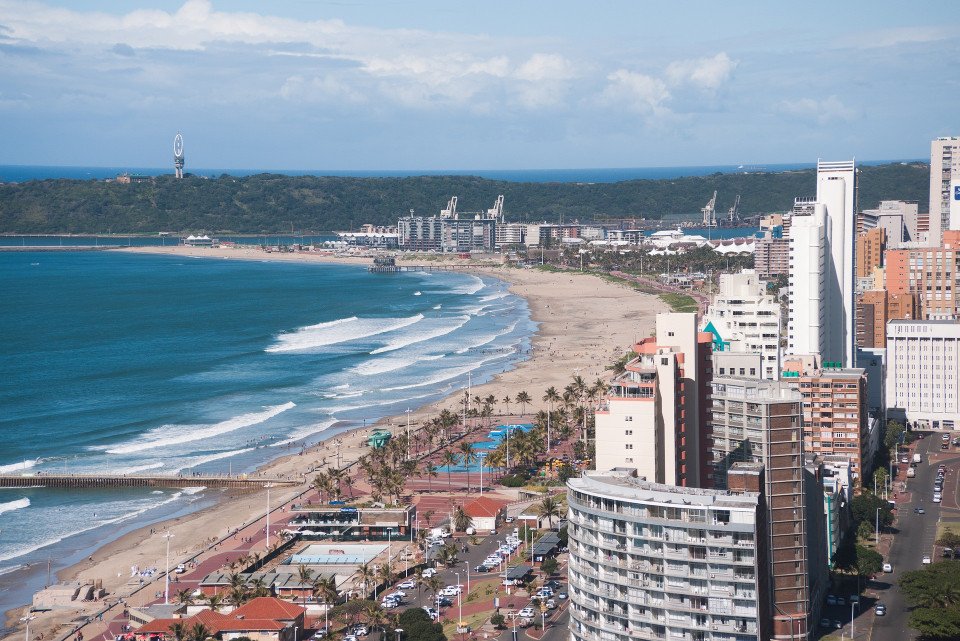
Durban, a glistening jewel on the south-east coast of Africa, is the third largest city in South Africa and the major city of KwaZulu-Natal. It has been a centre of sea trade since before colonisation and now has a flourishing artistic centre, which perfectly complements the vibrant market... Durban, a glistening jewel on the south-east coast of Africa, is the third largest city in South Africa and the major city of KwaZulu-Natal. It has been a centre of sea trade since before colonisation and now has a flourishing artistic centre, which perfectly complements the vibrant markets and rich cultures of the city. Durban’s port is a natural half-moon harbour lined with white sand and azure water, punctuated by the port’s many piers which reach into the water like the leaves of a fan. The beaches of Durban’s famous Golden Mile stretch along the harbour and are popular all year round, as travellers and locals alike enjoy Durban’s warm, humid summers and mild, dry winters. Read More
Gqeberha (ex Port Elizabeth)
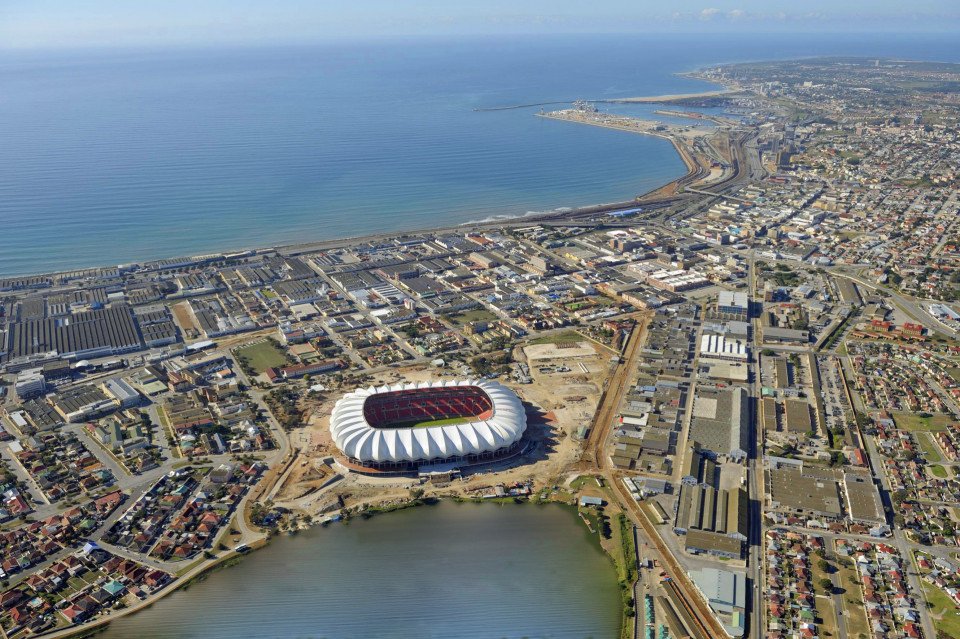
Originally the home of the San and Khoisan people and later the Xhosa tribe, the area now known as Gqeberha (previously Port Elizabeth) became a landing place for passing European ships after Portuguese navigator Bartolomew Diaz arrived in Algoa Bay in 1488. As part of the Cape Colony, the... Originally the home of the San and Khoisan people and later the Xhosa tribe, the area now known as Gqeberha (previously Port Elizabeth) became a landing place for passing European ships after Portuguese navigator Bartolomew Diaz arrived in Algoa Bay in 1488. As part of the Cape Colony, the British occupied the area during the Napoleonic Wars and it was they who built Fort Frederick here in 1799. Twenty-one years later 4,000 settlers arrived, becoming the first permanent British residents of South Africa and Gqeberha. Sir Rufane Donkin, Acting Governor of the Cape Colony, founded Port Elizabeth, naming the settlement after his late wife. The town underwent rapid growth after 1873 following the construction of the railway to Kimberley, and is now one of the country’s major seaports. Like most South African cities, miles of beautiful coastline surround Gqeberha. Algoa Bay combines warm water and fair breezes, making it a mecca for swimmers and water sports enthusiasts. Those interested in history can follow the Donkin Heritage Trail, past a succession of Victorian and Edwardian town houses, trim gardens and neo-Gothic churches. Just outside the town are a number of game reserves, including the famous Addo Elephant National Park. Read More
Mossel Bay
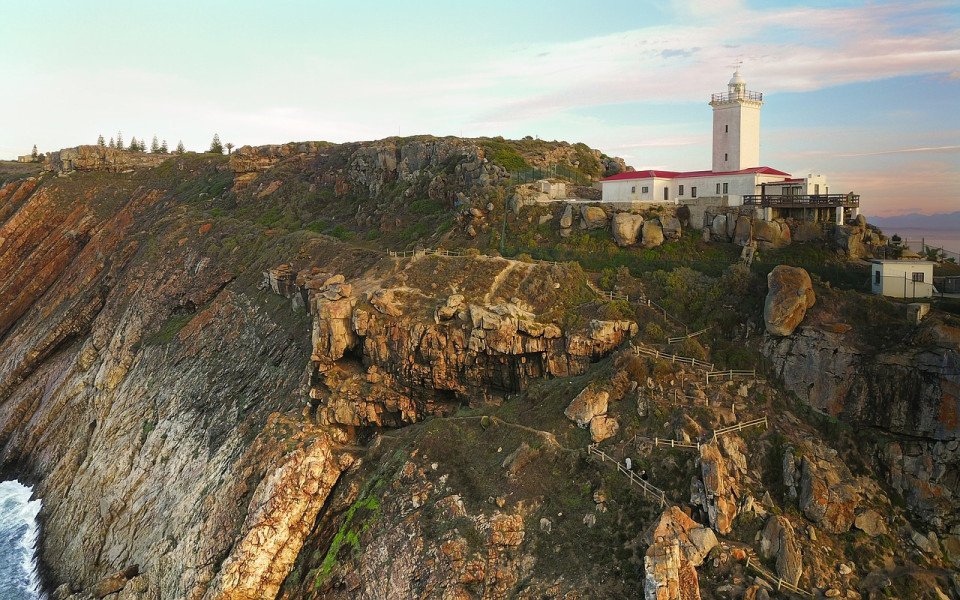
Mossel Bay is a picturesque coastal town located along the Garden Route in South Africa. Known for its stunning beaches, mild climate, and rich maritime history, it is a popular destination for both locals and tourists. The town features a variety of attractions, including the famous Cape... Mossel Bay is a picturesque coastal town located along the Garden Route in South Africa. Known for its stunning beaches, mild climate, and rich maritime history, it is a popular destination for both locals and tourists. The town features a variety of attractions, including the famous Cape St. Blaize Lighthouse, which offers breathtaking views of the ocean and surrounding coastline. Mossel Bay is also home to the Dias Museum Complex, where visitors can learn about the town’s history, including its significance as a stopping point for early explorers. Outdoor enthusiasts can enjoy a range of activities such as whale watching, hiking along scenic trails, and exploring nearby nature reserves. With its charming atmosphere, beautiful landscapes, and vibrant local culture, Mossel Bay is an ideal destination for those seeking relaxation and adventure along the southern coast of South Africa. Read More
Cape Town
Sometimes referred to as the Mother City, Cape Town is the most famous port in South Africa and is influenced by many different cultures, including Dutch, British and Malay. The port was founded in 1652 by Dutch explorer Jan Van Riebeeck, and evidence of Dutch colonial rule remains through... Sometimes referred to as the Mother City, Cape Town is the most famous port in South Africa and is influenced by many different cultures, including Dutch, British and Malay. The port was founded in 1652 by Dutch explorer Jan Van Riebeeck, and evidence of Dutch colonial rule remains throughout the region. The port is located on one of the world's most important trade routes, and is mainly a container port and handler of fresh fruit. Fishing is another vital industry, with large Asian fishing fleets using Cape Town as a logistical repair base for much of the year. The region is famous for its natural beauty, with the imposing Table Mountain and Lions Head, as well as the many nature reserves and botanical gardens such as Kirstenbosch which boasts an extensive range of indigenous plant life, including proteas and ferns. Cape Town's weather is mercurial, and can change from beautiful sunshine to dramatic thunderstorms within a short period. A local adage is that in Cape Town you can experience four seasons in one day. Read More
Cape Town
Sometimes referred to as the Mother City, Cape Town is the most famous port in South Africa and is influenced by many different cultures, including Dutch, British and Malay. The port was founded in 1652 by Dutch explorer Jan Van Riebeeck, and evidence of Dutch colonial rule remains through... Sometimes referred to as the Mother City, Cape Town is the most famous port in South Africa and is influenced by many different cultures, including Dutch, British and Malay. The port was founded in 1652 by Dutch explorer Jan Van Riebeeck, and evidence of Dutch colonial rule remains throughout the region. The port is located on one of the world's most important trade routes, and is mainly a container port and handler of fresh fruit. Fishing is another vital industry, with large Asian fishing fleets using Cape Town as a logistical repair base for much of the year. The region is famous for its natural beauty, with the imposing Table Mountain and Lions Head, as well as the many nature reserves and botanical gardens such as Kirstenbosch which boasts an extensive range of indigenous plant life, including proteas and ferns. Cape Town's weather is mercurial, and can change from beautiful sunshine to dramatic thunderstorms within a short period. A local adage is that in Cape Town you can experience four seasons in one day. Read More
Miami, Florida
At Sea
At Sea
At Sea
Fuerte Amador
Fuerte Amador
At Sea
At Sea
Guayaquil
At Sea
Salaverry
Callao
Callao
Callao
General San Martin
At Sea
At Sea
At Sea
At Sea
At Sea
Hangaroa, Easter Island
Hangaroa, Easter Island
At Sea
At Sea
At Sea
At Sea
San Juan Bautista (Robinson Crusoe Island)
Santa Clara Island
At Sea
Valparaiso
At Sea
Puerto Montt
Castro
Puerto Chacabuco
At Sea
Scenic Cruising
PIO X Glacier
Scenic Cruising
El Brujo Glacier
Punta Arenas
At Sea
Garibaldi Glacier
Ushuaia
At Sea
At Sea
Antarctic Experience
Antarctic Experience
Antarctic Experience
Antarctic Experience
Antarctic Experience
At Sea
At Sea
Falkland Islands
Falkland Islands
Port Stanley
At Sea
At Sea
At Sea
Montevideo
Buenos Aires
Buenos Aires
At Sea
At Sea
At Sea
At Sea
At Sea
At Sea
Tristan da Cunha
Nightingale Islands
At Sea
At Sea
At Sea
At Sea
At Sea
At Sea
Richards Bay
Maputo
At Sea
Durban
At Sea
Gqeberha (ex Port Elizabeth)
Mossel Bay
At Sea
Cape Town
Cape Town
Miami, Florida
Miami, Florida
Miami is one of the world’s most popular holiday spots. It has so much to offer; from its countless beach areas, to culture and museums, from spa and shopping days out, to endless cuban restaurants and cafes. Miami is a multicultural city that has something to offer to everyone.
At Sea
At Sea
At Sea
Fuerte Amador
Fuerte Amador
At Sea
At Sea
Guayaquil
Guayaquil
The second major jumping off point for the Galapagos Islands after Quito, this is a little city with a big heart. A sea port first and foremost, the city’s personality has been founded on that, and all the better it is for it too. Almost Caribbean in feeling, the clement climate coupled wi... The second major jumping off point for the Galapagos Islands after Quito, this is a little city with a big heart. A sea port first and foremost, the city’s personality has been founded on that, and all the better it is for it too. Almost Caribbean in feeling, the clement climate coupled with the intermingling rhythms floating from the windows and abundance of fresh seafood make this a very tropical destination. Once not even considered by the travel books as a potential destination in its own right, the city has undergone something of a resurgence in the past few years. Proud Guayaquileños will not hestitate to point out the Malecón or the exciting new riverfront promenade, once a no-go area after dark, now happily (and hippily) lined with museums, restaurants, shops, and ongoing entertainment. The new airport and urban transportation network are also lauded to the happy tourists who find themselves here. As the largest and most populous city in Ecuador as well as being the commercial centre, it would only be natural that the city would have some kind of modern architecture, but it is the colourful favelas, or to use their real name guasmos, that cling to the side of the hillside like limpets that really catch your eye. A blend of old and new, the first inhabitants can be traced back to 1948 when the government cleared the area for affordable housing, these shanty towns are witness to the social and political particularities that Guayaquil has faced in the past. Read More
At Sea
Salaverry
Salaverry
Located about nine hours north of Lima, Trujillo was founded in 1534 by the Spanish conquistador Pizarro. The attractive, colonial city retains much of its original charm with elegant casonas, or mansions, lining the streets. Nearby is Chan Chan, the ancient capital of the Chimú, a local I... Located about nine hours north of Lima, Trujillo was founded in 1534 by the Spanish conquistador Pizarro. The attractive, colonial city retains much of its original charm with elegant casonas, or mansions, lining the streets. Nearby is Chan Chan, the ancient capital of the Chimú, a local Indian tribe who came under the rule of the Incas. The area has several other Chimú sites, some dating back about 1500 years. The region is also famous as the home of the Peruvian Paso horses, as well as excellent beaches offering world-class surfing and other water sports. Read More
Callao
Callao
When people discuss great South American cities, Lima is often overlooked. But Peru's capital can hold its own against its neighbors. It has an oceanfront setting, colonial-era splendor, sophisticated dining, and nonstop nightlife.It's true that the city—clogged with traffic and choked wit... When people discuss great South American cities, Lima is often overlooked. But Peru's capital can hold its own against its neighbors. It has an oceanfront setting, colonial-era splendor, sophisticated dining, and nonstop nightlife.It's true that the city—clogged with traffic and choked with fumes—doesn't make a good first impression, especially since the airport is in an industrial neighborhood. But wander around the regal edifices surrounding the Plaza de Armas, among the gnarled olive trees of San Isidro's Parque El Olivar, or along the winding lanes in the coastal community of Barranco, and you'll find yourself charmed.In 1535 Francisco Pizarro found the perfect place for the capital of Spain's colonial empire. On a natural port, the so-called Ciudad de los Reyes (City of Kings) allowed Spain to ship home all the gold the conquistador plundered from the Inca. Lima served as the capital of Spain's South American empire for 300 years, and it's safe to say that no other colonial city enjoyed such power and prestige during this period.When Peru declared its independence from Spain in 1821, the declaration was read in the square that Pizarro had so carefully designed. Many of the colonial-era buildings around the Plaza de Armas are standing today. Walk a few blocks in any direction for churches and elegant houses that reveal just how wealthy this city once was. But the poor state of most buildings attests to the fact that the country's wealthy families have moved to neighborhoods to the south over the past century.The walls that surrounded the city were demolished in 1870, making way for unprecedented growth. A former hacienda became the graceful residential neighborhood of San Isidro. In the early 1920s the construction of tree-lined Avenida Arequipa heralded the development of neighborhoods such as bustling Miraflores and bohemian Barranco.Almost a third of the country's population of 29 million lives in the metropolitan area, many of them in relatively poor conos: newer neighborhoods on the outskirts of the city. Most residents of those neighborhoods moved there from mountain villages during the political violence and poverty that marked the 1980s and ’90s, when crime increased dramatically. During the past decade the country has enjoyed peace and steady economic growth, which have been accompanied by many improvements and refurbishment in the city. Residents who used to steer clear of the historic center now stroll along its streets. And many travelers who once would have avoided the city altogether now plan to spend a day here and end up staying two or three. Read More
Callao
Callao
When people discuss great South American cities, Lima is often overlooked. But Peru's capital can hold its own against its neighbors. It has an oceanfront setting, colonial-era splendor, sophisticated dining, and nonstop nightlife.It's true that the city—clogged with traffic and choked wit... When people discuss great South American cities, Lima is often overlooked. But Peru's capital can hold its own against its neighbors. It has an oceanfront setting, colonial-era splendor, sophisticated dining, and nonstop nightlife.It's true that the city—clogged with traffic and choked with fumes—doesn't make a good first impression, especially since the airport is in an industrial neighborhood. But wander around the regal edifices surrounding the Plaza de Armas, among the gnarled olive trees of San Isidro's Parque El Olivar, or along the winding lanes in the coastal community of Barranco, and you'll find yourself charmed.In 1535 Francisco Pizarro found the perfect place for the capital of Spain's colonial empire. On a natural port, the so-called Ciudad de los Reyes (City of Kings) allowed Spain to ship home all the gold the conquistador plundered from the Inca. Lima served as the capital of Spain's South American empire for 300 years, and it's safe to say that no other colonial city enjoyed such power and prestige during this period.When Peru declared its independence from Spain in 1821, the declaration was read in the square that Pizarro had so carefully designed. Many of the colonial-era buildings around the Plaza de Armas are standing today. Walk a few blocks in any direction for churches and elegant houses that reveal just how wealthy this city once was. But the poor state of most buildings attests to the fact that the country's wealthy families have moved to neighborhoods to the south over the past century.The walls that surrounded the city were demolished in 1870, making way for unprecedented growth. A former hacienda became the graceful residential neighborhood of San Isidro. In the early 1920s the construction of tree-lined Avenida Arequipa heralded the development of neighborhoods such as bustling Miraflores and bohemian Barranco.Almost a third of the country's population of 29 million lives in the metropolitan area, many of them in relatively poor conos: newer neighborhoods on the outskirts of the city. Most residents of those neighborhoods moved there from mountain villages during the political violence and poverty that marked the 1980s and ’90s, when crime increased dramatically. During the past decade the country has enjoyed peace and steady economic growth, which have been accompanied by many improvements and refurbishment in the city. Residents who used to steer clear of the historic center now stroll along its streets. And many travelers who once would have avoided the city altogether now plan to spend a day here and end up staying two or three. Read More
Callao
Callao
When people discuss great South American cities, Lima is often overlooked. But Peru's capital can hold its own against its neighbors. It has an oceanfront setting, colonial-era splendor, sophisticated dining, and nonstop nightlife.It's true that the city—clogged with traffic and choked wit... When people discuss great South American cities, Lima is often overlooked. But Peru's capital can hold its own against its neighbors. It has an oceanfront setting, colonial-era splendor, sophisticated dining, and nonstop nightlife.It's true that the city—clogged with traffic and choked with fumes—doesn't make a good first impression, especially since the airport is in an industrial neighborhood. But wander around the regal edifices surrounding the Plaza de Armas, among the gnarled olive trees of San Isidro's Parque El Olivar, or along the winding lanes in the coastal community of Barranco, and you'll find yourself charmed.In 1535 Francisco Pizarro found the perfect place for the capital of Spain's colonial empire. On a natural port, the so-called Ciudad de los Reyes (City of Kings) allowed Spain to ship home all the gold the conquistador plundered from the Inca. Lima served as the capital of Spain's South American empire for 300 years, and it's safe to say that no other colonial city enjoyed such power and prestige during this period.When Peru declared its independence from Spain in 1821, the declaration was read in the square that Pizarro had so carefully designed. Many of the colonial-era buildings around the Plaza de Armas are standing today. Walk a few blocks in any direction for churches and elegant houses that reveal just how wealthy this city once was. But the poor state of most buildings attests to the fact that the country's wealthy families have moved to neighborhoods to the south over the past century.The walls that surrounded the city were demolished in 1870, making way for unprecedented growth. A former hacienda became the graceful residential neighborhood of San Isidro. In the early 1920s the construction of tree-lined Avenida Arequipa heralded the development of neighborhoods such as bustling Miraflores and bohemian Barranco.Almost a third of the country's population of 29 million lives in the metropolitan area, many of them in relatively poor conos: newer neighborhoods on the outskirts of the city. Most residents of those neighborhoods moved there from mountain villages during the political violence and poverty that marked the 1980s and ’90s, when crime increased dramatically. During the past decade the country has enjoyed peace and steady economic growth, which have been accompanied by many improvements and refurbishment in the city. Residents who used to steer clear of the historic center now stroll along its streets. And many travelers who once would have avoided the city altogether now plan to spend a day here and end up staying two or three. Read More
General San Martin
At Sea
At Sea
At Sea
At Sea
At Sea
Hangaroa, Easter Island
Hangaroa, Easter Island
Discovered (by the Western world) on Easter Sunday, 1722, Easter Island is a UNESCO World Heritage Site and one of the most isolated places on the face of the Earth, some 2,300 miles from the Chilean mainland. Although more Polynesian than South American in character, the 64-square mile is... Discovered (by the Western world) on Easter Sunday, 1722, Easter Island is a UNESCO World Heritage Site and one of the most isolated places on the face of the Earth, some 2,300 miles from the Chilean mainland. Although more Polynesian than South American in character, the 64-square mile island was annexed by Chile in 1888, and is now famous as the world’s largest ‘open air museum’ on account of the Moai, or human-like stone statues, that can be found on the island. The Moai remain very much a mystery, which archaeologists are still trying to unlock by interpreting an ancient language of the Rapa Nui, which is the key to understanding this culture, and is written on the so called ‘rongo rongo tablets’. The island owes its origin to three volcanoes which erupted some three million years ago: Poike, Rano Kau and Maunga Terevaka. It is not known when or how the island was first populated, but the most credible theory suggests that the Rapa Nui people came from other Pacific islands in the 4th century AD. In addition to the cultural and archaeological interest, there are the beautiful beaches, transparent waters, and coral reefs that might be expected of a Pacific Island. Read More
Hangaroa, Easter Island
Hangaroa, Easter Island
Discovered (by the Western world) on Easter Sunday, 1722, Easter Island is a UNESCO World Heritage Site and one of the most isolated places on the face of the Earth, some 2,300 miles from the Chilean mainland. Although more Polynesian than South American in character, the 64-square mile is... Discovered (by the Western world) on Easter Sunday, 1722, Easter Island is a UNESCO World Heritage Site and one of the most isolated places on the face of the Earth, some 2,300 miles from the Chilean mainland. Although more Polynesian than South American in character, the 64-square mile island was annexed by Chile in 1888, and is now famous as the world’s largest ‘open air museum’ on account of the Moai, or human-like stone statues, that can be found on the island. The Moai remain very much a mystery, which archaeologists are still trying to unlock by interpreting an ancient language of the Rapa Nui, which is the key to understanding this culture, and is written on the so called ‘rongo rongo tablets’. The island owes its origin to three volcanoes which erupted some three million years ago: Poike, Rano Kau and Maunga Terevaka. It is not known when or how the island was first populated, but the most credible theory suggests that the Rapa Nui people came from other Pacific islands in the 4th century AD. In addition to the cultural and archaeological interest, there are the beautiful beaches, transparent waters, and coral reefs that might be expected of a Pacific Island. Read More
At Sea
At Sea
At Sea
At Sea
San Juan Bautista (Robinson Crusoe Island)
San Juan Bautista (Robinson Crusoe Island)
Robinson Crusoe Island is located 600 kilometres off the coast of Chile. The island is a rugged volcanic speck where 70 percent of its plant species are endemic, and is the largest of the Juan Fernandez Islands, a small archipelago that since 1935 is a Chilean National Park which was decla... Robinson Crusoe Island is located 600 kilometres off the coast of Chile. The island is a rugged volcanic speck where 70 percent of its plant species are endemic, and is the largest of the Juan Fernandez Islands, a small archipelago that since 1935 is a Chilean National Park which was declared a UNESCO World Biosphere Reserve. This island has witnessed and played an important role in Chilean and world history. In 1750 the village of San Juan Bautista was founded at Cumberland Bay and by 1779 there were already 7 fortresses bristling with guns. The island’s isolation offered Spain a splendid place for setting up a penal colony, to which high-ranking Chilean patriots were deported in the early 19th century. In 1915, during the First World War, three British ships and a German one, the Dresden, engaged in a sea battle which ended with the scuttling of the German cruiser. Today there are currently around one thousand people living in the archipelago, most of them in the village of San Juan Bautista engaged in fishing for the “pincer-less lobster”, a delicacy in the mainland. Read More
Santa Clara Island
At Sea
Valparaiso
Valparaiso
Valparaíso's dramatic topography—45 cerros, or hills, overlooking the ocean—requires the use of winding pathways and wooden ascensores (funiculars) to get up many of the grades. The slopes are covered by candy-color houses—there are almost no apartments in the city—most of which have exter... Valparaíso's dramatic topography—45 cerros, or hills, overlooking the ocean—requires the use of winding pathways and wooden ascensores (funiculars) to get up many of the grades. The slopes are covered by candy-color houses—there are almost no apartments in the city—most of which have exteriors of corrugated metal peeled from shipping containers decades ago. Valparaíso has served as Santiago's port for centuries. Before the Panama Canal opened, Valparaíso was the busiest port in South America. Harsh realities—changing trade routes, industrial decline—have diminished its importance, but it remains Chile's principal port. Most shops, banks, restaurants, bars, and other businesses cluster along the handful of streets called El Plan (the flat area) that are closest to the shoreline. Porteños (which means "the residents of the port") live in the surrounding hills in an undulating array of colorful abodes. At the top of any of the dozens of stairways, the paseos (promenades) have spectacular views; many are named after prominent Yugoslavian, Basque, and German immigrants. Neighborhoods are named for the hills they cover. With the jumble of power lines overhead and the hundreds of buses that slow down—but never completely stop—to pick up agile riders, it's hard to forget you're in a city. Still, walking is the best way to experience Valparaíso. Be careful where you step, though—locals aren't very conscientious about curbing their dogs. Read More
At Sea
Puerto Montt
Puerto Montt
For most of its history, windy Puerto Montt was the end of the line for just about everyone traveling in the Lake District. Now the Carretera Austral carries on southward, but for all intents and purposes Puerto Montt remains the region's last significant outpost, a provincial city that is... For most of its history, windy Puerto Montt was the end of the line for just about everyone traveling in the Lake District. Now the Carretera Austral carries on southward, but for all intents and purposes Puerto Montt remains the region's last significant outpost, a provincial city that is the hub of local fishing, textile, and tourist activity.Today the city center is full of malls, condos, and office towers—it's the fastest-growing city in Chile—but away from downtown, Puerto Montt consists mainly of low clapboard houses perched above its bay, the Seno de Reloncaví. If it's a sunny day, head east to Playa Pelluco or one of the city's other beaches. If you're more interested in exploring the countryside, drive along the shore for a good view of the surrounding hills. Read More
Castro
Castro
Bright, wooden huts teeter on stilts over Castro's estuary waterfront, inviting you into a patchwork of colour that’s sure to brighten any day. These traditional palafitos give the warmest of welcomes, as you prepare to experience Chile at its most vibrant. Castro has faced something of a... Bright, wooden huts teeter on stilts over Castro's estuary waterfront, inviting you into a patchwork of colour that’s sure to brighten any day. These traditional palafitos give the warmest of welcomes, as you prepare to experience Chile at its most vibrant. Castro has faced something of a tumultuous past, having been hit by a by a succession of earthquakes and fires - the most recent a devastating earthquake in 1960. But this city is incredibly resilient, and today the capital of Chiloe Island makes for a fantastic base for exploring the archipelago that surrounds it. Read More
Puerto Chacabuco
Puerto Chacabuco
The drive from Coyhaique to the town of Puerto Aisén and its port, Chacabuco, is beautiful. The mist hangs low over farmland, adding a dripping somnolence to the scenery. Dozens of waterfalls and rivers wend their way through mountain formations. Yellow poplars surround charming rustic lod... The drive from Coyhaique to the town of Puerto Aisén and its port, Chacabuco, is beautiful. The mist hangs low over farmland, adding a dripping somnolence to the scenery. Dozens of waterfalls and rivers wend their way through mountain formations. Yellow poplars surround charming rustic lodges, and sheep and cattle graze on mossy, vibrant fields. The picture of serenity terminates at the sea, where the nondescript town of Puerto Aisén and its port Chacabuco, Coyhaique's link to the ocean, sits, a conduit to further beauty. This harbor ringed by snowcapped mountains is where you board the ferries that transport you north to Puerto Montt in the Lake District and Quellón on Chiloé, as well as boats headed south to the spectacular Laguna San Rafael. Read More
At Sea
Scenic Cruising
PIO X Glacier
Scenic Cruising
El Brujo Glacier
Punta Arenas
Punta Arenas
Impenetrable forests, impassable mountains, and endless fields of ice define Chilean Patagonia, and meant that the region went largely unexplored until the beginning of the 20th century. Located in the southernmost part of the country, this area is still sparsely inhabited, though you will... Impenetrable forests, impassable mountains, and endless fields of ice define Chilean Patagonia, and meant that the region went largely unexplored until the beginning of the 20th century. Located in the southernmost part of the country, this area is still sparsely inhabited, though you will find a few populated places—like the colorful provincial city of Punta Arenas, which looks like it's about to be swept into the Strait of Magellan. Some unique wildlife, particularly colonies of elephant seals and penguins, call this breathtaking topography home. To the north is Parque Nacional Torres del Paine, the country's most magnificent natural wonder, and whose snow-covered peaks seem to rise vertically from the plains below. The vistas, such as the fantastic Avenue of the Glaciers, are breathtaking; along this stretch of the Beagle Channel, you can pass six tremendous glaciers all within a stone's throw of each other.Cruise SightsPunta Arenas. Founded a little more than 150 years ago, Punta Arenas (Sandy Point) was Chile's first permanent settlement in Patagonia. Plaza Muñoz Gamero, the central square, is surrounded by evidence of that early prosperity: buildings whose then-opulent brick exteriors recall a time when this was one of Chile's wealthiest cities. The newer houses here have colorful tin roofs, best appreciated when seen from a high vantage point such as the Mirador Cerro la Cruz. Although the city as a whole may not be particularly attractive, look for details: the pink-and-white house on a corner, the bay window full of potted plants, parking attendants wearing the regional blue and yellow colors, and schoolchildren in identical naval pea coats that remind you that the city's fate is tied to the sea.The Museo Naval y Marítimo extols Chile's high-seas prowess, particularly concerning Antarctica. Its exhibits are worth a visit for anyone with an interest in ships and sailing, merchant and military alike. Part of the second floor is designed like the interior of a ship, including a map and radio room. Pedro Montt 989. Admission charged.Housed in what was once the mansion of the powerful Braun-Menéndez family, the Museo Regional de Magallanes is an intriguing glimpse into the daily life of a wealthy provincial family at the beginning of the 20th century. Lavish Carrara marble hearths, English bath fixtures, and cordovan leather walls are among the original accoutrements. The museum also has an excellent group of displays depicting Punta Arenas's past, from the first European contact to the town's decline after the opening of the Panama Canal. The museum is half a block north of the main square. Magallanes 949. Admission charged.The resplendent 1895 Palacio Sara Braun is a national landmark and an architectural showpiece of southern Patagonia. Designed by a French architect, the house was built from materials and by craftsmen imported from Europe during the four years of construction. The city's central plaza and surrounding buildings soon followed, ushering in the region's golden era. Noteworthy are the lavish bedrooms, magnificent parquet floors, marble fireplaces, and hand-painted ceilings. Don't miss the portraits of Braun and her husband José Nogueira in the music room. Afterwards, head to the cellar for a drink or snack in the warm public tavern (a good portion of the mansion is leased to a hotel). Plaza Muñoz Gamero 716. Admission charged.Commonly referred to simply as "El Salesiano," the Museo Salesiano de Maggiorino Borgatello is operated by Italian missionaries whose order arrived in Punta Arenas in the 19th century. The Salesians, most of whom spoke no Spanish, proved to be daring explorers. Traveling throughout the region, they collected the artifacts made by indigenous tribes that are currently on display. Av. Bulnes 398. Admission charged.Isla Magdalena. Punta Arenas is the launching point for a boat trip to the Isla Magdalena to see the more than 100,000 Magellanic penguins at the Monumento Natural Los Pingúinos. A single trail, marked off by rope, is accessible to humans. The boat trip to the island, in the middle of the Estrecho de Magallanes, takes about two hours. Make sure to bring along warm clothing, even in summer; the island can be chilly, particularly if a breeze is blowing across the water.Parque Nacional Torres del Paine. Some 12 million years ago, lava flows pushed up through the thick sedimentary crust that covered the southwestern coast of South America, cooling to form a granite mass. Glaciers then swept through the region, grinding away all but the ash-gray spires that rise over the landscape of one of the world's most beautiful natural phenomena, now the Parque Nacional Torres del Paine (established in 1959). Snow formations dazzle along every turn of road, and the sunset views are spectacular.Among the 2,420-square-km (934-square-mi) park's most beautiful attractions are its lakes of turquoise, aquamarine, and emerald green waters. Another draw is its unusual wildlife. Creatures like the guanaco (a woollier version of the llama) and the ñandú (resembling a small ostrich) abound. They are used to visitors and don't seem to be bothered by the proximity of automobile traffic and the snapping of cameras. Predators, like the gray fox, make less frequent appearances. You may also spot the dramatic aerobatics of a falcon and the graceful soaring of the endangered condor. The beautiful puma is especially elusive, but sightings have become more common. Admission charged.Pingúinera de Seno Otway. The road to this penguin sanctuary begins 30 km (18 mi) north of Punta Arenas. Magellanic penguins, which live up to 20 years in the wild, return to their birthplace here every year to mate with the same partner. For about 2,000 penguin couples—no single penguins make the trip—home is this desolate and windswept land off the Otway Sound. In late September, the penguins begin to arrive from the southern coast of Brazil and the Falkland Islands. They mate and lay their eggs in early October, and brood their eggs in November. Offspring hatch between mid-November and early December. If you're lucky, you may catch sight of one of the downy gray chicks that stick their heads out of the burrows when their parents return to feed them. Otherwise you might see scores of the ungainly adult penguins waddling to the ocean from their nesting burrows. They swim for food every eight hours and dive up to 100 feet deep. The penguins depart from the sound in late March. Note that the sanctuary is a 1-km (1/2-mi) walk from the parking lot. It gets chilly, so bring a windbreaker. Admission charged.Reserva Nacional Laguna Parillar. This 47,000-acre reserve lies west of Puerto Hambre, a tranquil fishing village, and is centered around a shimmering lake in a valley flanked by hills. It's a great place for a picnic, and there are a number of well-marked paths that offer sweeping vistas over the Estrecho de Magallanes. About 2 km (1 mi) west of Puerto Hambre is a small white monolith that marks the geographical center of Chile, the midway point between Chile's northern port Arica and the South Pole.Cruise ShoppingWool may no longer be king of the economy, but vast flocks of sheep still yield a high-quality product that is woven into the clothing here. Leather products are also common, but the prices are not necessarily low. About 3 km (2 mi) north of Punta Arenas is the Zona Franca (Av. Bulnes). This duty-free zone is where people from all around the region come for low-priced electronics and other consumer items. Read More
At Sea
Garibaldi Glacier
Ushuaia
Ushuaia
At 55 degrees latitude south, Ushuaia (pronounced oo-swy-ah) is closer to the South Pole than to Argentina's northern border with Bolivia. It is the capital and tourism base for Tierra del Fuego, the island at the southernmost tip of Argentina.Although its stark physical beauty is striking... At 55 degrees latitude south, Ushuaia (pronounced oo-swy-ah) is closer to the South Pole than to Argentina's northern border with Bolivia. It is the capital and tourism base for Tierra del Fuego, the island at the southernmost tip of Argentina.Although its stark physical beauty is striking, Tierra del Fuego's historical allure is based more on its mythical past than on rugged reality. The island was inhabited for 6,000 years by Yámana, Haush, Selk'nam, and Alakaluf Indians. But in 1902 Argentina, eager to populate Patagonia to bolster its territorial claims, moved to initiate an Ushuaian penal colony, establishing the permanent settlement of its most southern territories and, by implication, everything in between.When the prison closed in 1947, Ushuaia had a population of about 3,000, made up mainly of former inmates and prison staff. Today the Indians of Darwin's "missing link" theory are long gone—wiped out by diseases brought by settlers and by indifference to their plight—and the 60,000 residents of Ushuaia are hitching their star to tourism.The city rightly (if perhaps too loudly) promotes itself as the southernmost city in the world (Puerto Williams, a few miles south on the Chilean side of the Beagle Channel, is a small town). You can make your way to the tourism office to get your clichéd, but oh-so-necessary, "Southernmost City in the World" passport stamp. Ushuaia feels like a frontier boomtown, at heart still a rugged, weather-beaten fishing village, but exhibiting the frayed edges of a city that quadrupled in size in the '70s and '80s and just keeps growing. Unpaved portions of Ruta 3, the last stretch of the Pan-American Highway, which connects Alaska to Tierra del Fuego, are finally being paved. The summer months (December through March) draw more than 120,000 visitors, and dozens of cruise ships. The city is trying to extend those visits with events like March's Marathon at the End of the World and by increasing the gamut of winter activities buoyed by the excellent snow conditions.A terrific trail winds through the town up to the Martial Glacier, where a ski lift can help cut down a steep kilometer of your journey. The chaotic and contradictory urban landscape includes a handful of luxury hotels amid the concrete of public housing projects. Scores of "sled houses" (wooden shacks) sit precariously on upright piers, ready for speedy displacement to a different site. But there are also many small, picturesque homes with tiny, carefully tended gardens. Many of the newer homes are built in a Swiss-chalet style, reinforcing the idea that this is a town into which tourism has breathed new life. At the same time, the weather-worn pastel colors that dominate the town's landscape remind you that Ushuaia was once just a tiny fishing village, snuggled at the end of the Earth.As you stand on the banks of the Canal Beagle (Beagle Channel) near Ushuaia, the spirit of the farthest corner of the world takes hold. What stands out is the light: at sundown the landscape is cast in a subdued, sensual tone; everything feels closer, softer, and more human in dimension despite the vastness of the setting. The snowcapped mountains reflect the setting sun back onto a stream rolling into the channel, as nearby peaks echo their image—on a windless day—in the still waters.Above the city rise the last mountains of the Andean Cordillera, and just south and west of Ushuaia they finally vanish into the often-stormy sea. Snow whitens the peaks well into summer. Nature is the principal attraction here, with trekking, fishing, horseback riding, wildlife spotting, and sailing among the most rewarding activities, especially in the Parque Nacional Tierra del Fuego (Tierra del Fuego National Park). Read More
At Sea
At Sea
Antarctic Experience
Antarctic Experience
The Antarctic Experience offers a thrilling adventure into one of the planet's most remote and captivating environments. Participants embark on guided expeditions to explore stunning ice formations, observe unique wildlife such as penguins, seals, and seabirds, and learn about the critical... The Antarctic Experience offers a thrilling adventure into one of the planet's most remote and captivating environments. Participants embark on guided expeditions to explore stunning ice formations, observe unique wildlife such as penguins, seals, and seabirds, and learn about the critical role this ecosystem plays in the global climate. Through immersive activities, including kayaking, hiking, and wildlife photography, guests gain a deep appreciation for the harsh beauty of the Antarctic landscape. Educational components focus on climate change and conservation efforts, encouraging a commitment to preserving this fragile environment. Overall, the Antarctic Experience combines adventure, education, and a profound connection to nature, making it an unforgettable journey. Read More
Antarctic Experience
Antarctic Experience
The Antarctic Experience offers a thrilling adventure into one of the planet's most remote and captivating environments. Participants embark on guided expeditions to explore stunning ice formations, observe unique wildlife such as penguins, seals, and seabirds, and learn about the critical... The Antarctic Experience offers a thrilling adventure into one of the planet's most remote and captivating environments. Participants embark on guided expeditions to explore stunning ice formations, observe unique wildlife such as penguins, seals, and seabirds, and learn about the critical role this ecosystem plays in the global climate. Through immersive activities, including kayaking, hiking, and wildlife photography, guests gain a deep appreciation for the harsh beauty of the Antarctic landscape. Educational components focus on climate change and conservation efforts, encouraging a commitment to preserving this fragile environment. Overall, the Antarctic Experience combines adventure, education, and a profound connection to nature, making it an unforgettable journey. Read More
Antarctic Experience
Antarctic Experience
The Antarctic Experience offers a thrilling adventure into one of the planet's most remote and captivating environments. Participants embark on guided expeditions to explore stunning ice formations, observe unique wildlife such as penguins, seals, and seabirds, and learn about the critical... The Antarctic Experience offers a thrilling adventure into one of the planet's most remote and captivating environments. Participants embark on guided expeditions to explore stunning ice formations, observe unique wildlife such as penguins, seals, and seabirds, and learn about the critical role this ecosystem plays in the global climate. Through immersive activities, including kayaking, hiking, and wildlife photography, guests gain a deep appreciation for the harsh beauty of the Antarctic landscape. Educational components focus on climate change and conservation efforts, encouraging a commitment to preserving this fragile environment. Overall, the Antarctic Experience combines adventure, education, and a profound connection to nature, making it an unforgettable journey. Read More
Antarctic Experience
Antarctic Experience
The Antarctic Experience offers a thrilling adventure into one of the planet's most remote and captivating environments. Participants embark on guided expeditions to explore stunning ice formations, observe unique wildlife such as penguins, seals, and seabirds, and learn about the critical... The Antarctic Experience offers a thrilling adventure into one of the planet's most remote and captivating environments. Participants embark on guided expeditions to explore stunning ice formations, observe unique wildlife such as penguins, seals, and seabirds, and learn about the critical role this ecosystem plays in the global climate. Through immersive activities, including kayaking, hiking, and wildlife photography, guests gain a deep appreciation for the harsh beauty of the Antarctic landscape. Educational components focus on climate change and conservation efforts, encouraging a commitment to preserving this fragile environment. Overall, the Antarctic Experience combines adventure, education, and a profound connection to nature, making it an unforgettable journey. Read More
Antarctic Experience
Antarctic Experience
The Antarctic Experience offers a thrilling adventure into one of the planet's most remote and captivating environments. Participants embark on guided expeditions to explore stunning ice formations, observe unique wildlife such as penguins, seals, and seabirds, and learn about the critical... The Antarctic Experience offers a thrilling adventure into one of the planet's most remote and captivating environments. Participants embark on guided expeditions to explore stunning ice formations, observe unique wildlife such as penguins, seals, and seabirds, and learn about the critical role this ecosystem plays in the global climate. Through immersive activities, including kayaking, hiking, and wildlife photography, guests gain a deep appreciation for the harsh beauty of the Antarctic landscape. Educational components focus on climate change and conservation efforts, encouraging a commitment to preserving this fragile environment. Overall, the Antarctic Experience combines adventure, education, and a profound connection to nature, making it an unforgettable journey. Read More
At Sea
At Sea
Falkland Islands
Falkland Islands
Port Stanley
Port Stanley
Tiny Stanley, capital of the Falklands, seems in many ways like a British village fallen out of the sky. Many homes are painted in bright colours, adding visual appeal to this distant outpost. Not far offshore, the wreck of the Lady Elizabeth, is one of the many vessels remaining as a sile... Tiny Stanley, capital of the Falklands, seems in many ways like a British village fallen out of the sky. Many homes are painted in bright colours, adding visual appeal to this distant outpost. Not far offshore, the wreck of the Lady Elizabeth, is one of the many vessels remaining as a silent testimonial to the region's frequent harsh weather conditions.The islands, also known by their Spanish name of Islas Malvinas, are home to arguably more tuxedo-clad inhabitants of the penguin variety than human residents. Various species, such as Gentoo, Magellanic and the more elusive King penguins, either live here permanently or use the Falklands as a stopover on their migration route. Darwin found the islands' flora and fauna fascinating - no doubt you will, too. Read More
At Sea
At Sea
At Sea
Montevideo
Montevideo
Uruguay’s capital city hugs the eastern bank of the Río de la Plata. A massive coastal promenade (malecón) that passes fine beaches, restaurants, and numerous parks recalls the sunny sophistications of the Mediterranean and is always dotted with Montevideans strolling, exercising, and loun... Uruguay’s capital city hugs the eastern bank of the Río de la Plata. A massive coastal promenade (malecón) that passes fine beaches, restaurants, and numerous parks recalls the sunny sophistications of the Mediterranean and is always dotted with Montevideans strolling, exercising, and lounging along the water. Montevideo has its share of glitzy shopping avenues and modern office buildings, balanced with its historic old city and sumptuous colonial architecture, as well as numerous leafy plazas and parks. It is hard not to draw comparisons to its sister city Buenos Aires across the river, and indeed Montevideo strikes many as a calmer, more manageable incarnation of Argentina's capital.When the weather's good, La Rambla, a 22-km (14-mile) waterfront avenue that links the Old City with the eastern suburbs and changes names about a dozen times, gets packed with fishermen, ice-cream vendors, and joggers. Around sunset, volleyball and soccer games wind down as couples begin to appear for evening strolls. Polls consistently rate Montevideo as having the highest quality of life of any city in Latin America. After one visit here, especially on a lovely summer evening, you probably will agree. Read More
Buenos Aires
Buenos Aires
Glamorous and gritty, Buenos Aires is two cities in one. What makes Argentina's capital so fascinating is its dual heritage—part European, part Latin American. Plaza de Mayo resembles a grand square in Madrid, and the ornate Teatro Colón would not be out of place in Vienna. But you’ll know... Glamorous and gritty, Buenos Aires is two cities in one. What makes Argentina's capital so fascinating is its dual heritage—part European, part Latin American. Plaza de Mayo resembles a grand square in Madrid, and the ornate Teatro Colón would not be out of place in Vienna. But you’ll know you’re in South America by the leather shoes for sale on cobbled streets and impromptu parades of triumphant soccer fans. Limited-production wines, juicy steaks, and ice cream in countless flavors are among the old-world imports the city has perfected. Read More
Buenos Aires
Buenos Aires
Glamorous and gritty, Buenos Aires is two cities in one. What makes Argentina's capital so fascinating is its dual heritage—part European, part Latin American. Plaza de Mayo resembles a grand square in Madrid, and the ornate Teatro Colón would not be out of place in Vienna. But you’ll know... Glamorous and gritty, Buenos Aires is two cities in one. What makes Argentina's capital so fascinating is its dual heritage—part European, part Latin American. Plaza de Mayo resembles a grand square in Madrid, and the ornate Teatro Colón would not be out of place in Vienna. But you’ll know you’re in South America by the leather shoes for sale on cobbled streets and impromptu parades of triumphant soccer fans. Limited-production wines, juicy steaks, and ice cream in countless flavors are among the old-world imports the city has perfected. Read More
At Sea
At Sea
At Sea
At Sea
At Sea
At Sea
Tristan da Cunha
Tristan da Cunha
For the adventurous and fit Jacobs Ladder could be of interest: the ladder actually is an inclined plane with 699 steps (and 600ft). For connoisseurs a visit to the St Helena Distillery is a must: names like White Lion Rum, Midnight Mist coffee liqueur and Juniper flavoured gin entice to s... For the adventurous and fit Jacobs Ladder could be of interest: the ladder actually is an inclined plane with 699 steps (and 600ft). For connoisseurs a visit to the St Helena Distillery is a must: names like White Lion Rum, Midnight Mist coffee liqueur and Juniper flavoured gin entice to see how they are made –and perhaps taste them. Read More
Nightingale Islands
Nightingale Islands
Nightingale Island is an active volcano and one of three islands in the extremes of the South Atlantic Ocean known as the Nightingale Islands falling within the Tristan da Cunha group. The three islands are administered by the United Kingdom and are visited for scientific research purposes... Nightingale Island is an active volcano and one of three islands in the extremes of the South Atlantic Ocean known as the Nightingale Islands falling within the Tristan da Cunha group. The three islands are administered by the United Kingdom and are visited for scientific research purposes and little else. This means the magnificent wildlife with an estimated one million seabirds, in addition to unusual flora, is all unspoiled by people. Nightingale Island is also a protected wildlife reserve and World Heritage Site. Nightingale has two peaks on its north end and the rest of the island is ringed by cliffs and sea caves, and is fringed with kelp beds. The sea caves have been said to hide pirate treasure with a fortune in Spanish doubloons and pieces-of-eight hidden here for safekeeping. However, no recovery of this booty has ever been documented. Read More
At Sea
At Sea
At Sea
At Sea
At Sea
At Sea
Richards Bay
Richards Bay
South Africa’s largest harbour is located on a lagoon on the Mhlatuze River on the northern coast of KwaZulu-Natal and takes its name from Admiral Sir F W Richards who sailed into the bay to deliver supplies to the troops during the Anglo/Zulu War of 1879. The Richards Bay lagoon was decla... South Africa’s largest harbour is located on a lagoon on the Mhlatuze River on the northern coast of KwaZulu-Natal and takes its name from Admiral Sir F W Richards who sailed into the bay to deliver supplies to the troops during the Anglo/Zulu War of 1879. The Richards Bay lagoon was declared a game reserve in 1935, when conservationists objected to the growing industrialisation here. This however did nothing to halt development. Instead a compromise was agreed and a wall was built across the length of the bay to divide the lagoon. The north side became the seaport and the south remained a sanctuary for waterfowl and wildlife. The lagoon is famous for being the site where the longest crocodile ever recorded was shot by hunter John Dunn - it measured over 20 feet. The town was built on the shores of the lagoon in 1954 and although it was only a small fishing community in the 1960s, the development of the deep water harbour and railway in 1976 prompted the growth of the much larger township you see today. The bustling town is now a popular holiday destination with its unspoilt beaches at the edge of the Indian Ocean, year-round sunshine and excellent recreational facilities including surfing and fishing. It is also an excellent gateway to Zululand and the KwaZulu wildlife reserves. Richards Bay has recently undergone a major renovation that has given the town a Caribbean feel. Read More
Maputo
Maputo
The city of Maputo was founded towards the end of the 18th century, and is influenced by a variety of cultures including Bantu, Arabian and Portuguese. Surrounded by beautiful colonial architecture and stunning natural scenery, it is an ideal base from which to explore the region. The scar... The city of Maputo was founded towards the end of the 18th century, and is influenced by a variety of cultures including Bantu, Arabian and Portuguese. Surrounded by beautiful colonial architecture and stunning natural scenery, it is an ideal base from which to explore the region. The scars from past wars and conflict are still evident, but the city is clearly regenerating, and the original beauty and cultural attractions of the area can easily be appreciated by visitors. Read More
At Sea
Durban
Durban
Durban, a glistening jewel on the south-east coast of Africa, is the third largest city in South Africa and the major city of KwaZulu-Natal. It has been a centre of sea trade since before colonisation and now has a flourishing artistic centre, which perfectly complements the vibrant market... Durban, a glistening jewel on the south-east coast of Africa, is the third largest city in South Africa and the major city of KwaZulu-Natal. It has been a centre of sea trade since before colonisation and now has a flourishing artistic centre, which perfectly complements the vibrant markets and rich cultures of the city. Durban’s port is a natural half-moon harbour lined with white sand and azure water, punctuated by the port’s many piers which reach into the water like the leaves of a fan. The beaches of Durban’s famous Golden Mile stretch along the harbour and are popular all year round, as travellers and locals alike enjoy Durban’s warm, humid summers and mild, dry winters. Read More
At Sea
Gqeberha (ex Port Elizabeth)
Gqeberha (ex Port Elizabeth)
Originally the home of the San and Khoisan people and later the Xhosa tribe, the area now known as Gqeberha (previously Port Elizabeth) became a landing place for passing European ships after Portuguese navigator Bartolomew Diaz arrived in Algoa Bay in 1488. As part of the Cape Colony, the... Originally the home of the San and Khoisan people and later the Xhosa tribe, the area now known as Gqeberha (previously Port Elizabeth) became a landing place for passing European ships after Portuguese navigator Bartolomew Diaz arrived in Algoa Bay in 1488. As part of the Cape Colony, the British occupied the area during the Napoleonic Wars and it was they who built Fort Frederick here in 1799. Twenty-one years later 4,000 settlers arrived, becoming the first permanent British residents of South Africa and Gqeberha. Sir Rufane Donkin, Acting Governor of the Cape Colony, founded Port Elizabeth, naming the settlement after his late wife. The town underwent rapid growth after 1873 following the construction of the railway to Kimberley, and is now one of the country’s major seaports. Like most South African cities, miles of beautiful coastline surround Gqeberha. Algoa Bay combines warm water and fair breezes, making it a mecca for swimmers and water sports enthusiasts. Those interested in history can follow the Donkin Heritage Trail, past a succession of Victorian and Edwardian town houses, trim gardens and neo-Gothic churches. Just outside the town are a number of game reserves, including the famous Addo Elephant National Park. Read More
Mossel Bay
Mossel Bay
Mossel Bay is a picturesque coastal town located along the Garden Route in South Africa. Known for its stunning beaches, mild climate, and rich maritime history, it is a popular destination for both locals and tourists. The town features a variety of attractions, including the famous Cape... Mossel Bay is a picturesque coastal town located along the Garden Route in South Africa. Known for its stunning beaches, mild climate, and rich maritime history, it is a popular destination for both locals and tourists. The town features a variety of attractions, including the famous Cape St. Blaize Lighthouse, which offers breathtaking views of the ocean and surrounding coastline. Mossel Bay is also home to the Dias Museum Complex, where visitors can learn about the town’s history, including its significance as a stopping point for early explorers. Outdoor enthusiasts can enjoy a range of activities such as whale watching, hiking along scenic trails, and exploring nearby nature reserves. With its charming atmosphere, beautiful landscapes, and vibrant local culture, Mossel Bay is an ideal destination for those seeking relaxation and adventure along the southern coast of South Africa. Read More
At Sea
Cape Town
Cape Town
Sometimes referred to as the Mother City, Cape Town is the most famous port in South Africa and is influenced by many different cultures, including Dutch, British and Malay. The port was founded in 1652 by Dutch explorer Jan Van Riebeeck, and evidence of Dutch colonial rule remains through... Sometimes referred to as the Mother City, Cape Town is the most famous port in South Africa and is influenced by many different cultures, including Dutch, British and Malay. The port was founded in 1652 by Dutch explorer Jan Van Riebeeck, and evidence of Dutch colonial rule remains throughout the region. The port is located on one of the world's most important trade routes, and is mainly a container port and handler of fresh fruit. Fishing is another vital industry, with large Asian fishing fleets using Cape Town as a logistical repair base for much of the year. The region is famous for its natural beauty, with the imposing Table Mountain and Lions Head, as well as the many nature reserves and botanical gardens such as Kirstenbosch which boasts an extensive range of indigenous plant life, including proteas and ferns. Cape Town's weather is mercurial, and can change from beautiful sunshine to dramatic thunderstorms within a short period. A local adage is that in Cape Town you can experience four seasons in one day. Read More
Cape Town
Cape Town
Sometimes referred to as the Mother City, Cape Town is the most famous port in South Africa and is influenced by many different cultures, including Dutch, British and Malay. The port was founded in 1652 by Dutch explorer Jan Van Riebeeck, and evidence of Dutch colonial rule remains through... Sometimes referred to as the Mother City, Cape Town is the most famous port in South Africa and is influenced by many different cultures, including Dutch, British and Malay. The port was founded in 1652 by Dutch explorer Jan Van Riebeeck, and evidence of Dutch colonial rule remains throughout the region. The port is located on one of the world's most important trade routes, and is mainly a container port and handler of fresh fruit. Fishing is another vital industry, with large Asian fishing fleets using Cape Town as a logistical repair base for much of the year. The region is famous for its natural beauty, with the imposing Table Mountain and Lions Head, as well as the many nature reserves and botanical gardens such as Kirstenbosch which boasts an extensive range of indigenous plant life, including proteas and ferns. Cape Town's weather is mercurial, and can change from beautiful sunshine to dramatic thunderstorms within a short period. A local adage is that in Cape Town you can experience four seasons in one day. Read More
*This holiday is generally suitable for persons with reduced mobility. For customers with reduced mobility or any medical condition that may require special assistance or arrangements to be made, please notify your Cruise Concierge at the time of your enquiry, so that we can provide specific information as to the suitability of the holiday, as well as make suitable arrangements with the Holiday Provider on your behalf.
Miami, Florida
Guayaquil
Salaverry
Callao
Callao
Callao
Hangaroa, Easter Island
Hangaroa, Easter Island
San Juan Bautista (Robinson Crusoe Island)
Valparaiso
Puerto Montt
Castro
Puerto Chacabuco
Punta Arenas
Ushuaia
Antarctic Experience
Antarctic Experience
Antarctic Experience
Antarctic Experience
Antarctic Experience
Port Stanley
Montevideo
Buenos Aires
Buenos Aires
Tristan da Cunha
Nightingale Islands
Richards Bay
Maputo
Durban
Gqeberha (ex Port Elizabeth)
Mossel Bay
Cape Town
Cape Town
*This holiday is generally suitable for persons with reduced mobility. For customers with reduced mobility or any medical condition that may require special assistance or arrangements to be made, please notify your Cruise Concierge at the time of your enquiry, so that we can provide specific information as to the suitability of the holiday, as well as make suitable arrangements with the Holiday Provider on your behalf.
What's Included with
Seabourn
Entertainment throughout the day and evening
Return flights included from a choice of UK airports (fly cruise bookings only)
WiFi included on-board
24-hour room service
Shuttle service to and from ports and airport where available
In-suite mini bar replenished daily
Almost 1:1 staff to guest ratio
In-suite bar replenished with your preferences
Personal Suite Stewardess
Complimentary laundry where applicable
Marina and complimentary watersports, Caviar in the Surf beach barbeques
Gratuities are neither required, nor expected
Seabourn Conversations with visionary experts
Selected wines, beers and spirits on-board
Luxurious, all-suite accommodation
Explore Seabourn Quest
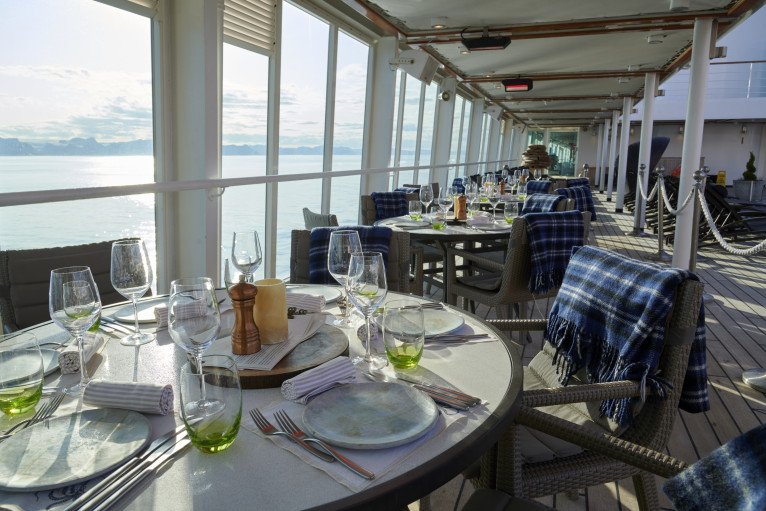
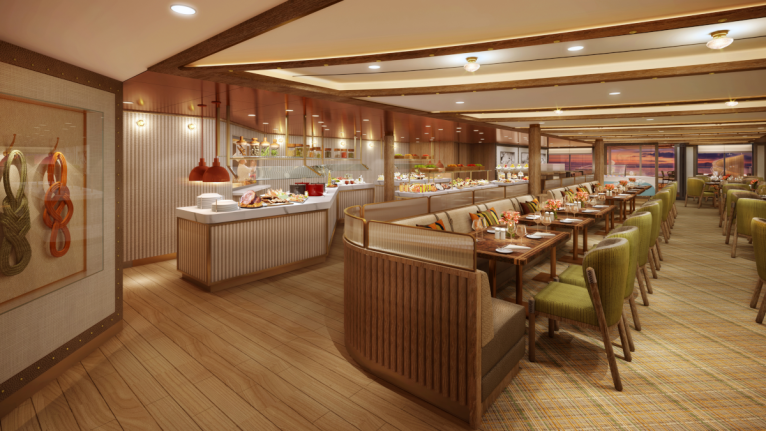
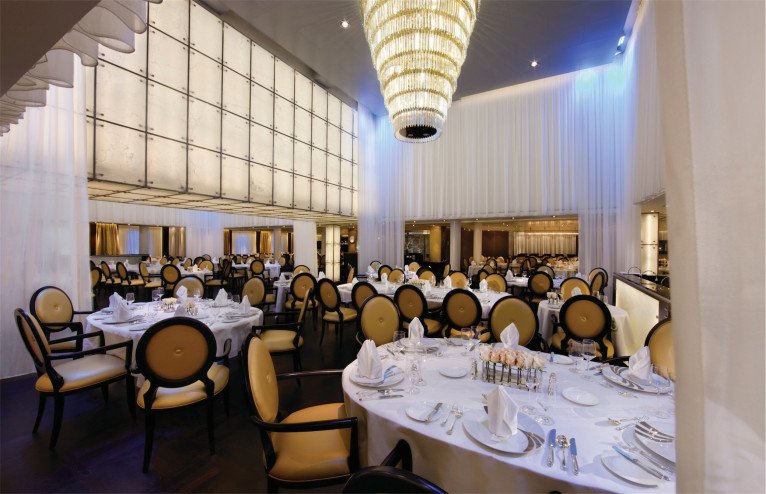
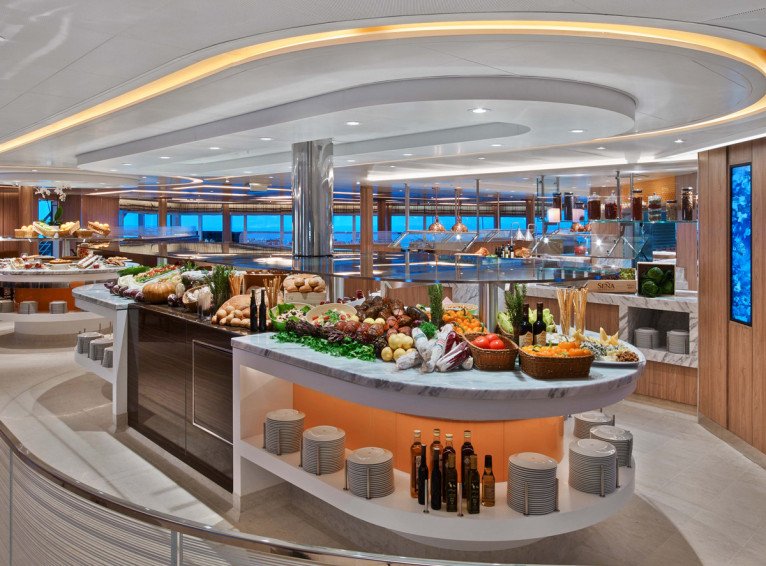
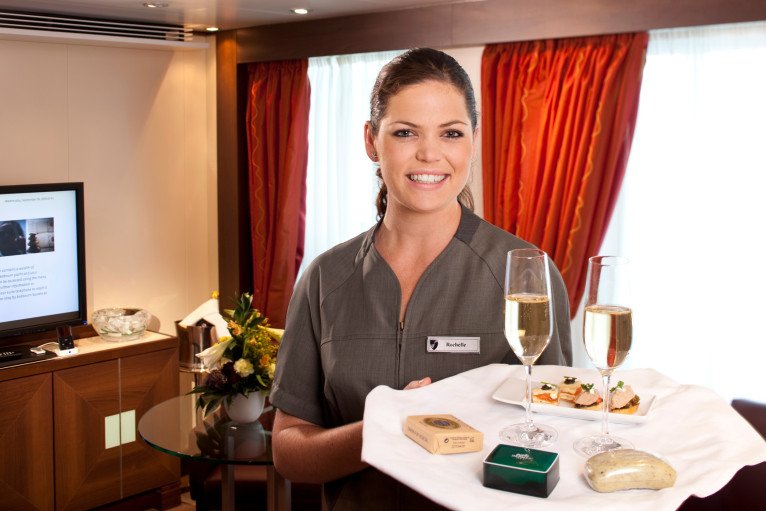
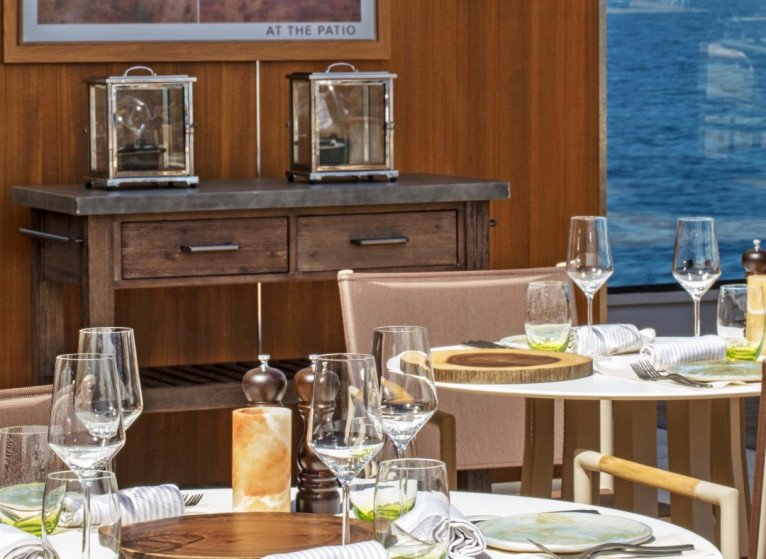
The Patio
Relaxed poolside dining offering luncheon buffets, salads, soups, grilled specialties and freshly baked pizza. Dinners feature a full menu in an alfresco setting.
Solis
Offering light, modern Mediterranean cuisine bursting with color and character, prepared fresh and entirely from scratch.
Solis will showcase a vibrant, chic atmosphere with feel-good background music and a menu reminiscent of our favorite travel memories. Solis was developed in collaboration with longtime Seabourn partners, Master Chef and Culinary Partner Chef Anton Egger, and Senior Corporate Chef Franck Salein. Chef Egger and Chef Salein are the culinary masterminds behind two of Seabourn’s most popular dining concepts – Earth & Ocean and Sushi.
Beyond the culinary, guests will be able to indulge in a truly sophisticated experience with Seabourn’s newly presented, refined vintage cocktail menu, featuring an allure of classic cocktails crafted to perfection. From classics such as the Kir Royale or Mauresco to the always — and most popular — Aperol Spritz, our team of talented mixologists have meticulously curated this menu to ensure that every drink is a masterpiece of flavors and aesthetics.
An evening at Solis is designed to delight our guests and leave them with lasting Seabourn Moments.
The Restaurant
Before Seabourn, open-seating dining on a cruise ship was unheard of. Come when you like, with whom you please, and be seated as you wish. The room is beautiful, the cuisine is exquisite, and the service is simultaneously flawless, friendly and fun.
The Colonnade
Our more casual, indoor/outdoor alternative, features an open kitchen, lavish buffets or table service for breakfasts and lunch, and serves regionally themed, bistro-style dinners with table service nightly.
In-Suite Dining
Seabourn is pleased to offer a varied menu available around the clock for service in your suite. You may also order dinner from The Restaurant menu and have your meal served, course by course, in your suite or on your veranda.
Earth & Ocean
Each evening, our skilled Earth & Ocean chefs create an imaginative array of fresh, inventive dishes—a sophisticated menu celebrating eclectic traditional flavors from around the world, served in a relaxed setting under the stars for a distinctive dining experience unlike any other on board.
Sushi
Seabourn researched the best ingredients and developed a menu that is a perfect blend of authenticity to maintain the root of the cuisine, and a twist of Seabourn’s culinary expertise. The sushi concept is a modern line that is steeped in tradition using the finest ingredients. Hamachi, tuna, shrimp and other fresh fish products will be shipped from Japan to Sushi and served à la carte for dinner. The menu features caviar and small plates, along with a selection of maki rolls, sushi and sashimi, and salads. In addition, the restaurant will feature three varieties of bento boxes for lunch: meat, seafood and vegetarian.
The Seabourn sushi experience is available in our traditional sushi restaurant aboard Seabourn Ovation and Seabourn Encore.
Seabourn Sojourn, Seabourn Quest, Seabourn Venture, and Seabourn Pursuit offer Sushi in The Club, serving a variety of light sushi bites freshly made to order each evening.
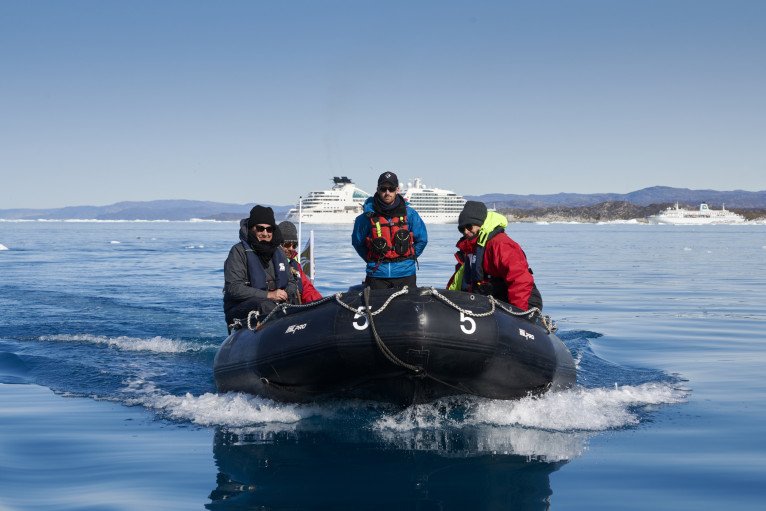
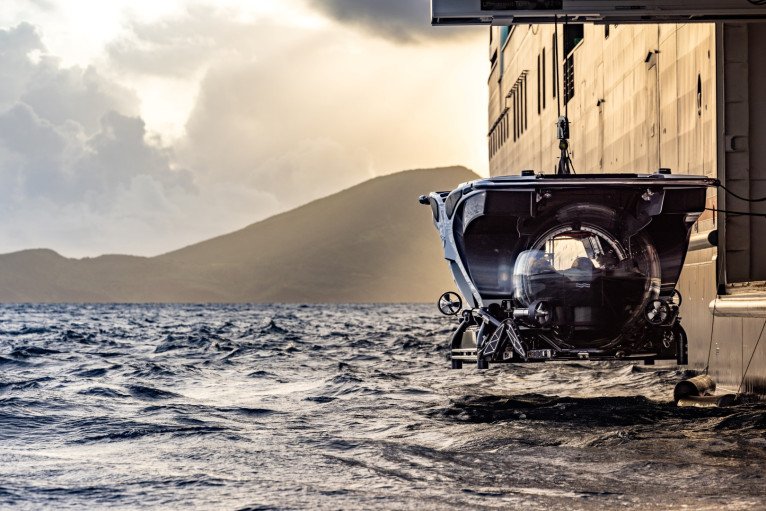
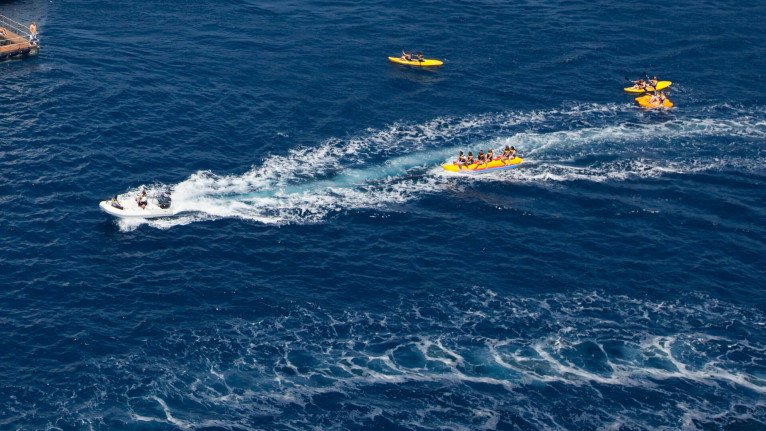
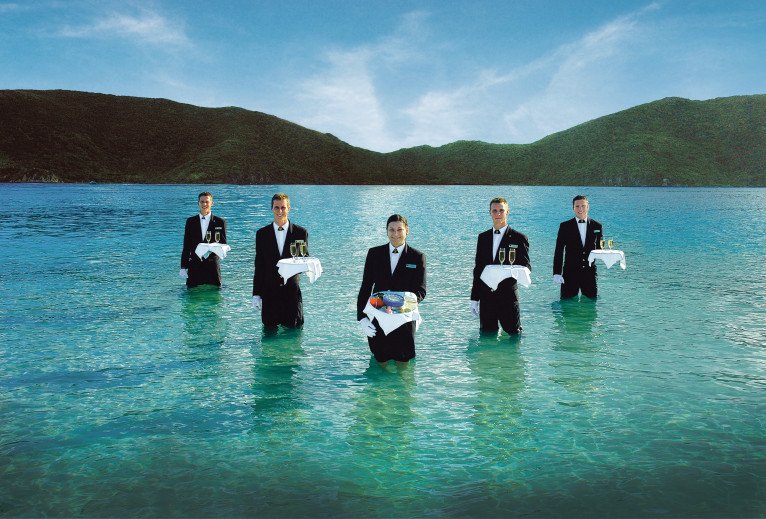
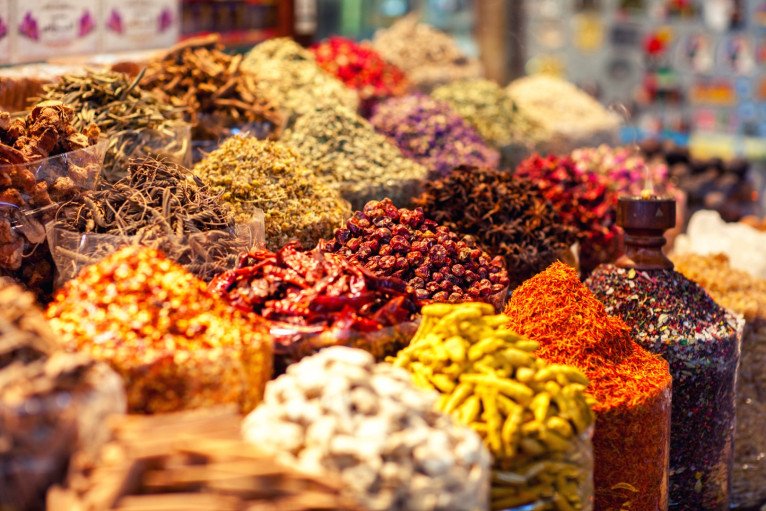


Ventures By Seabourn®
More and more of our guests relish the opportunity to engage with destinations in a more interactive, experiential and participatory way. We created Ventures by Seabourn® to provide these travelers with exciting, adventurous optional activities that are expertly planned, professionally operated and escorted by skilled expert guides.
Enhance..
On select sailings featuring Ventures by Seabourn® excursions, share your voyage with a knowledgeable, experienced expedition team of scientists, scholars, naturalists and more. These fascinating, accomplished experts will be part of our complimentary Seabourn Conversations program, providing you an in-depth understanding of the history, ecology and culture of the places you visit. On board, their valuable insights are offered both in formal presentations and in more casual conversations over meals or at leisure.
Extend
In select ports of call and destinations, optional Ventures by Seabourn® excursions, guided by our Expedition Team, invite you to explore spectacular destinations on exhilarating sea-level adventures. Launching from your ship on board our fleet of sturdy, Zodiac® boats or paddling in double sea kayaks, these adventures will vary depending on your itinerary, but include thrills such as cruising picturesque fjords and waterways, trekking on scenic islands, viewing birds, seals, whales and other wildlife up-close, and surveying massive, white-blue icebergs.
Ventures by Seabourn vs Excursions: What's the Difference?
First launched in 2013, Ventures by Seabourn was introduced for guests who have dreamed of experiencing a Seabourn expedition, but are unable to sail on one of our expedition ships.
Unlike traditional shore excursions, the expedition team is placed aboard select sailings to offer knowledge, commentary, education on the destinations, and to lead hikes, Zodiac cruises, and kayaking in remote areas. It allows Seabourn guests to experience expedition-style encounters with the landscapes, but do it on the traditional Seabourn ships that our guests know and love.
Shore Experiences By Seabourn
Our guests travel with us because they want to see, hear, learn and discover new places and experiences. To ensure that our guests have memorable and enriching experiences in the over 450 ports of call we offer annually, we contract the best local agents to create and operate some 12,000 carefully curated shore experiences, offering our guests a range of choices in duration, content and the type of activity involved to fully satisfy their wishes. To assist our guests in choosing among these numerous excursion options, we are categorizing our overall Shore Experiences by Seabourn into seven ‘Collections,’ according to the general interests they are designed to captivate.
The Cultural Collection
The Cultural Collection explores the arts, ideas and legacy of places, including access to UNESCO World Heritage sites around the world.
The Bespoke Collection
The Bespoke Collection affords guests opportunities to customize their shore experiences by arranging private cars and drivers, guides, yachts, reservations and other services in ports of call
The Adventure Collection
The Adventure Collection is an array of excursions offering guests active and participatory experiences in ports, including Ventures by Seabourn™ and expedition excursions on our Expedition ships.
The Mindful Living Collection
The Mindful Living Collection consists of guided shoreside experiences in Mindful Living, designed in partnership with world-renowned integrative medicine pioneer.
The Epicurean Collection
The Epicurean Collection invites guests to explore the unique flavors of a destination by indulging their passion for tasting both traditional and contemporary foods and drinks.
The Essential Collection
The Essential Collection offers shorter-duration introductory experiences such as guided walking tours, allowing guests with general interest to learn the highlights about a port.
The Journeys Collection
The Journeys Collection offers escorted pre-, post- and mid-cruise overland experiences of two to 13 days, exploring iconic landmarks impossible to visit during a scheduled port call.
Discovery Center
The Discovery Center, which is adjacent to the Expedition Lounge on Deck 4, acts as the teaching & academic center for natural history and cultural programming in an environment spacious enough to accommodate all guests at one time. Each day, guests will visit this venue for insightful lectures, briefings, and Seabourn Conversations enrichment programming designed to help educate them throughout their expedition experience. The world-class 26-person expedition team of wilderness experts, scientists, historians and naturalists will deliver rich, insightful lectures and discussions on a broad array of topics related to the region where guests are sailing. Inspired by the compelling landscape of some of the expedition destinations, the Discovery Center incorporates the organic shapes of topography maps against the elegant curves of the plush custom seating.
Audio-visual experiences will come to life through high-definition screens 2.5 meters high by 10 meters wide, showing a variety of programming to create a captivating experience that whets the appetite and creates excitement for each destination.
Marina Day
One of Seabourn’s most popular guest offerings is Marina Day. Available at select destinations, this fun-filled day features complimentary watersports either from the ships’ unique, retractable Marina platform or from a beach, which is typically on the same day as when the line’s signature Caviar in the Surf and beach barbecue is offered. Guests may enjoy a wide array of water sports, including kayaks, pedal boats, donut rides, banana boats, paddle-boards, waterskiing and more. Guests can be as relaxing or adventurous as they choose to be. It’s not to be missed!
* Guests choosing to participate in Marina Day activities must be able to swim and be in good physical condition to safely mount/dismount the equipment, including in open water.
** Watersports are offered where weather and ocean conditions permit, permissions are granted by the Harbour Master, and at the discretion of the Captain.
*** Children under the age of 14 must be accompanied by a parent or legal guardian.
Caviar In The Surf
Caviar in the Surf® is available on select sailings, weather and conditions permitting. One of Seabourn’s most popular events is our signature “Caviar in the Surf” beach barbecue. Our uniformed staff members plunge into the water and invite guests to wade in and get iced champagne and caviar at a surfboard bar. The event includes a lavish barbecue lunch, watersports, music and ample time to soak up the sun on a white-sandy beach.
Shopping With The Chef
Shopping with the Chef — at local food markets. Shop a bustling Sicilian market, gather spices in Istanbul or explore the local wines of Tuscany and Provence. Wherever you are in the world, you'll enjoy an insider's look at unique regional markets with an expert Seabourn chef as your guide.
Seabourn Conversations
Enjoy fascinating Seabourn Conversations sessions with guest experts from the fields of arts, history, science, and more.
Meeting Rooms
For meetings and gatherings, our ships offer meeting rooms that can accommodate up to 40 guests. The meeting rooms can be arranged to guests’ specifications including theatre-style or with tables; and each of the rooms have large-screen TVs for presentations. Guests may also reserve the Card Room when available. Our crew members are happy to assist guests with meeting room reservations and setup.
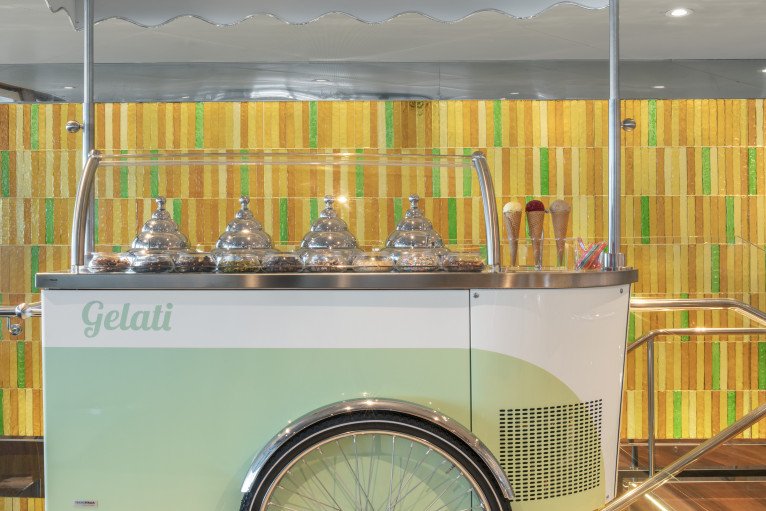

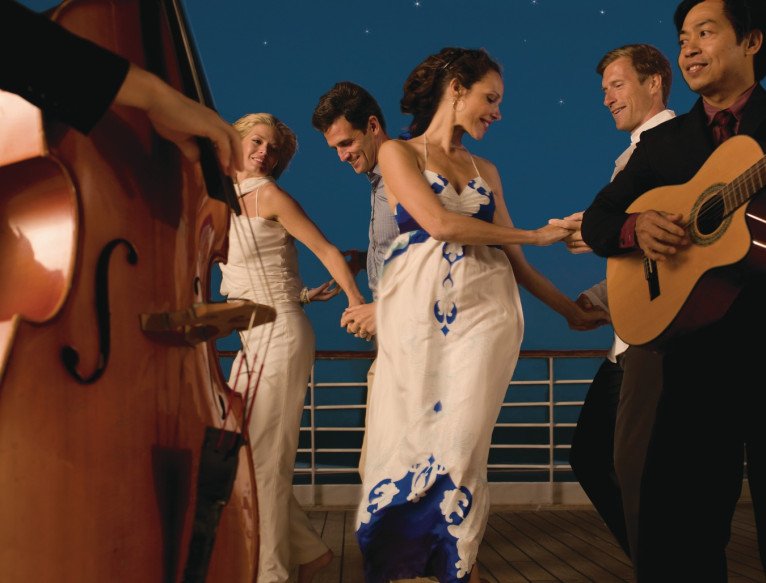
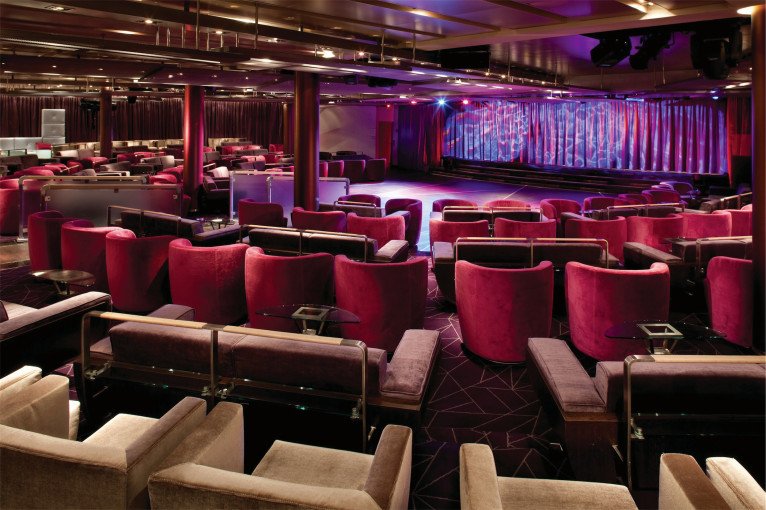
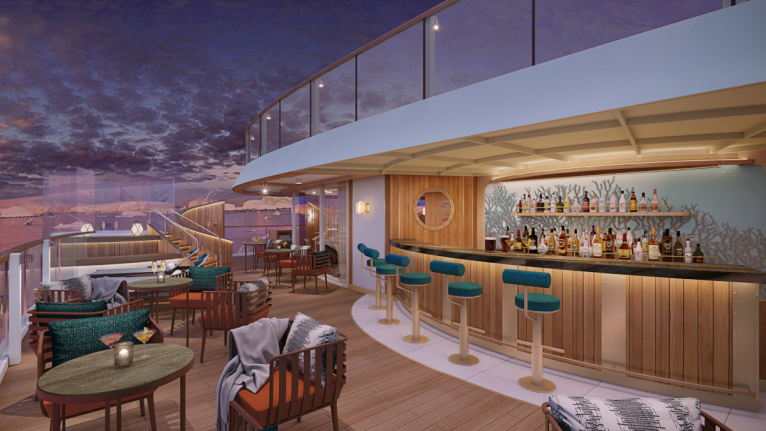

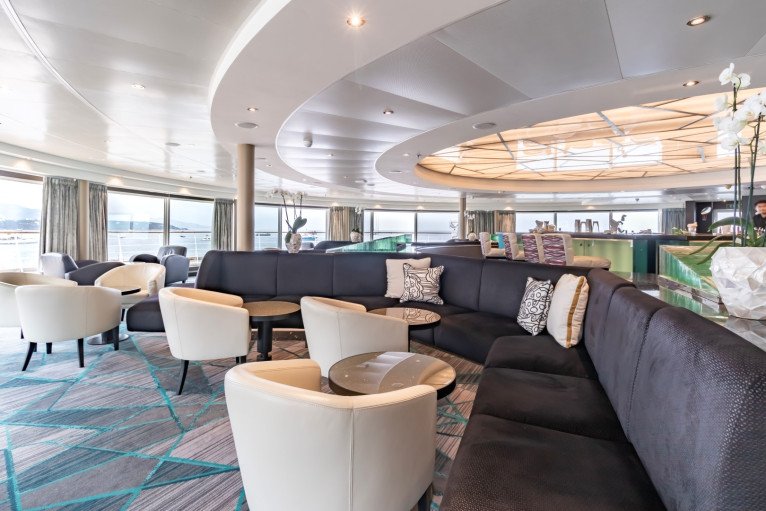
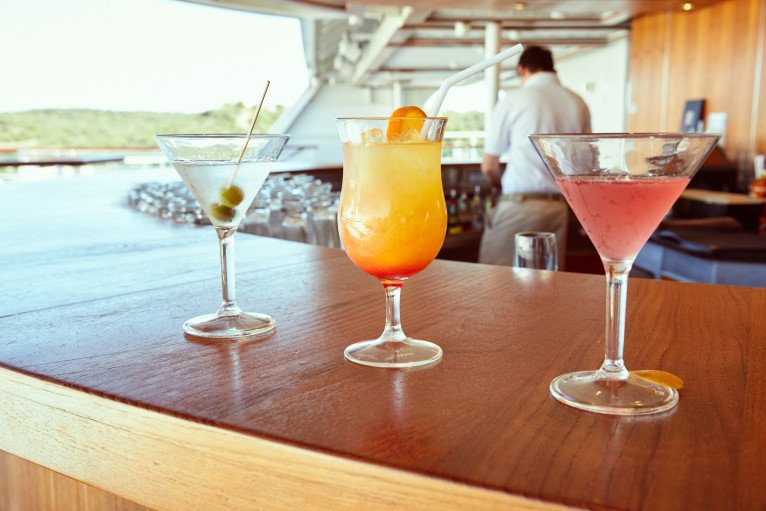
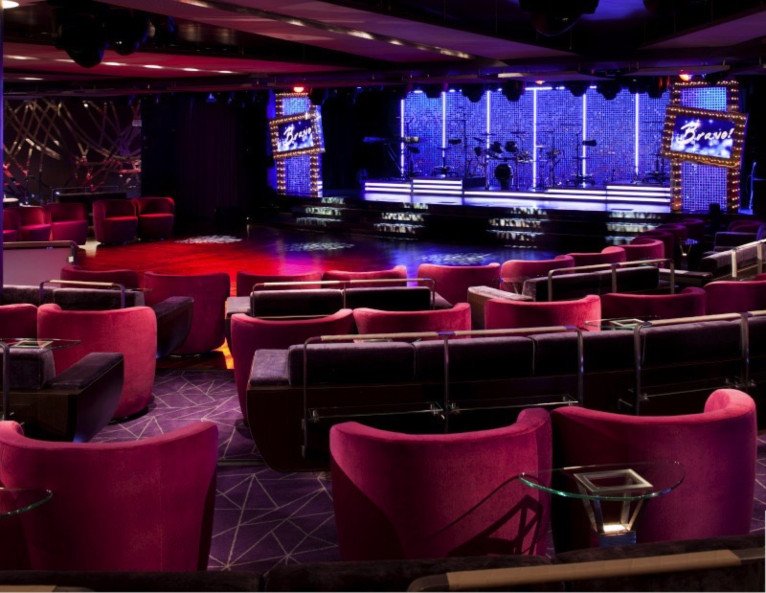
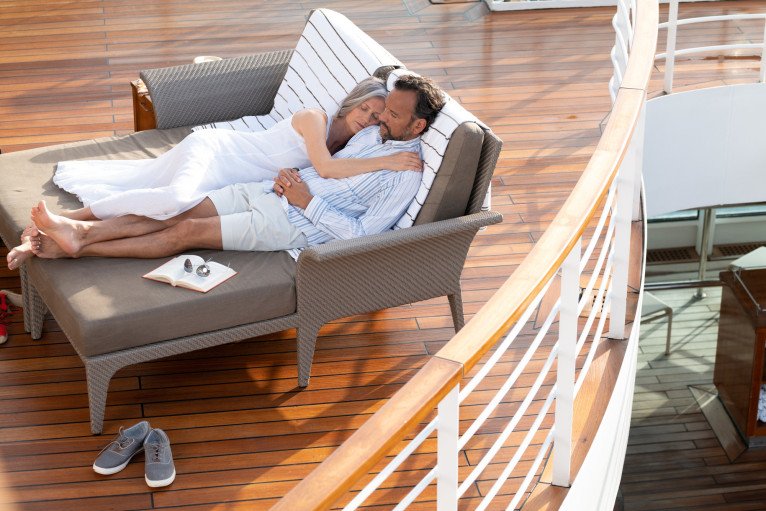
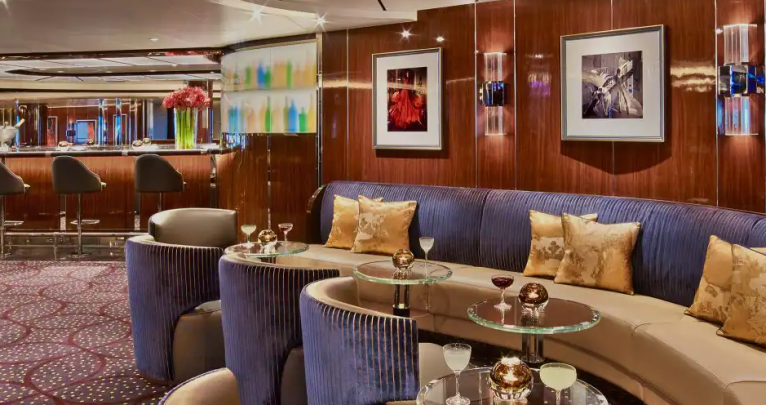
Seabourn Square
Whether you're looking for a place to enjoy your newspaper in the morning or want to socialize with your fellow passengers, Seabourn Square is what you're looking for. This inviting lounge offers plush seating, cocktail tables, a library, computer terminals, a coffee bar, and Guest Services staff.
Seabourn Square is the true ‘living room’ of the ships. An inviting sociable space where guests will find a charming European style coffee bar, Seabourn Square has been designed as an open, comfortable environment for guests to interact with onboard officers and the expedition team and engage in conversation with family and new friends. The space is also home to the highly-trained Guest Services staff, who provide a range of concierge services such as general ship information, assistance with special service requests, port and travel information, and more.
A selection of coffees are prepared by the skilled onboard baristas some using beans roasted in Seabourn Square. For those feeling a bit hungry, Seabourn Square offers freshly made pastries and other on-the-go breakfast items in the morning, as well as an assortment of light sandwiches and desserts later in the day, along with a selection of artisanal gelati made on board. Guests will also find a wide range of books in the adjoining library, with a host of titles on subjects such as adventure, expeditions and other topics of interest to enjoy while onboard. Staying current with the news is made easy with tablets featuring the Press Reader news application available to browse each day.
The Retreat
A tranquil setting housed in a distinctive flower-shaped canopy that shields guests from sun and wind, The Retreat is ringed with 15 private cabanas designed as individual luxury living rooms that each feature a large HD flat screen television and a refrigerator stocked with a personalized selection of beverages. An additional Spa Treatment Cabana is also available for guests to enjoy personalized spa services, subject to availability. For additional details or reservation, log in and customize your itinerary.
The Retreat is located around a central whirlpool with step-up access to water maintained at an inviting temperature. Up to 28 guests can stretch out on comfortable sun loungers; pull up a bar stool or take a table seat for champagne and cocktails custom created by Seabourn mixologists; or enjoy a selection of bites from a healthy spa menu. A selection of amenities include fresh fruit baskets, plush towels and personalized bathrobes, while a dedicated Retreat Concierge will be available to satisfy guest requests.
Cabanas at The Retreat will be available daily and may be reserved for a full day via the Guest Service Specialists at Seabourn Square.
Sun Terrace
The Sun Terrace features double sun loungers. Slow things down and soak up the sun as you relax on a luxurious lounger.
Grand Salon
The ship’s main showroom can accommodate all guests, though it seldom does because of the variety available. Lectures, cooking demonstrations, movies and other gatherings are held here in the daytime. In the evenings, live music for dancing before dinner gives way to vocal production shows, cabaret performances, comedy, and classical recitals, as well as more dancing later.
Casino
World's Finest Ultra-Luxury Cruise Line™
The Seabourn casino offers a handsome, well-appointed enclave for those attracted to games of chance and skill. Relax and test the odds on various mechanical games or pit your skills against personable, professional dealers at blackjack or poker tables.
Observation Bar
Guests find coffee and tea in this ship-top location and many return for an elegant afternoon Tea Time*, evening tapas, and cocktails.
Tea Time is offered on select days during your cruise or expedition.
Not available on board Seabourn Venture and Seabourn Pursuit
Evenings Under The Stars
One of the most FUN evenings during any cruise, Evenings Under the Stars is a night where guests can let their hair down and simply be in the moment. Enjoy Let’s Dance! with great live music, interact with fellow travelers and be spoiled in true Seabourn style by our food and beverage team with Desserts Under the Stars. A signature event, this dance party has been a part of the line’s rich culture, and a Seabourn cruise is not complete without Let’s Dance! and Desserts Under The Stars.
Weather permitting, this high-energy dance party is hosted poolside and under the stars by the entire entertainment team, featuring performances by The Band, vocalists and dancers. There is even the possibility your Cruise Director and Assistant Cruise Director might jump on stage to perform, as well! Guests can expect music that appeals to everyone’s taste with a great mix of hit songs. It’s a real treat and guests LOVE Evenings Under the Stars!
Sky Bar
The Sky Bar on our expedition ships is a place to enjoy a refreshing tropical beverage during the day, or an evening cocktail under the stars. Two small whirlpool spas bracket the open terrace.
Card Room
Many veteran cruisers specifically choose cruises that provide at least a few days at sea. The Card Room is a great choice for the sea-loving cruiser who craves that languorous feeling of lazy leisure. There will be loads of on board activities during those days, including a great game of bridge.
Coffee Bar
Enjoy a specialty crafted espresso just the way you like it.
The Club
The liveliest lounge on board is a popular spot for pre-dinner drinks and dancing to live music. After dinner, the dancing music continues, and later a DJ spins dance music until late at night. Another terrace of open deck aft of The Club boasts the Sky Bar and two small whirlpool spas.
Seabourn Venture and Seabourn Pursuit also offer Sushi in The Club serving a variety of light sushi bites freshly made to order each evening.
Onboard Shopping
Whether you're buying souvenirs for your friends at home or want a memento of your vacation, our Shops will have what you need. Shop for fashion and cosmetics at The Boutique, jewelry and fine watches at The Collection, or logo cruisewear at the Shop.
Zero @ Sea
A Zero-proof cocktail experience featuring a unique array of non-alcoholic cocktails
Zero @ Sea offers an inventive menu of mixology cocktails, with ingredients and flavors free of alcohol, such as elderflower, bursts of fresh citrus, botanical spirits, and more.
Zero @ Sea cocktails are available fleetwide in all bars and lounges aboard the ships together with an upgraded selection of nonalcoholic wines, sparkling wines, and beers.
The new cocktails were developed by Seabourn’s expert culinary and beverage team, led by Michael Simon, senior manager of restaurant and bar operations, and Francisco Fernandes, corporate manager service operations.
An Evening With Tim Rice
Seabourn is proud to have an exclusive partnership with Tim Rice, the acclaimed English musical theatre lyricist of Broadway, West End and film, winner of three Oscars, three Tonys, three Golden Globes and several Grammys. In addition, we are pleased to present his successful production, “An Evening with Tim Rice,” is now playing on all Seabourn ships. The show, in association with Belinda King Creative Productions and directed by Belinda King, first debuted in January 2017 on the inaugural voyage of Seabourn Encore and is now part of the evening entertainment repertoire on board Seabourn Sojourn and Seabourn Quest.
“An Evening with Tim Rice” is a concert-style presentation narrated via video by Rice to highlight some of his most loved work – from Jesus Christ Superstar to Aladdin and The Lion King . The show also includes a number from Chess called “One Night in Bangkok,” and a broad “Circle of Life” finale. The production is enhanced through anecdotes and visuals from Rice’s personal archive, and audiences will learn how each song came to life as they are drawn into the mind of one of the world’s most iconic songwriters.
Additional cast members have joined the show during the rollout, many of whom have extensive professional experience performing on Broadway and the West End theaters. They include Dayle Hodge, who just finished playing Frankie Valli in the hit West End musical, Jersey Boys; JC McCann, who starred as Joseph in Jersey Boys on the Broadway tour; Rachel Jerram, who appeared in Avenue Q in both the West End and U.K. tour; Matias Polar; who appeared in FAME on the U.S. tour; and Ellie Ann, who performed in Saturday Night Fever in the U.K. national tour.
Tim’s much-loved work has given pleasure to millions around the world: Joseph and the Amazing Technicolour Dreamcoat; Jesus Christ Superstar and Evita (with Andrew Lloyd Webber); Chess (with Bjorn Ulvaeus and Benny Andersson of ABBA); Aladdin and Beauty and the Beast (with Alan Menken) and The Lion King (with Elton John) - to name a few. In 1994 Tim was knighted by Her Majesty Queen Elizabeth II for services to music and in 2008 his star joined the Hollywood Walk of Fame. ‘An Evening with Tim Rice’ will be a concert-style presentation narrated throughout by Tim himself taking us on a musical journey through some of his best-known work.
The production features the four Seabourn Encore Singers and includes anecdotes and visuals from his personal archive. Audiences in the Grand Salon on board every ship will learn how each song came to life as they are drawn into the mind of one of the world’s most respected and iconic songwriters. “This is a first for me, it’s been an amazing experience, looking back over my career and the friendships that shaped it,” said Tim Rice. “The result is a show that you won’t find anywhere else. I’ve been lucky that my work has been shown around the world, so I love the idea of this production circumnavigating the globe on the high seas on board Seabourn’s beautiful ships.”
Produced by Belinda King Creative Productions ‘An Evening with Tim Rice’ will be enhanced with exclusive photos from Tim’s private collection and fascinating dialogue. His presence will be brilliantly brought to life through state-of-the-art technology on screens around the stage. During the show’s run, he will make a select number of personal appearances on every Seabourn ship. A cast of singers and live musicians will draw the audience into his very special world, bringing the glamour and buzz of the West End and Broadway to every Seabourn sailing.
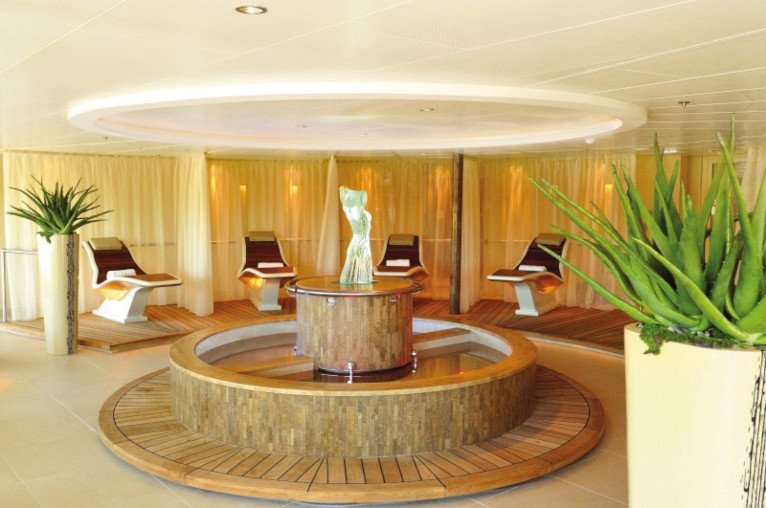
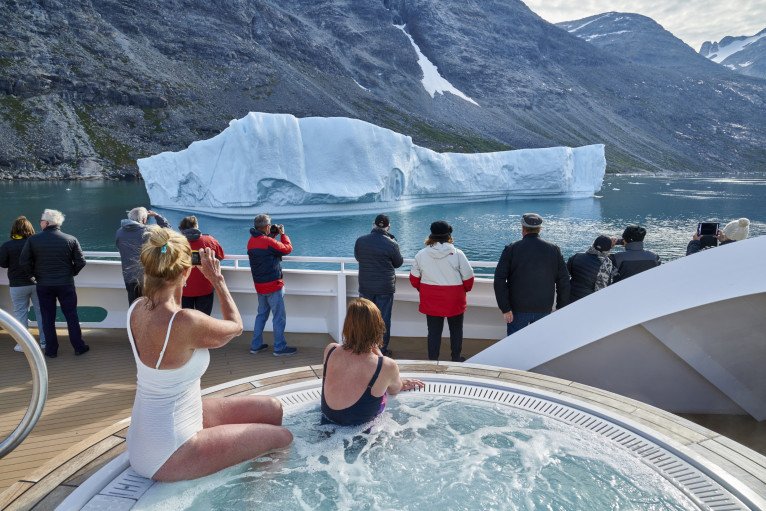
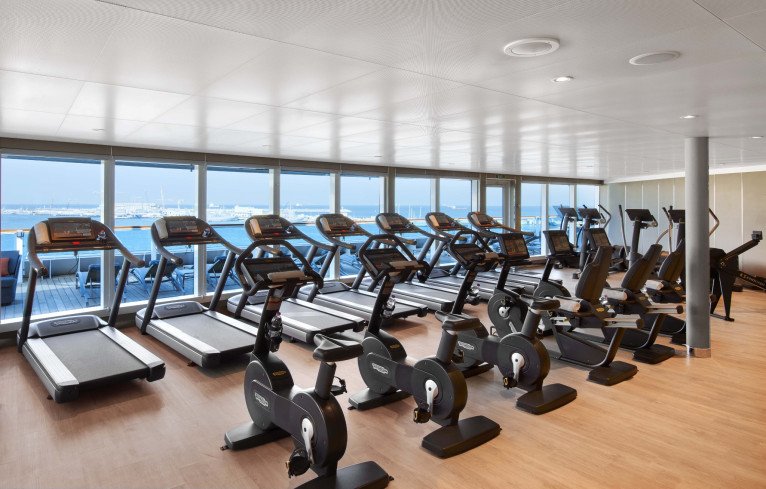
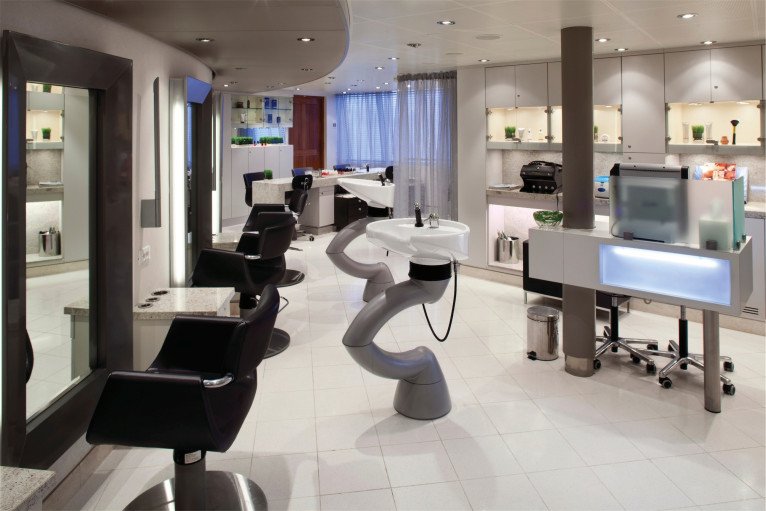
Spa & Wellness
Seabourn’s spas offer a wide spectrum of massages, facials, and beauty treatments, blending traditional practices from around the world with the most up-to-date techniques. Seabourn’s spas are suitable for guests wishing to maintain a personal fitness regime or discover a new one. A well-equipped ocean-view gym and Motion Studio is staffed by professional fitness trainers, and a full-service salon for men and women complement the spas.
SPA AND FITNESS SERVICES INCLUDE
- Skilled therapists offer a full range of body and facial services including massage, detox, cleansing and wrap therapies and more
- Full-service salon for men and women
- Fitness Director to create your ideal regime
- Fitness centers with ocean views, offering state-of-the-art fitness equipment
- Motion Studio offering yoga and meditation, Crystal Sound bath, TRX and stretch classes, and more
- Personalized spa services are also offered in a dedicated Spa Cabana at The Retreat, our serene enclave atop Seabourn Encore and Seabourn Ovation, available by reservation
- Unique to Seabourn Venture and Seabourn Pursuit: Glass-walled saunas with expansive ocean views
As part of the wellness enhancement in the spa, Seabourn are able to enjoy two new treatments fleetwide.
- Earth Grounding Massage: This enhanced treatment combines the therapeutic benefits of touch with a specialized grounding technology that harnesses the age old power of the Earth.
- Restorative Salt Stone Massage: Warm, Himalayan salt stones are bathed in personally selected aromatics to contour the body.
These treatments join two other options introduced on all Seabourn ships:
- Thai Massage: A fusion of traditional Thai Massage and the Chinese method of deep tissue pressure point massage and stretching techniques.
- Mindful Living Massage: Sweeping massage techniques, conscious breathing, and the vibrational effects of sound encourage energy flow to be restored.
These two treatments add to the number of reasons why cruise travel can have a positive impact on physical and mental well-being.
Bow Whirlpool
A breathtaking ocean vista will dazzle your senses on the pool deck. Boasting a prime location, this picturesque area presents you with the opportunity to soak up some rays during the afternoon, or socialize in the whirlpool in the evening.
Fitness Centre
Our Fitness Center features high performance Technogym equipment for cardio and strength training. We also offer a series of complimentary classes including yoga, Pilates and Tai Chi. Or, if personal attention is preferred, our personal trainers will design a nutrition and exercise plan that will help you achieve results.
Based on your body’s particular needs, this personalized session will expose you to the wellness program that works best with your body. Aboard Seabourn Sojourn and Seabourn Quest you may try the Kinesis System. Using a tri-dimensional pulley system, our personal trainers will guide you through a series of exercises designed to improve balance, flexibility and strength.
Pool
Offering the perfect setting for a sunny afternoon, the swimming pool is surrounded by an expansive sundeck with chaise lounges, shaded seating, two large whirlpool spas, and is within steps of the Patio Grill. Sun loungers and cabanas are arrayed in a mix of sun and shade. A stage provides occasional live music for dancing.
Salon
All Seabourn ships offer a full-service Beauty Salon offering all traditional salon services including hairstyling, cut and colour. Some of our favourites include the Fire and Ice Manicure and Pedicure using a combination of therapeutic cooling gels and the warmth of massage with a heated stone. The Elemis Sole Delight Foot Treatment with Pedicure, a rejuvenating therapy using warmed aromatherapy oils and the decadence of milk protein. Or, try the Elemis Frangipani Conditioning Hair and Scalp Ritual, used for centuries in Tahiti to soften the skin and hair.
Deck 11
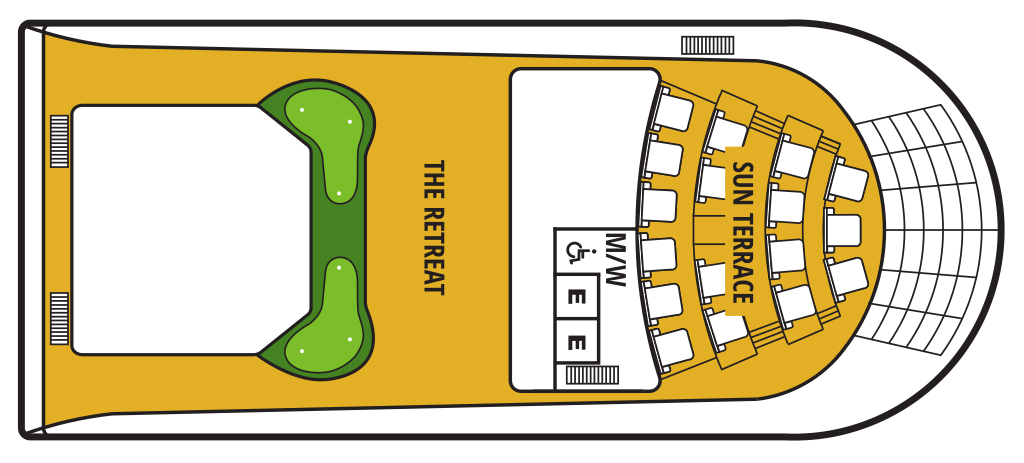
- The Retreat
- Sun Terrace
Deck 10
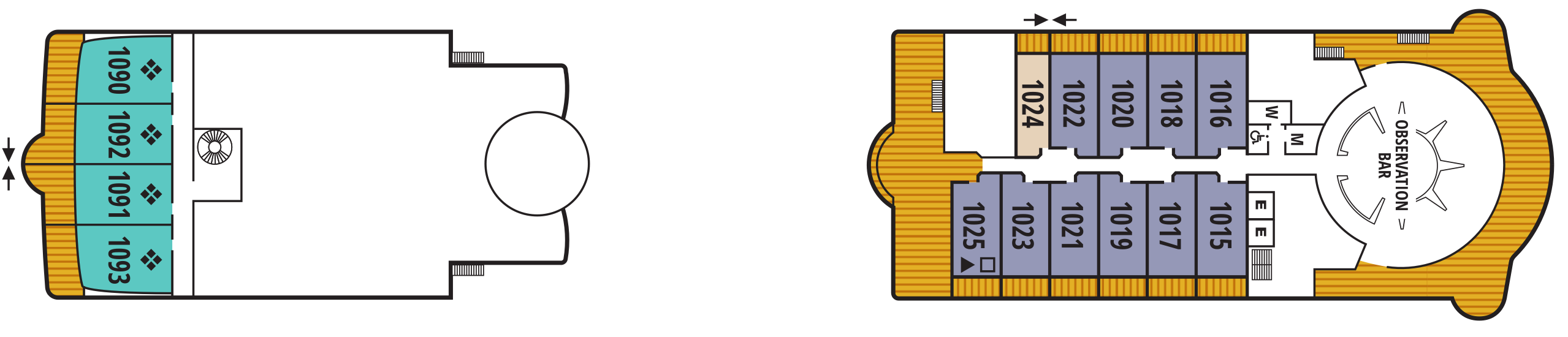
- Observation Bar
- Penthouse Suite
- Veranda Suite
- Penthouse Spa Suite
Deck 9
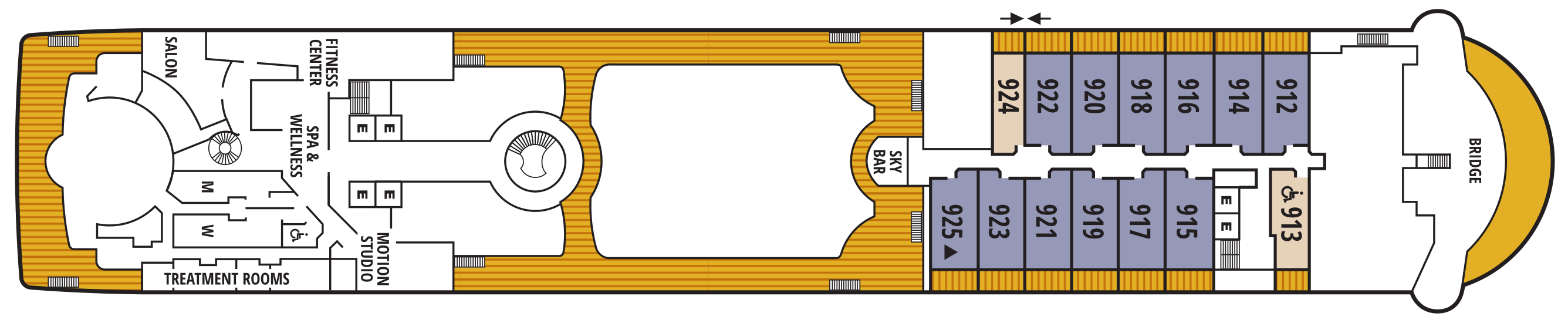
- Bridge
- Sky Bar
- Fitness Centre
- Motion Studio
- Spa & Wellness Area
- Salon
- Treatment Rooms
- Penthouse Suites
- Veranda Suites (x1 Accessible Suite)
Deck 8

- The Patio
- Patio Bar
- Whirlpools
- Pool
- Solis
- The Colonnade
- Owner's Suites
- Veranda Suites (x1 Accessible Suite)
Deck 7

- Card Room
- The Collection
- Shops
- Coffee Bar
- Seabourn Square
- Grand Wintergarden Suite
- Wintergarden Suite
- Grand Signature Suites
- Signature Suites
- Owner's Suites
- Veranda Suites (x1 Accessible Suite)
Deck 6

- Whirlpool
- Grand Salon
- Owner's Suites
- Veranda Suites
- Penthouse Suite (x1 Accessible Suite)
Deck 5

- Meeting Rooms
- Casino
- Club Bar
- The Club
- Pool
- Whirlpools
- Veranda Suites (x1 Accessible Suite)
Deck 4

- The Restaurant
- Galley
- Ocean View Suites (x1 Accessible Suite)
Deck 3
- Medical Facility
Deck 2
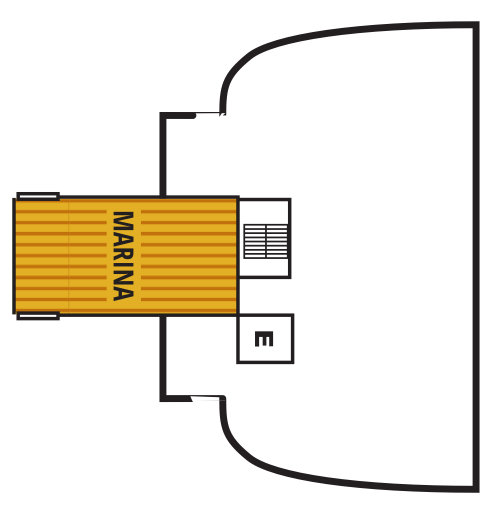
- Marina
Seabourn Quest Cabins & Suites
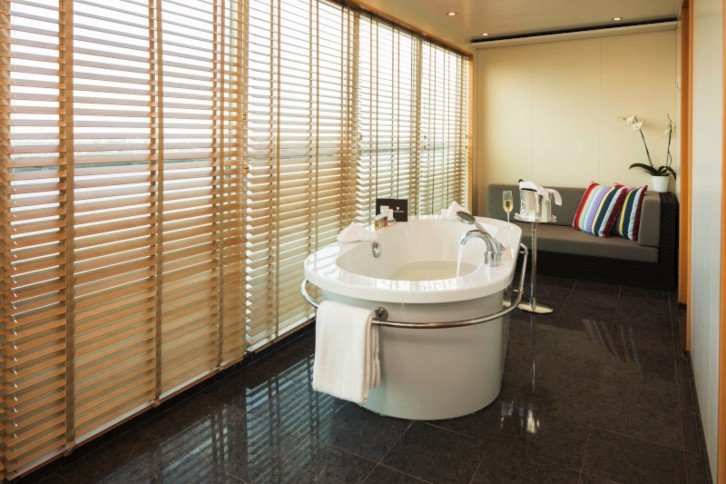
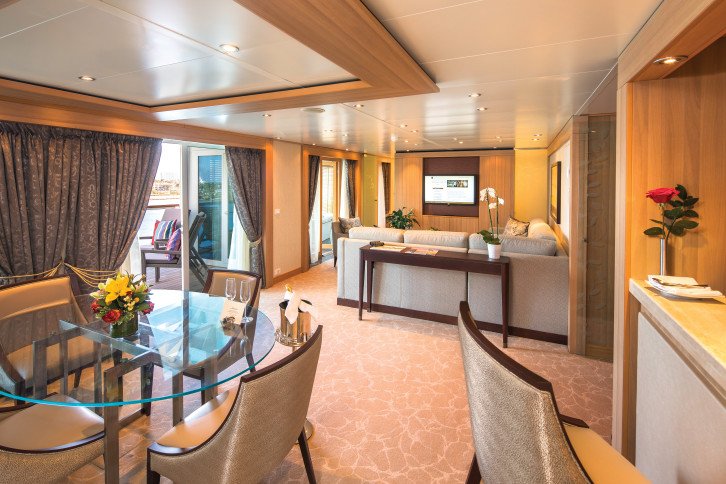
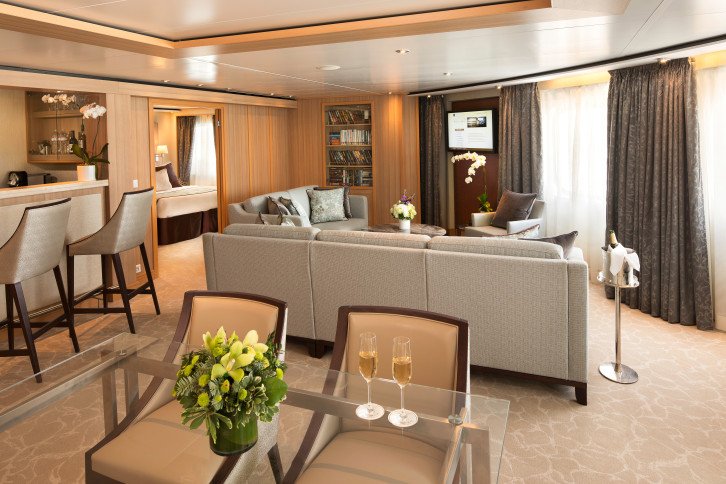
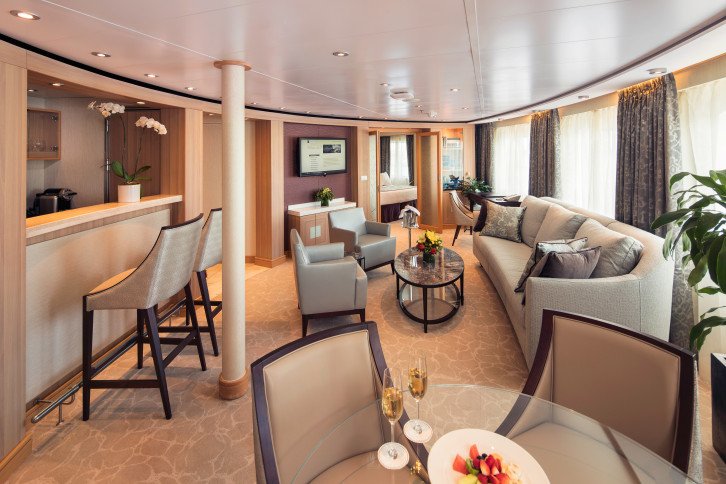
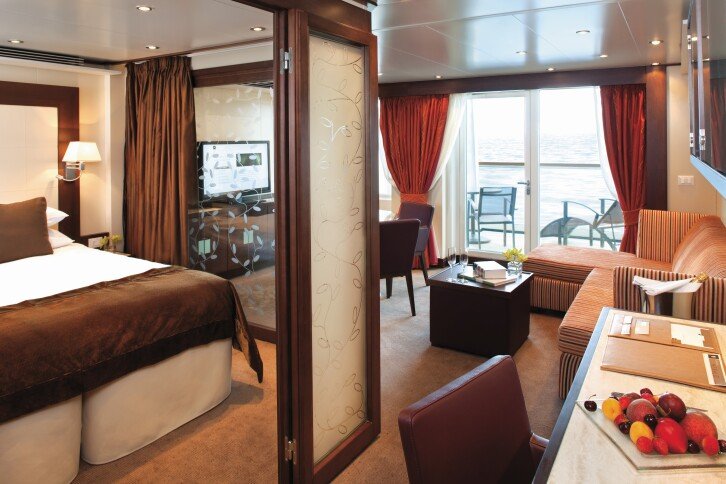
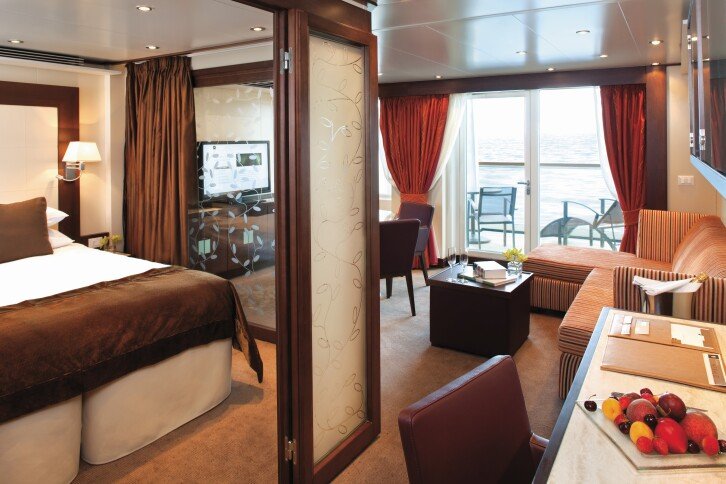
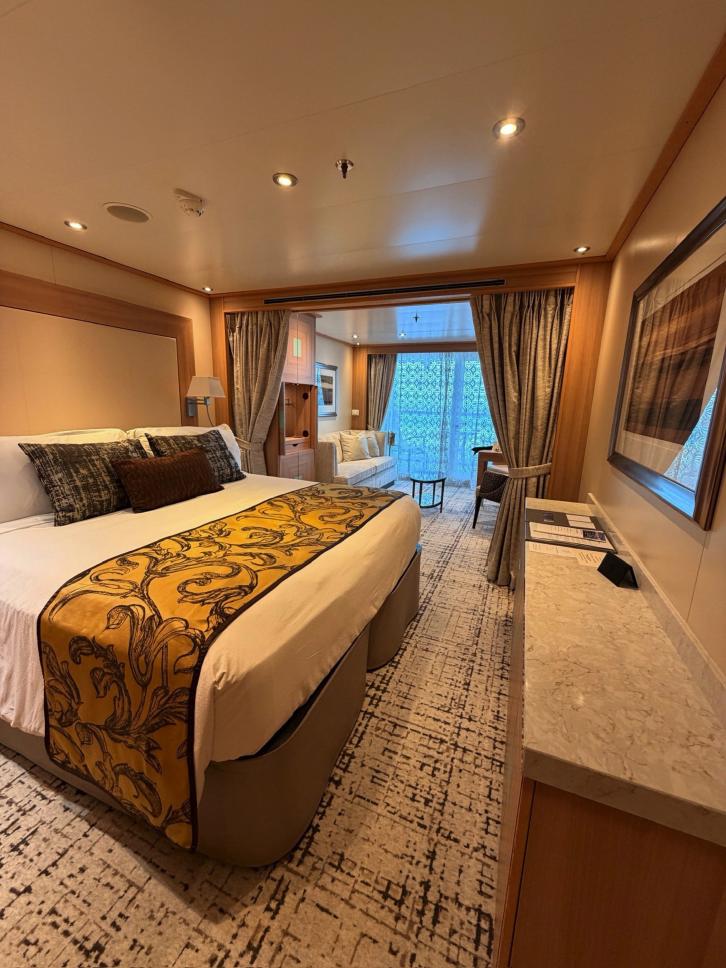
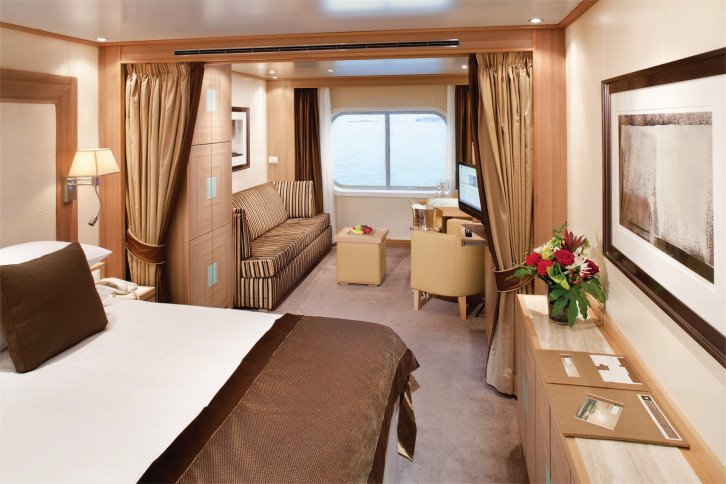
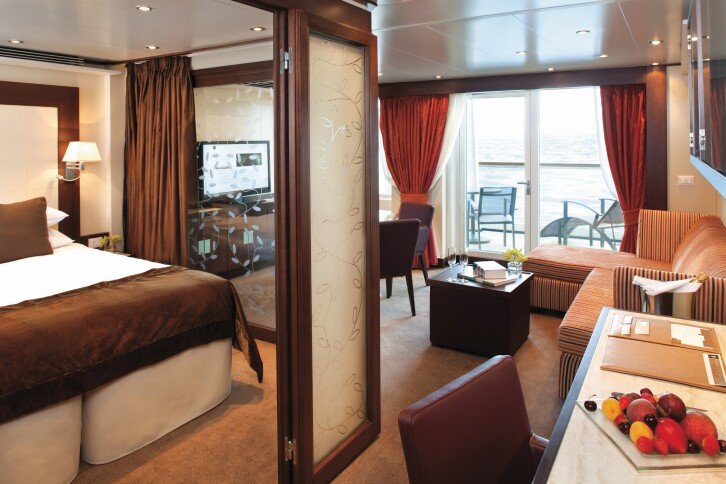
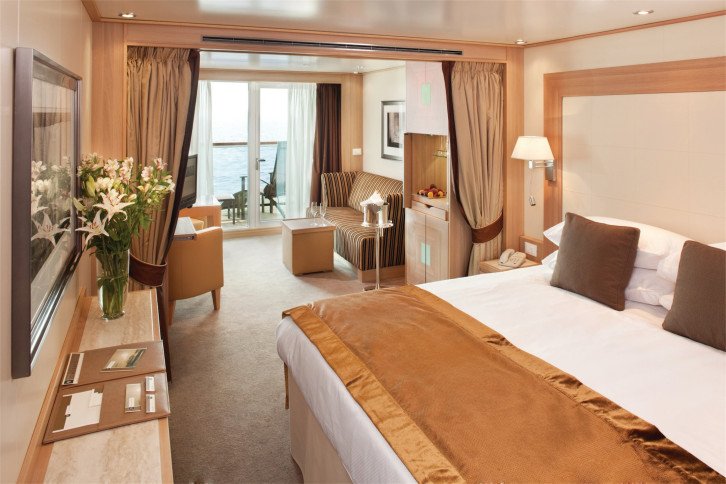
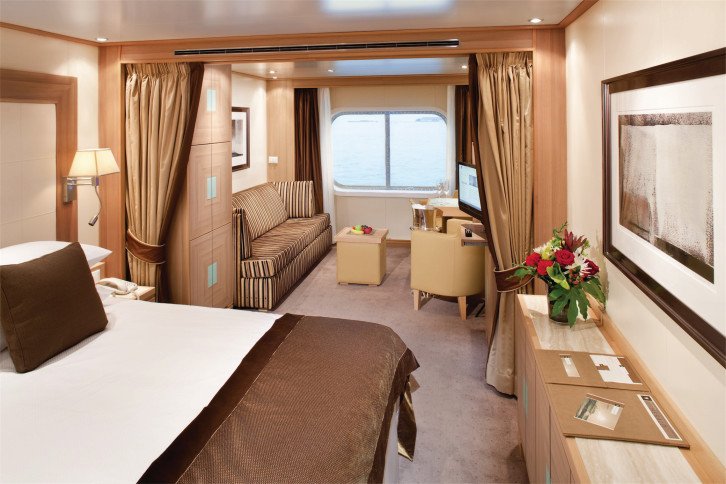
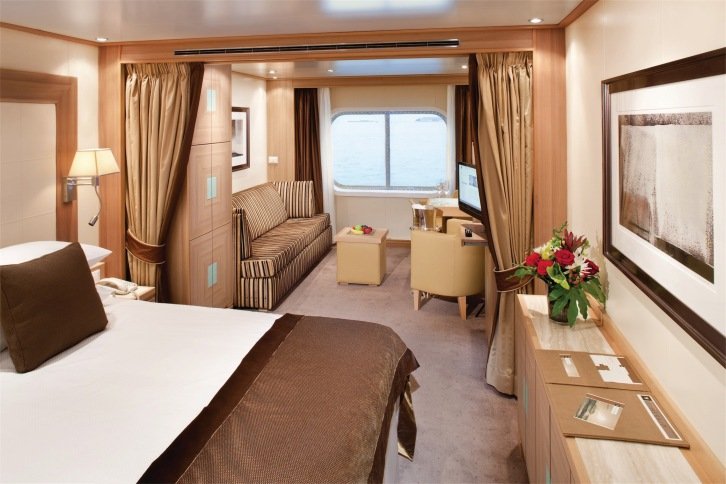
Grand Wintergarden Suite
Suites on board feature a comfortable living area, private veranda, queen-size-bed or two twin beds; walk-in closet with personal safe, interactive flat-screen TV with music and movies, fully stocked bar and refrigerator, writing desk with personalized stationary, makeup vanity, spacious bathroom with separate tub and shower, plush robes, slippers hair dryer and 110/220V AC outlets.
Grand Wintergarden Suites feature:
- Large windows
- Dining for four
- Glass-enclosed solarium with tub and day bed
- Bathroom with whirlpool bathtub
- Guest bath
- Two bedrooms
- Convertible sofa bed for one
- Pantry with wet bar
- Two flat-screen TVs
- Complimentary Internet/Wi-Fi service
FLOORPLANS
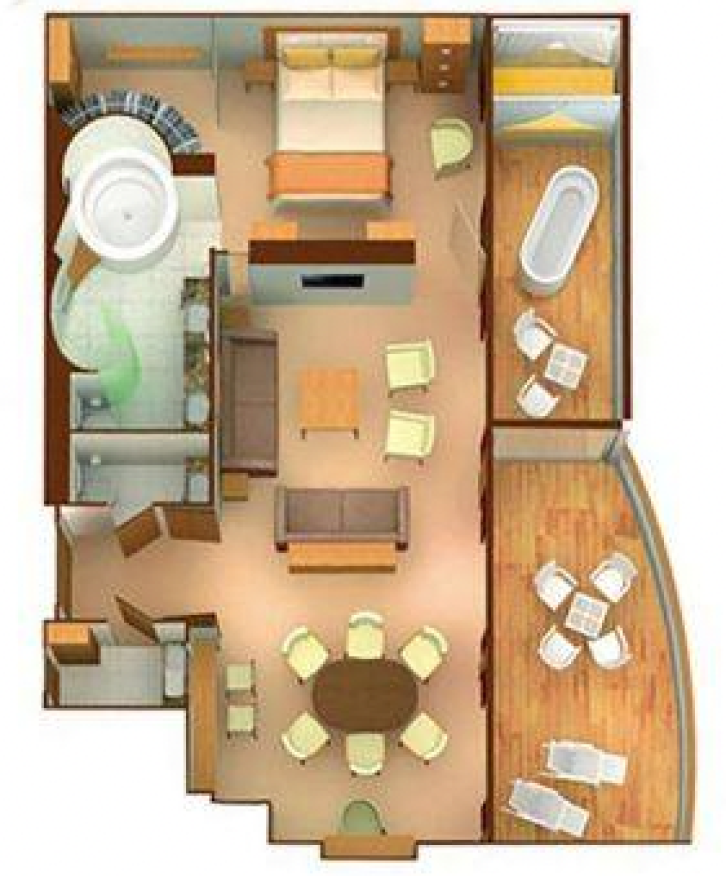
Facilities
- Second Bedroom
- Sofa Bed
- Shower
- Bath
- Whirlpool Bath
- Suite Benefits
- TV
- Free Wi-Fi
- Safe
- Hair Dryer
- Queen or Twin Configuration
- Lounge Area
- Dining Area
- Vanity Area
- Toiletries Provided
- Full Bar
- Desk
- Room Service Available
- Telephone
- Air Conditioning
Wintergarden Suite
Suites on board feature a comfortable living area, private veranda, queen-size-bed or two twin beds; walk-in closet with personal safe, interactive flat-screen TV with music and movies, fully stocked bar and refrigerator, writing desk with personalized stationary, makeup vanity, spacious bathroom with separate tub and shower, plush robes, slippers hair dryer and 110/220V AC outlets.
Wintergarden Suites feature:
- Large windows
- Dining for four
- Bathroom with whirlpool bathtub
- Guest bath
- Convertible sofa bed for one
- Pantry with wet bar
- Glass-enclosed solarium with tub and day bed
- Two closets
- Two flat-screen TVs
- Complimentary Internet/Wi-Fi service
FLOORPLANS
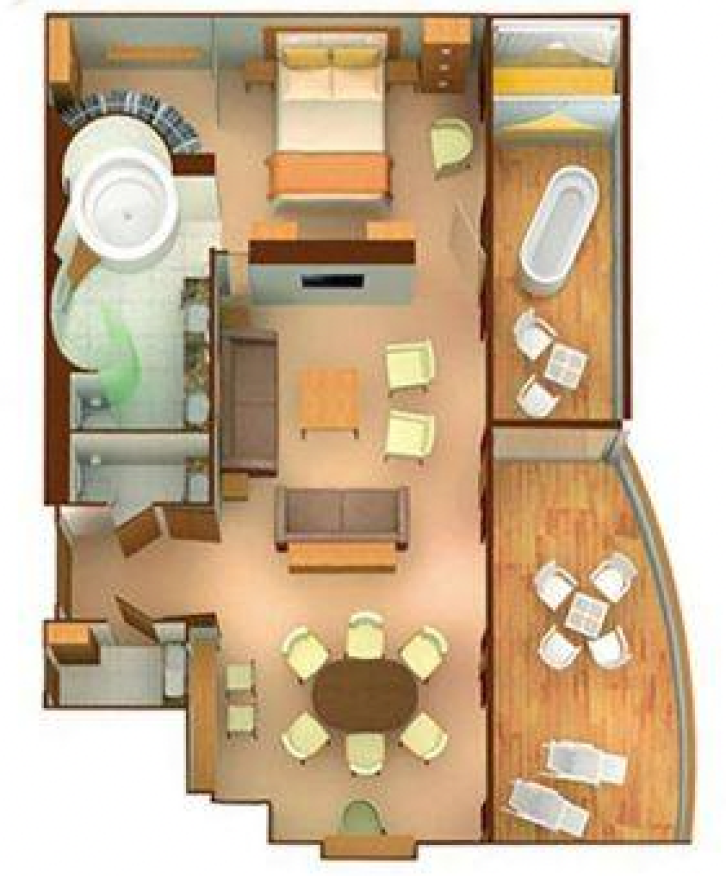
Facilities
- Queen or Twin Configuration
- Shower
- Bath
- Whirlpool Bath
- TV
- Free Wi-Fi
- Safe
- Hair Dryer
- Sofa Bed
- Lounge Area
- Dining Area
- Vanity Area
- Toiletries Provided
- Suite Benefits
- Full Bar
- Desk
- Room Service Available
- Telephone
- Air Conditioning
Signature Suite
Suites on board feature a comfortable living area, private veranda, queen-size-bed or two twin beds; walk-in closet with personal safe, interactive flat-screen TV with music and movies, fully stocked bar and refrigerator, writing desk with personalized stationary, makeup vanity, spacious bathroom with separate tub and shower, plush robes, slippers hair dryer and 110/220V AC outlets.
Signature Suites feature:
- Expansive ocean views
- Forward-facing windows
- Dining for four to six
- Bathroom with whirlpool bathtub
- Guest bath
- Pantry with wet bar
- Two flat-screen TVs
- Complimentary Internet/Wi-Fi service
FLOORPLANS
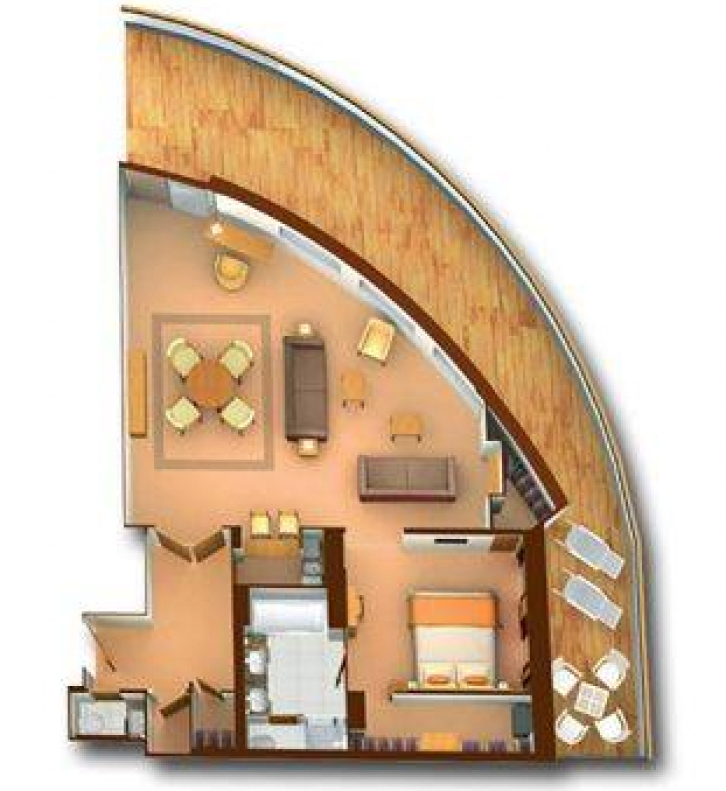
Facilities
- Queen or Twin Configuration
- Shower
- Bath
- Whirlpool Bath
- TV
- Free Wi-Fi
- Safe
- Hair Dryer
- Suite Benefits
- Room Service Available
- Telephone
- Lounge Area
- Dining Area
- Toiletries Provided
- Vanity Area
- Full Bar
- Desk
- Air Conditioning
Owner's Suite
Suites on board feature a comfortable living area, private veranda, queen-size-bed or two twin beds; walk-in closet with personal safe, interactive flat-screen TV with music and movies, fully stocked bar and refrigerator, writing desk with personalized stationary, makeup vanity, spacious bathroom with separate tub and shower, plush robes, slippers hair dryer and 110/220V AC outlets.
Owner's Suite features
- Expansive ocean views
- Glass door to private veranda
- Comfortable living area
- Separate bedroom
- Queen-size bed or two twin beds
- Walk-in closet
- Dining for four
- Pantry with wet bar
- Two flat-screen TVs
- Complimentary Internet/Wi-Fi service.
- Guest bath
- Makeup vanity
- Bathroom with whirlpool bathtub
*Wheelchair accessible suites are roll-in shower only.
FLOORPLANS
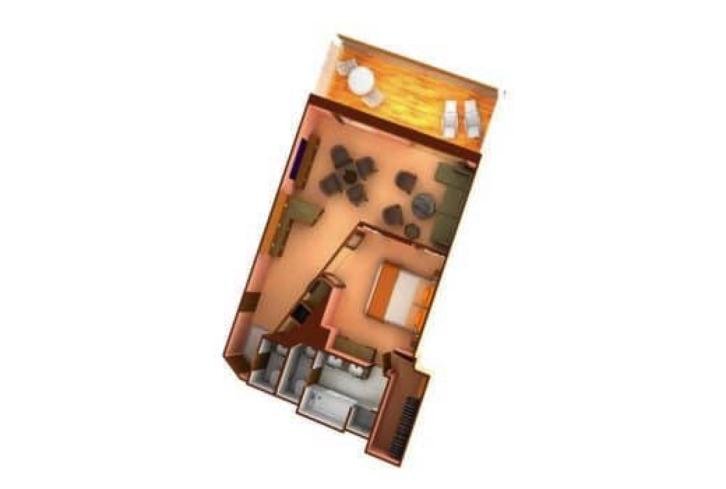
Facilities
- Queen or Twin Configuration
- Shower
- Bath
- TV
- Free Wi-Fi
- Safe
- Hair Dryer
- Lounge Area
- Dining Area
- Vanity Area
- Whirlpool Bath
- Toiletries Provided
- Suite Benefits
- Full Bar
- Desk
- Room Service Available
- Telephone
- Air Conditioning
Penthouse Spa Suite
Suites on board feature a comfortable living area, private veranda, queen-size-bed or two twin beds; walk-in closet with personal safe, interactive flat-screen TV with music and movies, fully stocked bar and refrigerator, writing desk with personalized stationary, makeup vanity, spacious bathroom with separate tub and shower, plush robes, slippers hair dryer and 110/220V AC outlets.
All Penthouse Spa Suite feature:
- A full-length window
- Glass door to private veranda
- Comfortable living area
- Separate bedroom
- Queen-size bed or two twin beds
- Dining table for two to four
- Walk-in closet
- Two flat-screen TVs
- Fully stocked bar and refrigerator
- Makeup vanity
- Spacious bathroom with separate tub and shower
*Wheelchair accessible suites are roll-in shower only.
FLOORPLANS
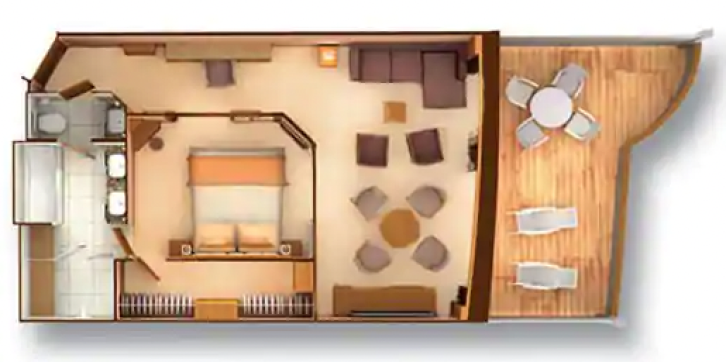
Facilities
- Queen or Twin Configuration
- Lounge Area
- Bath
- TV
- Safe
- Hair Dryer
- Dining Area
- Vanity Area
- Shower
- Toiletries Provided
- Room Service Available
- Suite Benefits
- Full Bar
- Free Wi-Fi
- Telephone
- Desk
- Air Conditioning
Penthouse Suite
All Penthouse Suites on board feature a comfortable living area, glass door to private veranda, queen-size-bed or two twin beds; walk-in closet with personal safe, two flat-screen TV with music and movies, fully stocked bar and refrigerator, writing desk with personalized stationary, makeup vanity, spacious bathroom with separate tub and shower, plush robes, slippers hair dryer and 110/220V AC outlets
All Penthouse Suite feature
- Dining table for two to four
- Separate bedroom
- Glass door to veranda
- Two flat-screen TVs
- Fully stocked bar
- Spacious bathroom with tub, shower and large vanity
FLOORPLANS
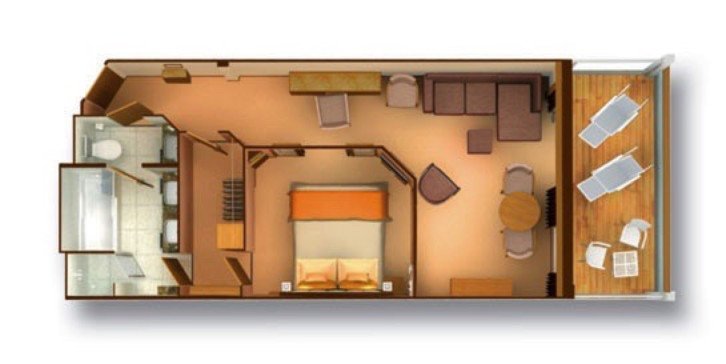
Facilities
- Queen or Twin Configuration
- Shower
- TV
- Safe
- Hair Dryer
- Lounge Area
- Dining Area
- Vanity Area
- Toiletries Provided
- Suite Benefits
- Full Bar
- Room Service Available
- Telephone
- Desk
- Air Conditioning
Veranda Suite
All Veranda Suites feature a full-length window and glass door to private veranda, comfortable living area, queen-size bed or two twin beds, dining table for two, walk-in closet, interactive flat-screen television with music and movies, fully stocked bar and refrigerator, makeup vanity, spacious bathroom with separate tub and shower.
All Veranda Suites feature:
- A full-length window
- Glass door to private veranda
- Comfortable living area
- Queen-size bed or two twin beds
- Dining table for two
- Walk-in closet
- Interactive flat-screen television with music and movies
- Fully stocked bar
- Makeup vanity
- Spacious bathroom with separate tub and shower
*Wheelchair accessible suites are roll-in shower only.
FLOORPLANS
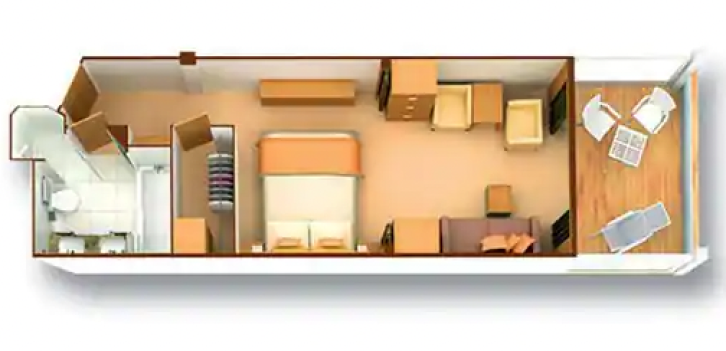
Facilities
- Queen or Twin Configuration
- Shower
- TV
- Safe
- Hair Dryer
- Lounge Area
- Toiletries Provided
- Suite Benefits
- Full Bar
- Room Service Available
- Telephone
- Desk
- Media/Entertainment Station
- Air Conditioning
Ocean View Suite
All Ocean View Suites feature a large picture window, comfortable living area, queen-size bed or two twin beds, dining table for two, walk-in closet, interactive flat-screen television with music and movies, fully stocked bar and refrigerator, makeup vanity, spacious bathroom with separate tub and shower. Approximately 295 sq. ft. (28 sq.m.) of inside space
- A large picture window
- Comfortable living area
- Queen-size bed or two twin beds
- Dining table for two
- Walk-in closet
- Interactive flat-screen television with music and movies
- Fully stocked bar and refrigerator
- Makeup vanity, spacious bathroom with separate tub and shower
*Wheelchair accessible suites are roll-in shower only.
FLOORPLANS
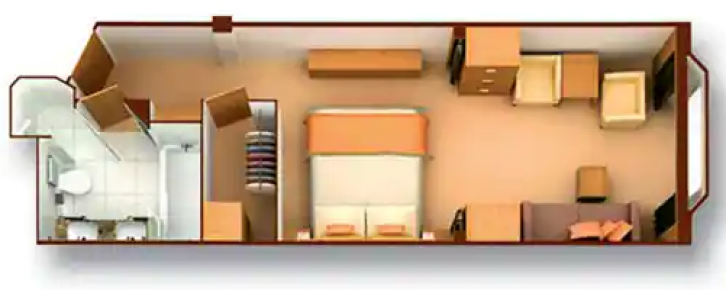
Facilities
- Queen or Twin Configuration
- Shower
- Bath
- TV
- Safe
- Hair Dryer
- Lounge Area
- Dining Area
- Vanity Area
- Toiletries Provided
- Suite Benefits
- Full Bar
- Wi-Fi (Additional Cost)
- Room Service Available
- Telephone
- Desk
Penthouse Suite Guarantee
Approximately 436 square feet (41 square meters) of inside space, plus one veranda of 98 square feet (9 square meters)
Guaranteed Suite: For this option we select the location and specific suite for you, and notify you prior to departure. Guests are guaranteed to be assigned a suite in the category selected or higher.
All Penthouse Suite feature:
- Dining table for two to four
- Separate bedroom
- Glass door to veranda
- Two flat-screen TVs
- Fully stocked bar
- Spacious bathroom with tub, shower and large vanity
FLOORPLANS
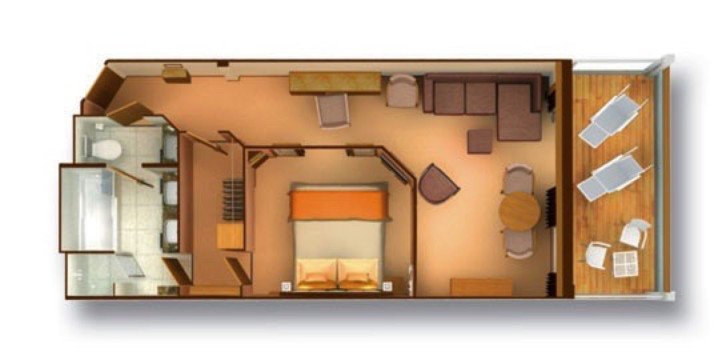
Facilities
- Bath
- Queen or Twin Configuration
- Lounge Area
- Dining Area
- Vanity Area
- Shower
- Toiletries Provided
- Room Service Available
- Suite Benefits
- Full Bar
- TV
- Safe
- Hair Dryer
- Telephone
- Desk
- Air Conditioning
Veranda Guarantee
All Veranda Suites feature a full-length window and glass door to private veranda, comfortable living area, queen-size bed or two twin beds, dining table for two, walk-in closet, interactive flat-screen television with music and movies, fully stocked bar and refrigerator, makeup vanity, spacious bathroom with separate tub and shower.
Guaranteed Suite: For this option we select the location and specific suite for you, and notify you prior to departure. Guests are guaranteed to be assigned a suite in the category selected or higher.
Facilities
- Bath
- Queen or Twin Configuration
- Lounge Area
- Shower
- Toiletries Provided
- Room Service Available
- Full Bar
- TV
- Free Wi-Fi
- Safe
- Hair Dryer
- Telephone
- Desk
- Air Conditioning
- Suite Benefits
- Media/Entertainment Station
Single Outside Guarantee
All Ocean View Suites feature a large picture window, comfortable living area, queen-size bed or two twin beds, dining table for two, walk-in closet, interactive flat-screen television with music and movies, fully stocked bar and refrigerator, makeup vanity, spacious bathroom with separate tub and shower. Approximately 295 sq. ft. (28 sq.m.) of inside space
Guaranteed Suite: For this option we select the location and specific suite for you, and notify you prior to departure. Guests are guaranteed to be assigned a suite in the category selected or higher.
Facilities
- Bath
- Queen or Twin Configuration
- Lounge Area
- Dining Area
- Vanity Area
- Shower
- Toiletries Provided
- Room Service Available
- Suite Benefits
- Full Bar
- TV
- Free Wi-Fi
- Safe
- Hair Dryer
- Telephone
- Desk
- Air Conditioning
Suite Guarantee
Guaranteed Suite: For this option we select the location and specific suite for you, and notify you prior to departure. Guests are guaranteed to be assigned a suite in the category selected or higher.
Facilities
- Bath
- Queen or Twin Configuration
- Lounge Area
- Shower
- Toiletries Provided
- Room Service Available
- Full Bar
- TV
- Free Wi-Fi
- Safe
- Hair Dryer
- Telephone
- Desk
- Air Conditioning
- Suite Benefits